Ciri dan struktur
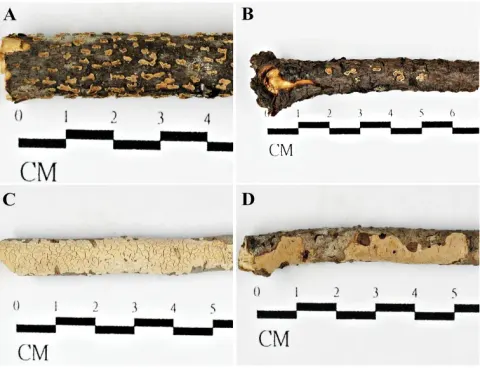
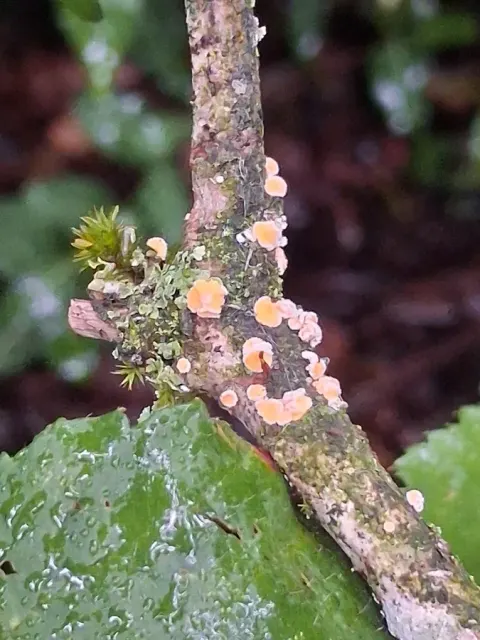
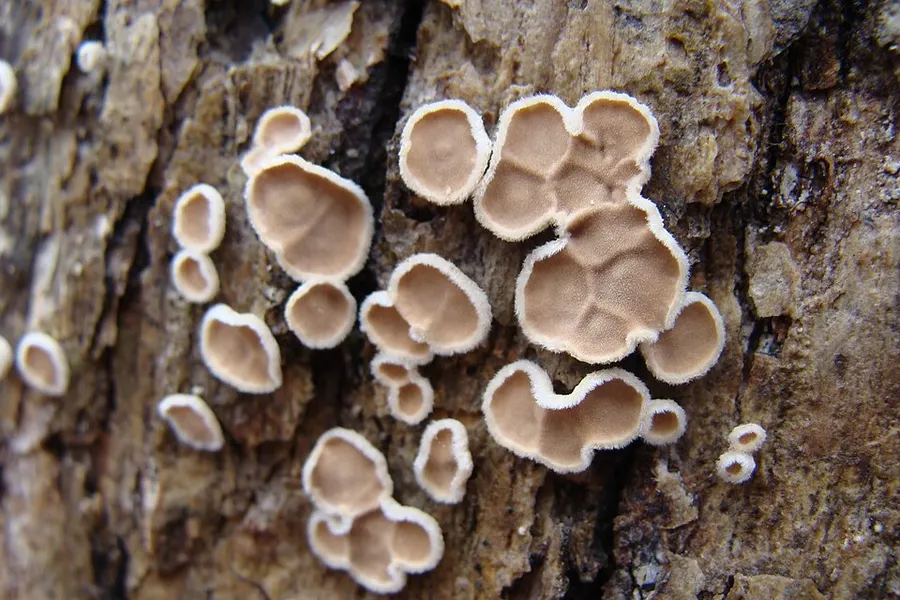
Aleurodiscus oakesii produces clusters of gray or cream-colored, flat, crustlike, fruiting bodies, usually less than a centimeter in diameter, though larger sizes may result from the combination of adjacent bodies. The inner, fertile space of the cup-like fruiting bodies is darker in color in comparison to the sterile outer surface. The spore-bearing bodies are tough in texture and attached to the bark by a single point, but the fungi lacks a stipe. The edges of the fruiting bodies are raised and may be confused for cup-shaped Ascomycete fungus. A. oakesii grows best on thinner sections of bark, with the stromata formed beneath the top bark layer and enlarging cracks in the bark with growth of fungal hyphae that then form the cup-like structure. Microscopically, A. oakesii has septate hyphae and antler-like acanthophyses. Basidiospores are oval or egg-shaped and relatively small in comparison to species of the same genus, and the spores of this species have spines and warts.
Habitat dan peran ekologis
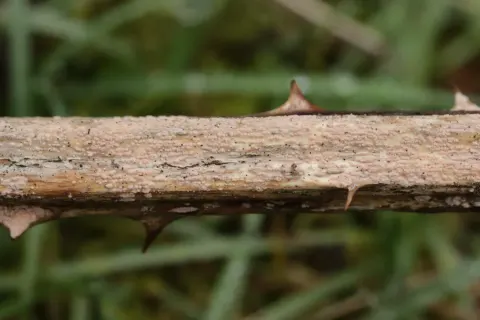
Found across North America, Europe, and Asia, most commonly in the North Eastern United States, most commonly found in spring and fall but grows year round. It colonizes the outer bark of trees, especially white oaks, and eventually digests it, causing the "smooth patch disease" the fungus is most well known for. A. oakesii grows commonly on hardwood trees of the genus Ostrya and is less commonly found on leafier trees.
- Habitat atau konteks temuan
- Informasi belum tersedia pada sumber rilis ini.
- Substrat
- Informasi belum tersedia pada sumber rilis ini.
- Peran atau konteks
- Belum dikategorikan pada rilis ini.
Reproduksi
Aleurodiscus oakesii produces clusters of gray or cream-colored, flat, crustlike, fruiting bodies, usually less than a centimeter in diameter, though larger sizes may result from the combination of adjacent bodies. The inner, fertile space of the cup-like fruiting bodies is darker in color in comparison to the sterile outer surface. The spore-bearing bodies are tough in texture and attached to the bark by a single point, but the fungi lacks a stipe. The edges of the fruiting bodies are raised and may be confused for cup-shaped Ascomycete fungus. A. oakesii grows best on thinner sections of bark, with the stromata formed beneath the top bark layer and enlarging cracks in the bark with growth of fungal hyphae that then form the cup-like structure.
Catatan identitas dan cakupan
- Nama diterima mengikuti Catalogue of Life Base2026-09-11; uraian mempertahankan konsep dan nama sumber aslinya.
- Original geographic, specimen and life-cycle scope retained; source import awaits individual editorial review.
- Impor dan terjemahan otomatis belum diperiksa editorial per profil. Struktur reproduktif yang disebutkan tidak membuktikan seluruh siklus hidup diketahui.
- Pengukuran pada uraian mengikuti spesimen, kultur, dan metode sumber; angka tidak diperluas ke semua populasi.
Catatan distribusi dalam narasi mengikuti sumbernya. Dokumentasi spesimen atau foto mengikuti catatan sumber. Bukti wilayah Indonesia dan penilaian konservasi tidak disimpulkan dari gambar.
Melihat dengan konteks
Dokumentasi Aleurodiscus oakesii dari Wikimedia Commons. For more information about this, see the observation page at Mushroom Observer. Identifikasi mengikuti record berkas sumber.
- Jenis
- Fotografi
- Kredit
- This image was created by user Patrick Harvey (pg_harvey) at Mushroom Observer , a source for mycological images. You can contact this user here .
- Lisensi
- CC BY-SA 3.0
- Sumber media
- Buka entri sumber
Sumber profil
- [1] Aleurodiscus oakesii — Wikipedia (en)
- [2] Catalogue of Life Base2026-09-11 — Acanthophysium oakesii
- [3] Dokumentasi visual — Aleurodiscus oakesii
Rujukan halaman ini
Fungi. Acanthophysium oakesii. Rilis data fungi-2026-10-12-expansion-2. https://fungi-atlas.mgadib.chatgpt.site/jamur/acanthophysium-oakesii/.
Status: impor sumber; pemeriksaan editorial per profil belum selesai. Untuk klaim biologis, gunakan rujukan pada bagian terkait dan periksa konteks sumber aslinya.