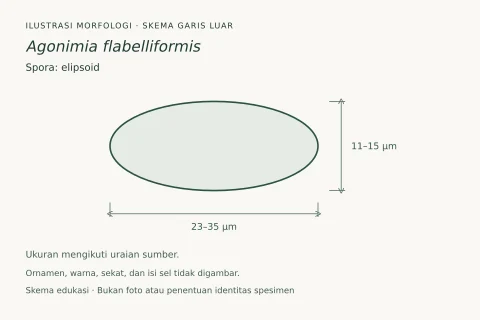
01 / Morfologi

Ciri dan struktur

Agonimia octospora is a minute lichen species that forms small, scattered (scale-like structures) on the bark of aged broadleaf trees, particularly oak trees. This species has several distinctive characteristics. The squamules are typically 0.05–0.1 mm thick and 0.05–0.25 mm wide, appearing pale grey-green when dry and brightening to a glaucous (bluish-green) colour when wet. These squamules are usually closely attached to the , sometimes simple in form but occasionally irregularly divided or finger-like, with rounded or elongated shapes. Their margins may be entire or notched, and their upper surfaces are convex with a matte or slightly shiny appearance. The reproductive structures (perithecia) are relatively rare, scattered among the squamules, and measure 0.5–0.8 mm in diameter. They are partially embedded in the substrate, appearing spherical or somewhat pear-shaped. These structures are black with a or slightly shiny surface that may be smooth or slightly roughened. The opening (ostiole) appears pink-grey in immature specimens but becomes black as the perithecia mature, and is often positioned off-centre. Under microscopic examination, the squamules are composed mostly of tissue (cells arranged like a simple tissue) with only a few fungal filaments penetrating the substrate. The upper surface has a single cell-thick layer with distinctive conical, peg-like projections measuring about 1–2 by 1–1.5 μm. The wall of the perithecium comprise three distinct layers: an outer pigmented zone, an inner non-pigmented layer, and an innermost layer of inwardly directed, unbranched fungal strands.

Sebagian uraian ditampilkan dalam bahasa sumber; terjemahannya belum tersedia atau belum lolos pemeriksaan.

Rujukan: [1]

Pengukuran mengikuti objek, spesimen atau kultur, dan metode yang disebutkan sumber. Baca uraian asli untuk konteks lengkap.

02 / Kehidupan

Habitat dan peran ekologis

The lichen is found in Europe and South America. In central Spain, A. octospora consistently appeared in minimally managed areas with dense shrub coverage and steeper terrain.

Sebagian uraian ditampilkan dalam bahasa sumber; terjemahannya belum tersedia atau belum lolos pemeriksaan.

Rujukan: [1]

Habitat atau konteks temuan
Informasi belum tersedia pada sumber rilis ini.
Substrat
Informasi belum tersedia pada sumber rilis ini.
Peran atau konteks
Pembentuk liken
Temukan hubungan serupa
03 / Siklus hidup

Reproduksi

The reproductive structures (perithecia) are relatively rare, scattered among the squamules, and measure 0.5–0.8 mm in diameter. They are partially embedded in the substrate, appearing spherical or somewhat pear-shaped. These structures are black with a or slightly shiny surface that may be smooth or slightly roughened. The opening (ostiole) appears pink-grey in immature specimens but becomes black as the perithecia mature, and is often positioned off-centre. The wall of the perithecium comprise three distinct layers: an outer pigmented zone, an inner non-pigmented layer, and an innermost layer of inwardly directed, unbranched fungal strands. Each ascus (spore-producing structure) contains 8 colourless, ellipsoid spores that are densely (divided by both transverse and longitudinal walls), typically measuring 60–75 by 20–26 μm.

Sebagian uraian ditampilkan dalam bahasa sumber; terjemahannya belum tersedia atau belum lolos pemeriksaan.

Rujukan: [1]

04 / Batas informasi

Catatan identitas dan cakupan

  • Nama diterima mengikuti Catalogue of Life Base2026-09-11; uraian mempertahankan konsep dan nama sumber aslinya.
  • Original geographic, specimen and life-cycle scope retained; source import awaits individual editorial review.
  • Impor dan terjemahan otomatis belum diperiksa editorial per profil. Struktur reproduktif yang disebutkan tidak membuktikan seluruh siklus hidup diketahui.
  • Pengukuran pada uraian mengikuti spesimen, kultur, dan metode sumber; angka tidak diperluas ke semua populasi.

Catatan distribusi dalam narasi mengikuti sumbernya. Dokumentasi spesimen atau foto mengikuti catatan sumber. Bukti wilayah Indonesia dan penilaian konservasi tidak disimpulkan dari gambar.

05 / Dokumentasi

Melihat dengan konteks

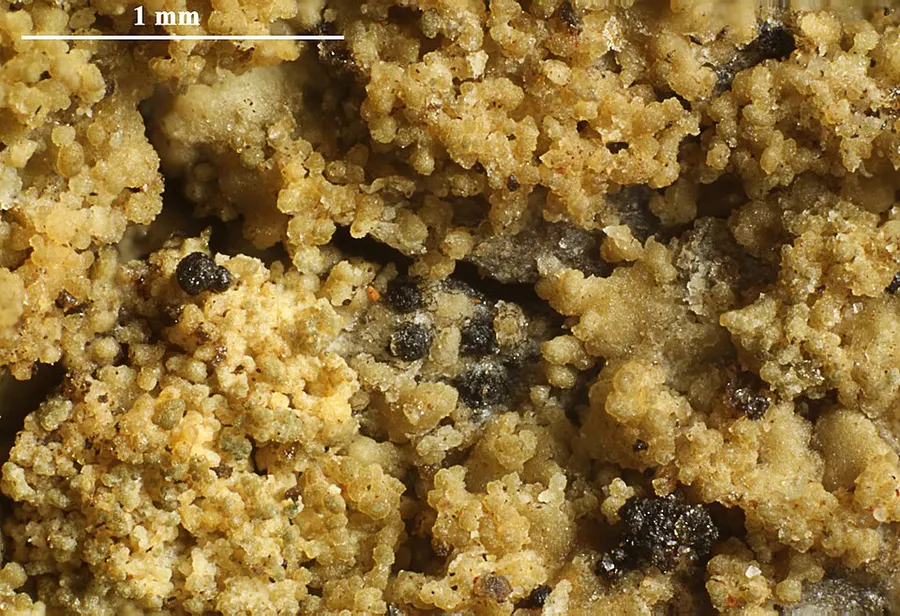
Dokumentasi Agonimia octospora dari Wikimedia Commons. A closeup of the squamulose (scaly) lichen Agonimia octospora . Notes: [TSB_16351], Portugal, Vale de Boa Hora, Parragil, Loulè, Algarve c. 175 m, on Prunus dulcis. - Leg. M. Pugh-Jones (Nr. 1150), 09.1989 Identifikasi mengikuti record berkas sumber.

Jenis
Fotografi
Kredit
Felix Schumm
Sumber media
Buka entri sumber

Gambar menunjukkan objek menurut identifikasi sumber, bukan verifikasi independen spesimen oleh Fungi. Tidak ada skala baru yang ditambahkan.

06 / Rujukan

Sumber profil

  1. [1] Agonimia octospora — Wikipedia (en)Bagian sumber: Frozen revision 1284912340
    Tanggal penghimpunan sumber: 2026-10-12
    Teks sumber: CC BY-SA4.0 · Wikipedia contributors
  2. [2] Catalogue of Life Base2026-09-11 — Agonimia octosporaBagian sumber: ColDP NameUsage.tsv ID 664YN; accepted species; source 2073
    Tanggal penghimpunan sumber: 2026-10-12
  3. [3] Dokumentasi visual — Agonimia octosporaBagian sumber: Individual media record; identification follows the source, not independent determination
    Tanggal penghimpunan sumber: 2026-10-12
    Media sumber: CC BY-SA 4.0 · Felix Schumm

Adaptasi teks: CC BY-SA 4.0. Wikipedia contributors — Agonimia octospora — Wikipedia (en)

Uraian asli dan riwayat sumber

Riwayat atau halaman sumber

Ringkasan sumber

Agonimia octospora is a species of corticolous, (bark-dwelling) squamulose (scaly) lichen in the family Verrucariaceae. This minute species has a thallus made of tiny pale grey-green (scales) that are closely pressed to the bark of aged broadleaf trees, particularly oaks. It is distinguished from other members of the genus by features of its spores. The lichen occurs in ancient woodland habitats across parts of Europe and South America, showing a preference for minimally disturbed areas with abundant shrub coverage.

Revisi sumber

Morfologi sumber

Agonimia octospora is a minute lichen species that forms small, scattered (scale-like structures) on the bark of aged broadleaf trees, particularly oak trees. This species has several distinctive characteristics. The squamules are typically 0.05–0.1 mm thick and 0.05–0.25 mm wide, appearing pale grey-green when dry and brightening to a glaucous (bluish-green) colour when wet. These squamules are usually closely attached to the , sometimes simple in form but occasionally irregularly divided or finger-like, with rounded or elongated shapes. Their margins may be entire or notched, and their upper surfaces are convex with a matte or slightly shiny appearance. The reproductive structures (perithecia) are relatively rare, scattered among the squamules, and measure 0.5–0.8 mm in diameter. They are partially embedded in the substrate, appearing spherical or somewhat pear-shaped. These structures are black with a or slightly shiny surface that may be smooth or slightly roughened. The opening (ostiole) appears pink-grey in immature specimens but becomes black as the perithecia mature, and is often positioned off-centre. Under microscopic examination, the squamules are composed mostly of tissue (cells arranged like a simple tissue) with only a few fungal filaments penetrating the substrate. The upper surface has a single cell-thick layer with distinctive conical, peg-like projections measuring about 1–2 by 1–1.5 μm. The wall of the perithecium comprise three distinct layers: an outer pigmented zone, an inner non-pigmented layer, and an innermost layer of inwardly directed, unbranched fungal strands.

Revisi sumber

Ekologi sumber

The lichen is found in Europe and South America. In central Spain, A. octospora consistently appeared in minimally managed areas with dense shrub coverage and steeper terrain.

Revisi sumber

Struktur reproduksi sumber

The reproductive structures (perithecia) are relatively rare, scattered among the squamules, and measure 0.5–0.8 mm in diameter. They are partially embedded in the substrate, appearing spherical or somewhat pear-shaped. These structures are black with a or slightly shiny surface that may be smooth or slightly roughened. The opening (ostiole) appears pink-grey in immature specimens but becomes black as the perithecia mature, and is often positioned off-centre. The wall of the perithecium comprise three distinct layers: an outer pigmented zone, an inner non-pigmented layer, and an innermost layer of inwardly directed, unbranched fungal strands. Each ascus (spore-producing structure) contains 8 colourless, ellipsoid spores that are densely (divided by both transverse and longitudinal walls), typically measuring 60–75 by 20–26 μm.

Revisi sumber

Rujukan halaman ini

Fungi. Agonimia octospora. Rilis data fungi-2026-10-12-expansion-2. https://fungi-atlas.mgadib.chatgpt.site/jamur/agonimia-octospora/.

Status: impor sumber; pemeriksaan editorial per profil belum selesai. Untuk klaim biologis, gunakan rujukan pada bagian terkait dan periksa konteks sumber aslinya.