Ciri dan struktur
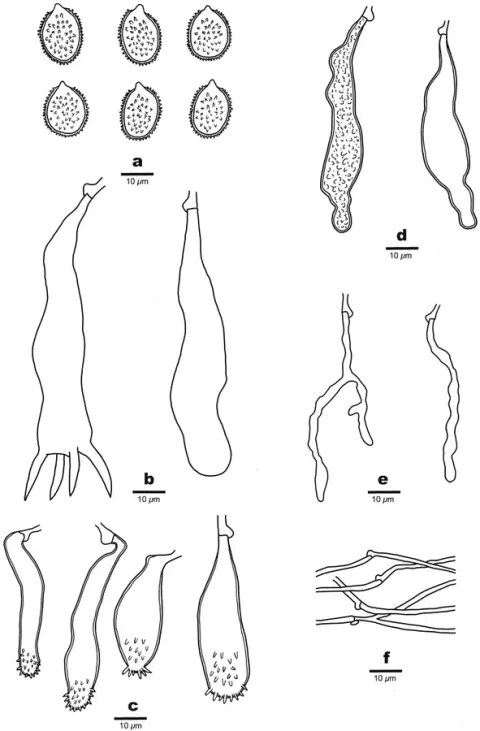
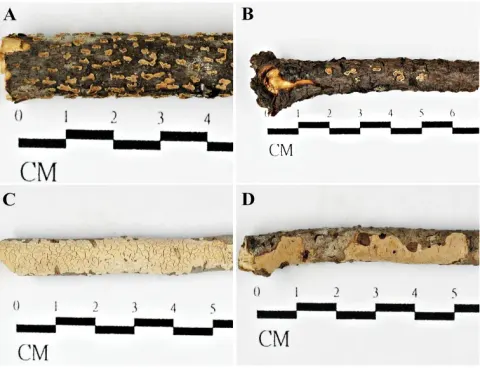
Hymenophore annual, cretaceous, adherent, at first composed of numerous orbicular or linear small colonies 2-10 mm across, coalescing to form effused areas 11-14 x 1-2 cm; hymenial surface chalk white, even, at length deeply and areolately creviced; margin thinning out, at first fibrillose, later definite and cliff-like, adherent. Context white, to 250 µm thick, basal layer of compact hyphae densely intertwined and almost pseudoparenchymatous, intermediate layer scanty, of erect hyphae; generative hyphae 3-5 µm diameter, walls 0.25 µm thick, naked, without clamp connections. Acanthophyses arising from the surface of the basal layer and forming a dense palisade, coralloid, with lateral branches, spinose throughout. Gloeocystidia commonly fusiform, oval, or obpyriform, 32-72 x 18-50 µm, contents orange when fresh. Hymenial layer occupying the greater part of the context, a close palisade of basidia, paraphyses, and acanthophyses. Basidia cylindrical or slightly clavate, 65-110 x 20-25 µm, bearing 4 spores; sterigmata arcuate, subulate, to 32 µm long. Paraphyses ovate, fusiform, or subclavate, varying in length and shape, deeply embedded, 35-80 x 8-16 µm. Spores elliptical, apiculate, 25-36 x 16-20 µm, walls covered with irregular aculeae to 3 µm long, hyaline; 1 µm thick, amyloid.
Habitat dan peran ekologis
HABITAT: Effused on bark or decorticated wood of dead branches. The type collection in Kew herbarium, ex "Wangaretta, Victoria" consists of eight small, irregularly orbicular colonies 1-5 mm wide. It is immature since spores were not found. Sections agree with the collections from Australia listed above, save that paraphyses are more clavate. The description given differs in several particulars from that of Hoehnel & Litschauer (1907, p. 809) which was drawn from specimens collected near the Murray River, Victoria. For they had described a different type of acanthophysis, and stated that spores were smooth. Basidia and paraphyses arise from the surface of the basal layer and are completely embedded in masses of acanthophyses which form the greater part of the context. At maturity basidia become elongated and. project above the hymenium, shed their spores, then collapse. Paraphyses remain deeply embedded. Gloeocystidia are scanty or abundant, apparently absent from some collections, assume many shapes, vary appreciably in size, and when fresh contain orange contents. In a previous paper (1956b, p. 259) I stated they were not present; but in a recent collection they were readily seen, and on re-examination of the other collections were found in some but not all, by aid of a differential stain.
- Habitat atau konteks temuan
- Informasi belum tersedia pada sumber rilis ini.
- Substrat
- kulit kayu
- Peran atau konteks
- Belum dikategorikan pada rilis ini.
Reproduksi
Hymenophore annual, cretaceous, adherent, at first composed of numerous orbicular or linear small colonies 2-10 mm across, coalescing to form effused areas 11-14 x 1-2 cm; hymenial surface chalk white, even, at length deeply and areolately creviced; margin thinning out, at first fibrillose, later definite and cliff-like, adherent. Context white, to 250 µm thick, basal layer of compact hyphae densely intertwined and almost pseudoparenchymatous, intermediate layer scanty, of erect hyphae; generative hyphae 3-5 µm diameter, walls 0.25 µm thick, naked, without clamp connections. Acanthophyses arising from the surface of the basal layer and forming a dense palisade, coralloid, with lateral branches, spinose throughout.
Catatan identitas dan cakupan
- Nama diterima mengikuti Catalogue of Life Base2026-09-11; uraian mempertahankan konsep dan nama sumber aslinya.
- Historical description as cited by BiotaNZ. Preserve explicit New Zealand/locality, host and specimen qualifiers. Distribution is the cited source scope, not a current global range.
- Impor dan terjemahan otomatis belum diperiksa editorial per profil. Struktur reproduktif yang disebutkan tidak membuktikan seluruh siklus hidup diketahui.
- Pengukuran pada uraian mengikuti spesimen, kultur, dan metode sumber; angka tidak diperluas ke semua populasi.
Catatan distribusi dalam narasi mengikuti sumbernya. Dokumentasi spesimen atau foto mengikuti catatan sumber. Bukti wilayah Indonesia dan penilaian konservasi tidak disimpulkan dari gambar.
Melihat dengan konteks
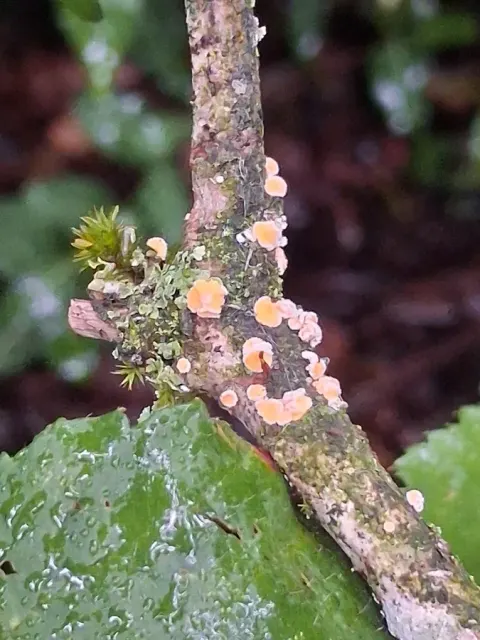
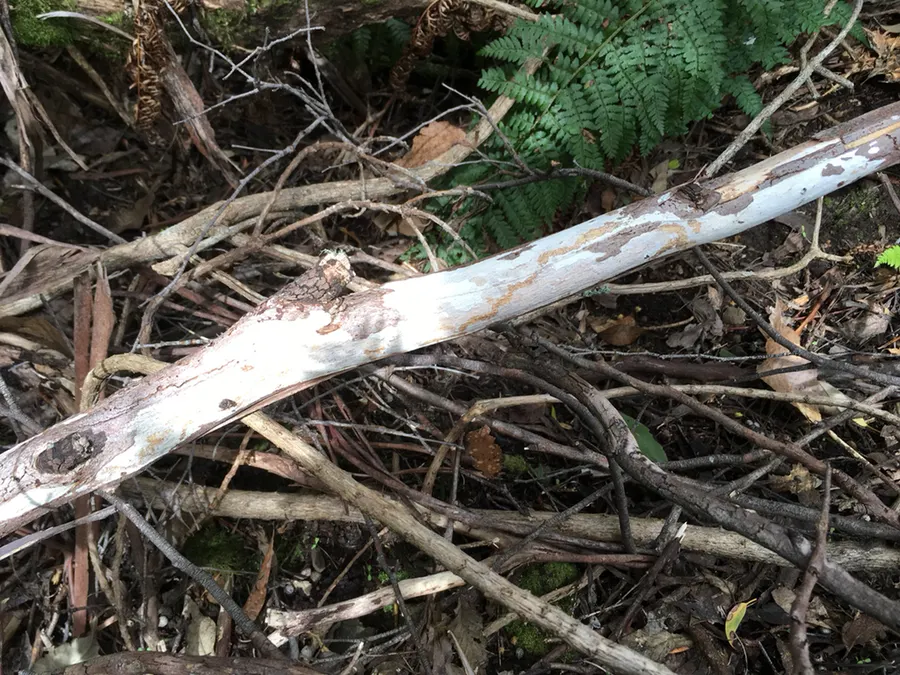
Dokumentasi Aleurodiscus sparsus menurut asosiasi foto pada record takson iNaturalist. Kredit: dschigel. Identitas mengikuti sumber; bukan penentuan spesimen independen.
- Jenis
- Fotografi
- Kredit
- (c) dschigel, some rights reserved (CC BY), uploaded by dschigel
- Lisensi
- CC BY 4.0
- Sumber media
- Buka entri sumber
Sumber profil
- [1] Cunningham, G.H. 1963: The Thelephoraceae of Australia and New Zealand. New Zealand Department of Scientific and Industrial Research, Bulletin. 145. — Acanthophysium sparsum
- [2] Catalogue of Life Base2026-09-11 — Aleurodiscus sparsus
- [3] Dokumentasi visual — Aleurodiscus sparsus
Rujukan halaman ini
Fungi. Aleurodiscus sparsus. Rilis data fungi-2026-10-12-expansion-2. https://fungi-atlas.mgadib.chatgpt.site/jamur/aleurodiscus-sparsus/.
Status: impor sumber; pemeriksaan editorial per profil belum selesai. Untuk klaim biologis, gunakan rujukan pada bagian terkait dan periksa konteks sumber aslinya.