Ciri dan struktur
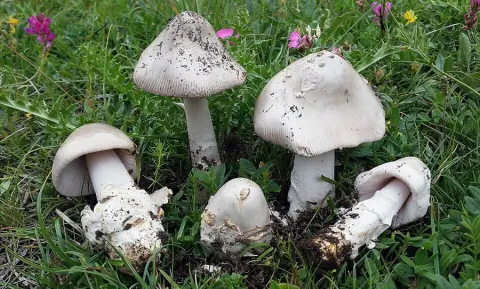
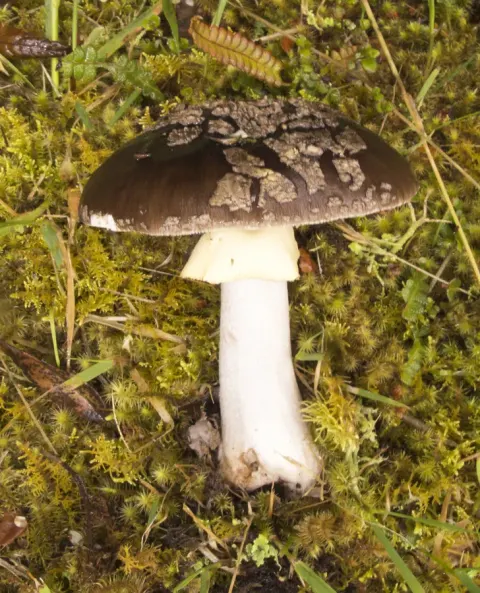
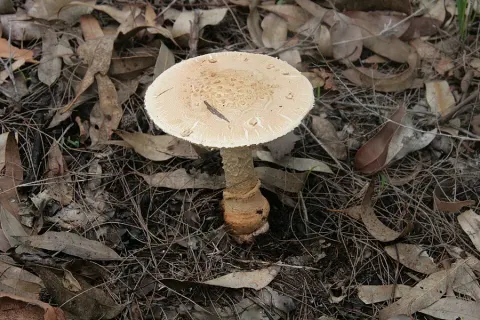
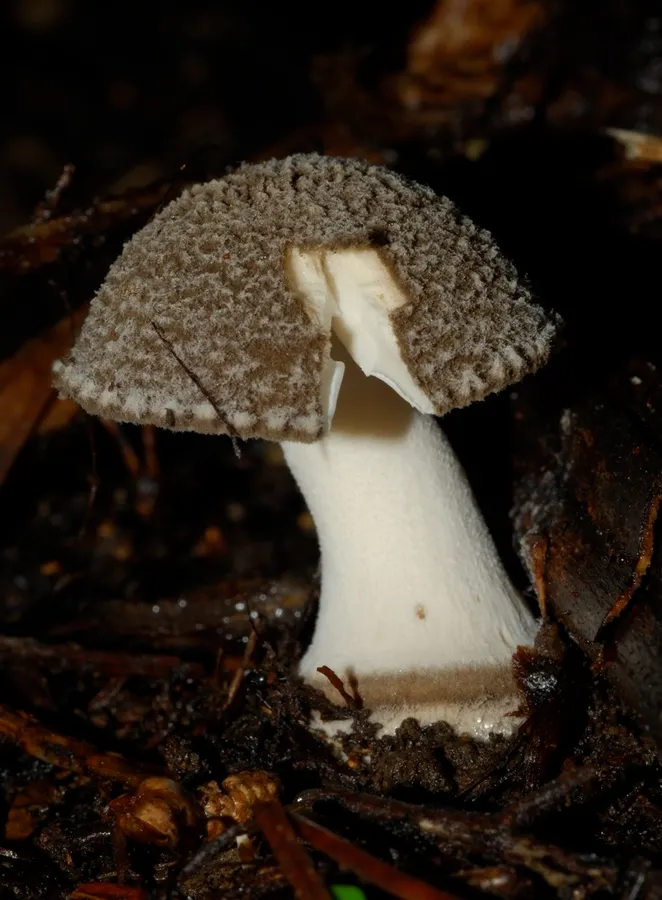
Growing on the ground usually in late summer, the cap is 2.5-6.5 cm wide, plano-convex to plano-depressed, buff, non-viscid, with a striate margin. The volval remnants are pulverulent on the center raised into wart-like peaksor warts or radial ridges, colored pale sepia. Gills are crowded and free, measure 6–7 mm wide, and appear white to pale buff. The short gills are subtruncate. Its stipe is 20–75 × 4–11 mm, hollow, exannulate, with a smooth to subfloccose upper stem and smooth lower stem. The surface is white, pale buff, or very pale grayish sepia in color like the cap. The basal bulb is clavate to bulbous, 10–16 mm in diameter. The base has a rim or band of powdery volva, the same color as on the cap. The stem has no ring. The spores measure 6.5–9 × 5.5–8 (-8.5) μm and are subglobose to broadly ellipsoid to ellipsoid and inamyloid. They are white in color. Clamps are absent at the bases of the basidia. The flesh is white, with a very pale area under the skin in the center.
Habitat dan peran ekologis
Spesies ini awalnya digambarkan dari Wellington, Selandia Baru, terkait dengan banyak jenis Nothofagus, Leptospermum, dan Kunzea. Hal ini juga dikenal dari Selandia Baru Selatan Island of.
- Habitat atau konteks temuan
- Informasi belum tersedia pada sumber rilis ini.
- Substrat
- Informasi belum tersedia pada sumber rilis ini.
- Peran atau konteks
- Belum dikategorikan pada rilis ini.
Reproduksi
The spores measure 6.5–9 × 5.5–8 (-8.5) μm and are subglobose to broadly ellipsoid to ellipsoid and inamyloid. They are white in color. Clamps are absent at the bases of the basidia. The flesh is white, with a very pale area under the skin in the center.
Catatan identitas dan cakupan
- Nama diterima mengikuti Catalogue of Life Base2026-09-11; uraian mempertahankan konsep dan nama sumber aslinya.
- Original geographic, specimen and life-cycle scope retained; source import awaits individual editorial review.
- Impor dan terjemahan otomatis belum diperiksa editorial per profil. Struktur reproduktif yang disebutkan tidak membuktikan seluruh siklus hidup diketahui.
- Pengukuran pada uraian mengikuti spesimen, kultur, dan metode sumber; angka tidak diperluas ke semua populasi.
Catatan distribusi dalam narasi mengikuti sumbernya. Dokumentasi spesimen atau foto mengikuti catatan sumber. Bukti wilayah Indonesia dan penilaian konservasi tidak disimpulkan dari gambar.
Melihat dengan konteks
Dokumentasi Amanita nehuta menurut asosiasi foto pada record takson iNaturalist. Kredit: Michael (inski). Identitas mengikuti sumber; bukan penentuan spesimen independen.
- Jenis
- Fotografi
- Kredit
- (c) Michael (inski), some rights reserved (CC BY-SA)
- Lisensi
- CC BY-SA 4.0
- Sumber media
- Buka entri sumber
Dokumentasi tambahan
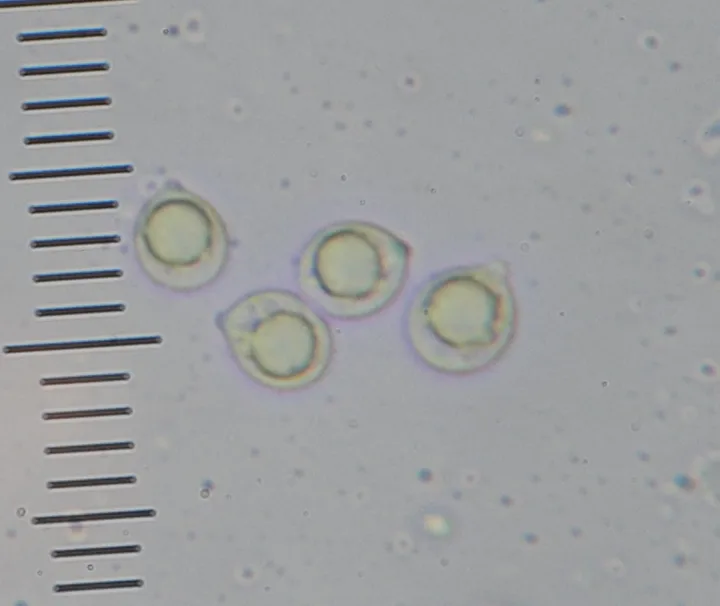
Foto yang diasosiasikan dengan Amanita nehuta pada iNaturalist. Identifikasi mengikuti sumber; bukan penentuan spesimen independen.
Kredit dan penggunaan
(c) Michael (inski), some rights reserved (CC BY-SA)
Ukuran dan format gambar disesuaikan tanpa pemotongan, retus, atau penambahan skala. Lisensi sumber dipertahankan.
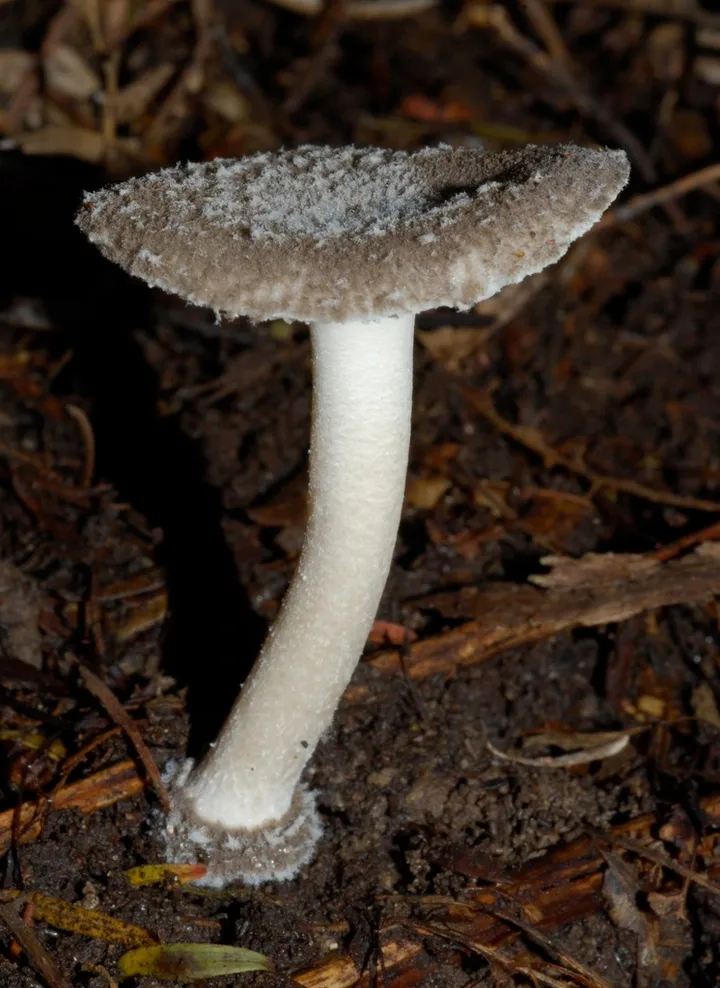
Foto yang diasosiasikan dengan Amanita nehuta pada iNaturalist. Identifikasi mengikuti sumber; bukan penentuan spesimen independen.
Kredit dan penggunaan
(c) Michael (inski), some rights reserved (CC BY-SA)
Ukuran dan format gambar disesuaikan tanpa pemotongan, retus, atau penambahan skala. Lisensi sumber dipertahankan.
Sumber profil
- [1] Amanita nehuta — Wikipedia (en)
- [2] Catalogue of Life Base2026-09-11 — Amanita nehuta
- [3] Dokumentasi visual — Amanita nehuta
- [4] Dokumentasi visual — Amanita nehuta
- [5] Dokumentasi visual — Amanita nehuta
Rujukan halaman ini
Fungi. Amanita nehuta. Rilis data fungi-2026-10-12-expansion-2. https://fungi-atlas.mgadib.chatgpt.site/jamur/amanita-nehuta/.
Status: impor sumber; pemeriksaan editorial per profil belum selesai. Untuk klaim biologis, gunakan rujukan pada bagian terkait dan periksa konteks sumber aslinya.