01 / Morfologi

Ciri dan struktur

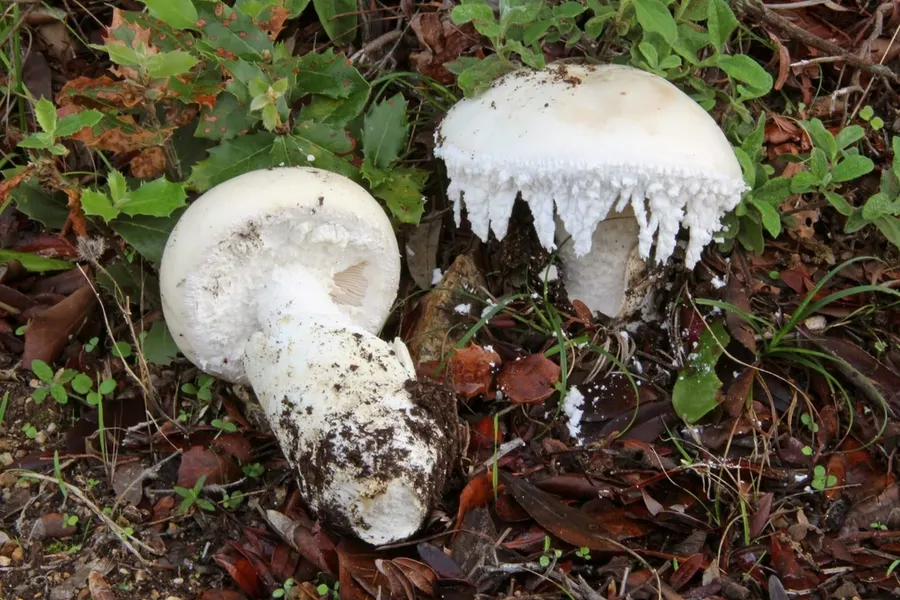
The mushroom is white to cream-coloured and can reach very large sizes, over 15 cm, or in exceptional cases over 30 cm. The cap is smooth, fleshy, silky, hemispherical when young, but soon becoming convex to shield shaped. The cap margin is usually covered with hanging, cottony remains of the partial veil. The lamellae are thick, rounded, broad and are free from the stipe. The stipe is thick, cylindrical, powdery, has a fragile, cottony ring, and a large, white to ochraceous-cream volva at the base. The flesh is thick, white and has a strong, unpleasant smell. The spore print is white, and the elliptical spores measure 10–12 × 6.5–8 μm.

Sebagian uraian ditampilkan dalam bahasa sumber; terjemahannya belum tersedia atau belum lolos pemeriksaan.

Rujukan: [1]

Pengukuran mengikuti objek, spesimen atau kultur, dan metode yang disebutkan sumber. Baca uraian asli untuk konteks lengkap.

02 / Kehidupan

Habitat dan peran ekologis

Native to Eropa, ditemukan di dataran rendah serta pegunungan di Mediterranean region. Amanita ovoidea is a symbiotic fungus, forming mycorrhizal associations with pine trees, as well as evergreen and deciduous oaks. It is found in coniferous forests, deciduous forests, coastal regions, mountains, roadsides and grassy areas, growing on limy, sandy and alkaline soils. Jamur tumbuh setengah dikubur di tanah, dan spesimen yang dikumpulkan sering ditutupi dengan pasir.

Sebagian uraian ditampilkan dalam bahasa sumber; terjemahannya belum tersedia atau belum lolos pemeriksaan.

Rujukan: [1]

Habitat atau konteks temuan
hutan
Substrat
Informasi belum tersedia pada sumber rilis ini.
Peran atau konteks
Mitra tumbuhan
Temukan hubungan serupa
03 / Siklus hidup

Reproduksi

The mushroom is white to cream-coloured and can reach very large sizes, over 15 cm, or in exceptional cases over 30 cm. The cap is smooth, fleshy, silky, hemispherical when young, but soon becoming convex to shield shaped. The cap margin is usually covered with hanging, cottony remains of the partial veil. The lamellae are thick, rounded, broad and are free from the stipe. The stipe is thick, cylindrical, powdery, has a fragile, cottony ring, and a large, white to ochraceous-cream volva at the base. The flesh is thick, white and has a strong, unpleasant smell. The spore print is white, and the elliptical spores measure 10–12 × 6.5–8 μm.

Sebagian uraian ditampilkan dalam bahasa sumber; terjemahannya belum tersedia atau belum lolos pemeriksaan.

Rujukan: [1]

Sinonim menurut acuan taksonomi rilis: Agaricus ovoideus; Agaricus ovoideus var. leucomyces; Agaricus ovoideus var. leucosarcos; Amanita gigantea; Amanita ovoidea var. ammophila; Amanita ovoidea var. gallaica; Amidella ovoidea
04 / Batas informasi

Catatan identitas dan cakupan

  • Nama diterima mengikuti Catalogue of Life Base2026-09-11; uraian mempertahankan konsep dan nama sumber aslinya.
  • Original geographic, specimen and life-cycle scope retained; source import awaits individual editorial review.
  • Impor dan terjemahan otomatis belum diperiksa editorial per profil. Struktur reproduktif yang disebutkan tidak membuktikan seluruh siklus hidup diketahui.
  • Pengukuran pada uraian mengikuti spesimen, kultur, dan metode sumber; angka tidak diperluas ke semua populasi.

Catatan distribusi dalam narasi mengikuti sumbernya. Dokumentasi spesimen atau foto mengikuti catatan sumber. Bukti wilayah Indonesia dan penilaian konservasi tidak disimpulkan dari gambar.

05 / Dokumentasi

Melihat dengan konteks

Dokumentasi Amanita ovoidea menurut asosiasi foto pada record takson iNaturalist. Kredit: Davide Puddu. Identitas mengikuti sumber; bukan penentuan spesimen independen.

Jenis
Fotografi
Kredit
(c) Davide Puddu, some rights reserved (CC BY), uploaded by Davide Puddu
Lisensi
CC BY 4.0
Sumber media
Buka entri sumber

Gambar menunjukkan objek menurut identifikasi sumber, bukan verifikasi independen spesimen oleh Fungi. Tidak ada skala baru yang ditambahkan.

06 / Rujukan

Sumber profil

  1. [1] Amanita ovoidea — Wikipedia (en)Bagian sumber: Frozen revision 1194753338
    Tanggal penghimpunan sumber: 2026-10-12
    Teks sumber: CC BY-SA4.0 · Wikipedia contributors
  2. [2] Catalogue of Life Base2026-09-11 — Amanita ovoideaBagian sumber: ColDP NameUsage.tsv ID 65YZX; accepted species; source 2073
    Tanggal penghimpunan sumber: 2026-10-12
  3. [3] Dokumentasi visual — Amanita ovoideaBagian sumber: Individual media record; identification follows the source, not independent determination
    Tanggal penghimpunan sumber: 2026-10-12
    Media sumber: CC BY 4.0 · (c) Davide Puddu, some rights reserved (CC BY), uploaded by Davide Puddu

Adaptasi teks: CC BY-SA 4.0. Wikipedia contributors — Amanita ovoidea — Wikipedia (en)

Uraian asli dan riwayat sumber

Riwayat atau halaman sumber

Ringkasan sumber

The mushroom is white to cream-coloured and can reach very large sizes, over 15 cm, or in exceptional cases over 30 cm. The cap is smooth, fleshy, silky, hemispherical when young, but soon becoming convex to shield shaped. The cap margin is usually covered with hanging, cottony remains of the partial veil. The lamellae are thick, rounded, broad and are free from the stipe. The stipe is thick, cylindrical, powdery, has a fragile, cottony ring, and a large, white to ochraceous-cream volva at the base.

Revisi sumber

Morfologi sumber

The mushroom is white to cream-coloured and can reach very large sizes, over 15 cm, or in exceptional cases over 30 cm. The cap is smooth, fleshy, silky, hemispherical when young, but soon becoming convex to shield shaped. The cap margin is usually covered with hanging, cottony remains of the partial veil. The lamellae are thick, rounded, broad and are free from the stipe. The stipe is thick, cylindrical, powdery, has a fragile, cottony ring, and a large, white to ochraceous-cream volva at the base. The flesh is thick, white and has a strong, unpleasant smell. The spore print is white, and the elliptical spores measure 10–12 × 6.5–8 μm.

Revisi sumber

Ekologi sumber

Native to Europe, it is found on plains as well as mountains in the Mediterranean region. Amanita ovoidea is a symbiotic fungus, forming mycorrhizal associations with pine trees, as well as evergreen and deciduous oaks. It is found in coniferous forests, deciduous forests, coastal regions, mountains, roadsides and grassy areas, growing on limy, sandy and alkaline soils. The mushroom grows semi-buried in the ground, and collected specimens are often covered with sand.

Revisi sumber

Struktur reproduksi sumber

The mushroom is white to cream-coloured and can reach very large sizes, over 15 cm, or in exceptional cases over 30 cm. The cap is smooth, fleshy, silky, hemispherical when young, but soon becoming convex to shield shaped. The cap margin is usually covered with hanging, cottony remains of the partial veil. The lamellae are thick, rounded, broad and are free from the stipe. The stipe is thick, cylindrical, powdery, has a fragile, cottony ring, and a large, white to ochraceous-cream volva at the base. The flesh is thick, white and has a strong, unpleasant smell. The spore print is white, and the elliptical spores measure 10–12 × 6.5–8 μm.

Revisi sumber

Rujukan halaman ini

Fungi. Amanita ovoidea. Rilis data fungi-2026-10-12-expansion-2. https://fungi-atlas.mgadib.chatgpt.site/jamur/amanita-ovoidea/.

Status: impor sumber; pemeriksaan editorial per profil belum selesai. Untuk klaim biologis, gunakan rujukan pada bagian terkait dan periksa konteks sumber aslinya.