Ciri dan struktur
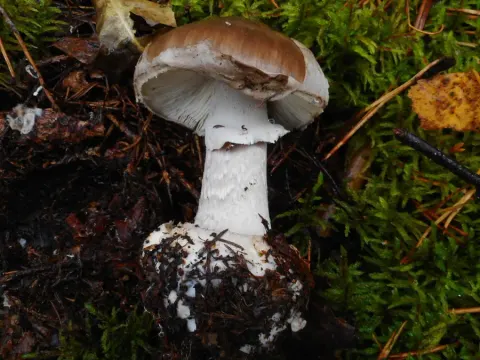
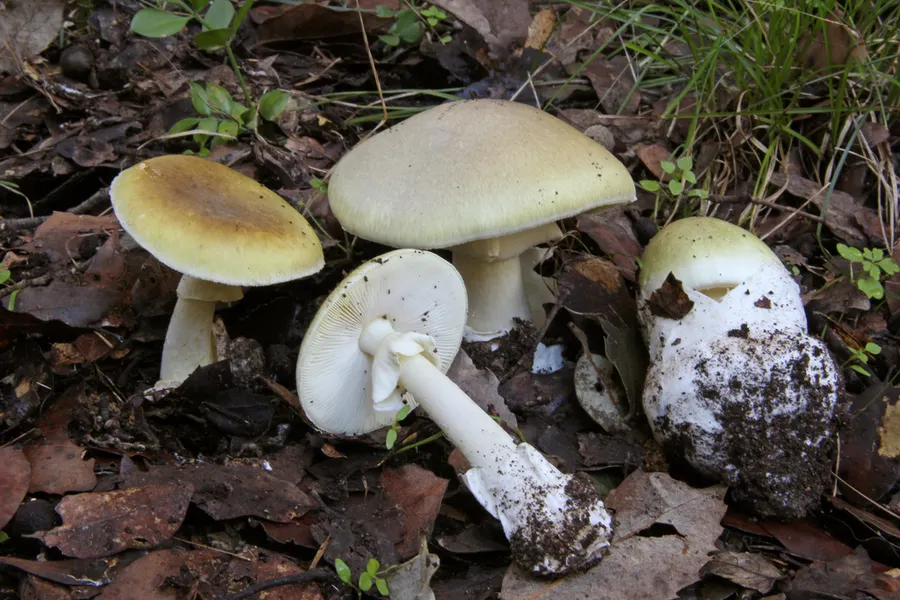
The death cap has a large and imposing epigeous (aboveground) fruiting body (basidiocarp), usually with a pileus (cap) from 5 to 15 cm across (2 to 5.8 inches) across, initially rounded and hemispherical, but flattening with age. The color of the cap can be pale-green, yellowish-green, olive-green, bronze, or (in one form) white; it is often paler toward the margins, which can have darker streaks; it is also often paler after rain. The cap surface is sticky when wet and easily peeled—a troublesome feature, as that is allegedly a feature of edible fungi. The remains of the partial veil are seen as a skirtlike, floppy annulus usually about 1 to 1.5 cm below the cap. The crowded white lamellae (gills) are free. The stipe is white with a scattering of grayish-olive scales and is 8 to 15 cm long and 1 to 2 cm thick, with a swollen, ragged, sac-like white volva (base). Spores: 7-12 x 6-9 μm. Smooth, ellipsoid, amyloid. The smell has been described as initially faint and honey-sweet, but strengthening over time to become overpowering, sickly-sweet and objectionable. Young specimens first emerge from the ground resembling a white egg covered by a universal veil, which then breaks, leaving the volva as a remnant. The spore print is white, a common feature of Amanita. The transparent spores are globular to egg-shaped, measure 8–10 μm (0.3–0.4 mil) long, and stain blue with iodine.
Habitat dan peran ekologis
Cap kematian berasal dari Eropa, di mana ia tersebar luas. It is found from the southern coastal regions of Scandinavia in the north, to Ireland in the west, east to Poland and western Russia, and south throughout the Balkans, in Greece, Italy, Spain, and Portugal in the Mediterranean basin, and in Morocco and Algeria in north Africa. Di Asia Barat, telah dilaporkan dari hutan di Iran utara. Ada catatan dari timur jauh di Asia but ini belum dikonfirmasi sebagai A. phalloides. By the akhir abad ke-19, Charles Horton Peck had melaporkan A. phalloides di Amerika Utara. Di 1918, sampel dari United Timur States were diidentifikasi sebagai spesies yang berbeda meskipun serupa, A. brunnescens, oleh George Francis Atkinson of Cornell University. By the 1970s, it had become clear that A. phalloides does occur in the United States, apparently having been introduced from Europe alongside chestnuts, with populations on the West and East Coasts. Sebuah tinjauan sejarah 2006 menyimpulkan bahwa East Coast populations disertakan secara tidak sengaja, mungkin pada akar tanaman impor yang lain seperti kastan. The origins of the West Coast populations remained unclear, due to scant historical records, Observations of various collections of A. phalloides, from conifers rather than native forests, have led to the hypothesis that the species was introduced to North America multiple times.
- Habitat atau konteks temuan
- hutan
- Substrat
- Informasi belum tersedia pada sumber rilis ini.
- Peran atau konteks
- Belum dikategorikan pada rilis ini.
Reproduksi
The death cap has a large and imposing epigeous (aboveground) fruiting body (basidiocarp), usually with a pileus (cap) from 5 to 15 cm across (2 to 5.8 inches) across, initially rounded and hemispherical, but flattening with age. The color of the cap can be pale-green, yellowish-green, olive-green, bronze, or (in one form) white; it is often paler toward the margins, which can have darker streaks; it is also often paler after rain. The cap surface is sticky when wet and easily peeled—a troublesome feature, as that is allegedly a feature of edible fungi. The remains of the partial veil are seen as a skirtlike, floppy annulus usually about 1 to 1.5 cm below the cap. The crowded white lamellae (gills) are free.
Catatan identitas dan cakupan
- Nama diterima mengikuti Catalogue of Life Base2026-09-11; uraian mempertahankan konsep dan nama sumber aslinya.
- Original geographic, specimen and life-cycle scope retained; source import awaits individual editorial review.
- Impor dan terjemahan otomatis belum diperiksa editorial per profil. Struktur reproduktif yang disebutkan tidak membuktikan seluruh siklus hidup diketahui.
- Pengukuran pada uraian mengikuti spesimen, kultur, dan metode sumber; angka tidak diperluas ke semua populasi.
Catatan distribusi dalam narasi mengikuti sumbernya. Dokumentasi spesimen atau foto mengikuti catatan sumber. Bukti wilayah Indonesia dan penilaian konservasi tidak disimpulkan dari gambar.
Melihat dengan konteks
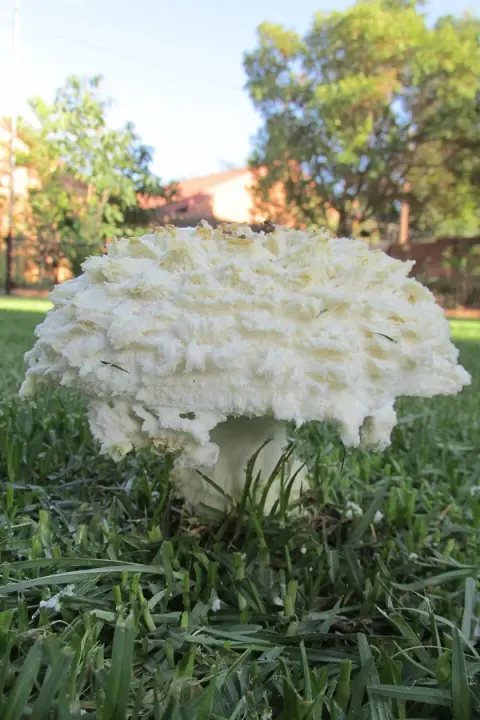
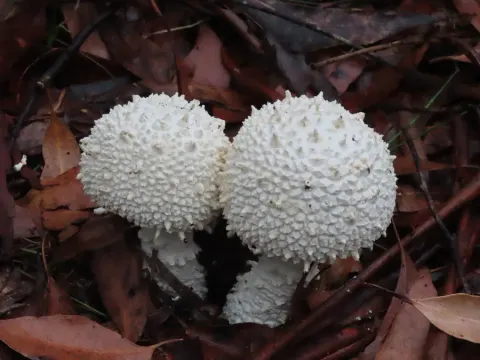
Dokumentasi Amanita phalloides menurut asosiasi foto pada record takson iNaturalist. Kredit: Davide Puddu. Identitas mengikuti sumber; bukan penentuan spesimen independen.
- Jenis
- Fotografi
- Kredit
- (c) Davide Puddu, bazı hakları saklıdır (CC BY), yükleyen: Davide Puddu
- Lisensi
- CC BY 4.0
- Sumber media
- Buka entri sumber
Sumber profil
- [1] Amanita phalloides — Wikipedia (en)
- [2] Catalogue of Life Base2026-09-11 — Amanita phalloides
- [3] Dokumentasi visual — Amanita phalloides
Rujukan halaman ini
Fungi. Amanita phalloides. Rilis data fungi-2026-10-12-expansion-2. https://fungi-atlas.mgadib.chatgpt.site/jamur/amanita-phalloides/.
Status: impor sumber; pemeriksaan editorial per profil belum selesai. Untuk klaim biologis, gunakan rujukan pada bagian terkait dan periksa konteks sumber aslinya.