Ciri dan struktur
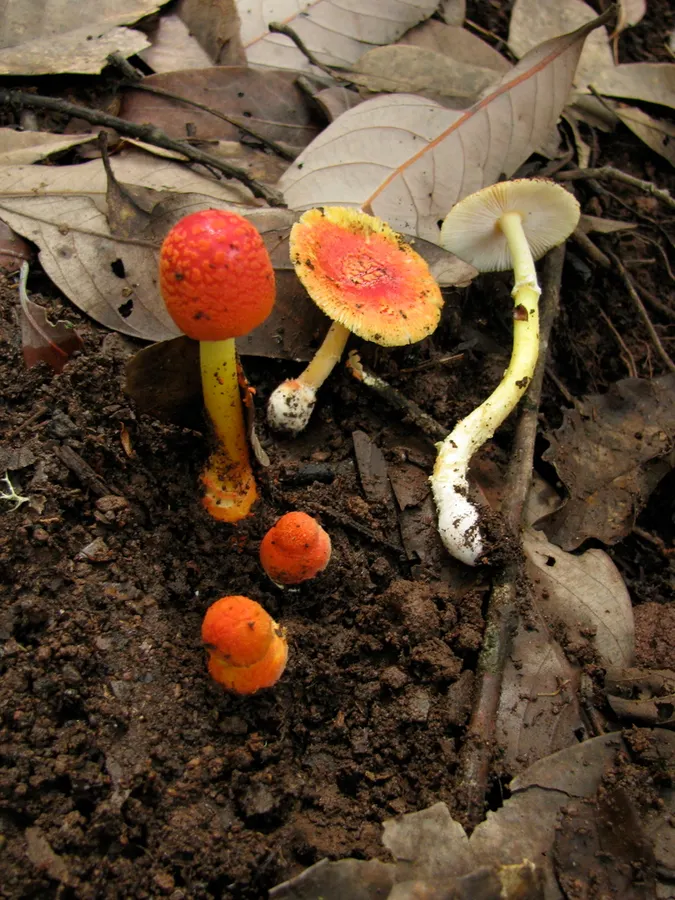
The cap of A. rubrovolvata is 2.0 – 6.5 cm wide, convex to flattened, sometimes with a slight umbo. They are dark red to reddish-orange, becoming a paler orange to yellowish at the margin. The cap surface is densely covered with red to orange to yellow, powdery to granular remnants of the volva. The cap margin is grooved—with the grooves extending to between 30% and 60% of the radius—and does not have partial veil remnants hanging along the cap margin. The flesh of the mushroom is white to yellow, or reddish immediately beneath the cap cuticle. The white gills are free from attachment to the stem and are 3 to 6 mm broad. The lamellulae (short gills that do not extend fully from the cap edge to the stem) are truncate, and typically range in length between 15 and 50% of the length of the gills. The stem is 50 – 100 mm by 5 – 10 mm thick, roughly cylindrical or slightly larger upwards, with a surface that is cream above the ring and cream to yellowish below. The bulb at the base of the stem is roughly spherical, and 1 – 2 cm wide, with its upper part covered with red, orange to yellow woolly to powdery remnants of the volva. The volva remains in mature specimens as a ring around the upper part of the stem bulb. The ring is membranous, persistent, with an upper surface that is white and a lower surface having a yellowish tinge and an edge that is red to orange. A. rubrovolvata produces a white to cream-colored spore print. The spores are spherical or nearly so, and typically measure 7.5–9.0 by 7.0–8.5 μm. They are inamyloid, meaning that they will not absorb iodine stain from Melzer's reagent.
Habitat dan peran ekologis
A. rubrovoltata jamur tumbuh dalam kelompok di tanah. Amanita species bentuk mikoriza hubungan dengan pohon. This is a mutually beneficial relationship where the hyphae of the fungus grow around the roots of trees, enabling the fungus to receive moisture, protection and nutritive byproducts of the tree, and affording the tree greater access to soil nutrients. Asal Japanese collections dibuat di hutan yang didominasi oleh Japanese beech (Fagus crenata), tetapi juga telah ditemukan tumbuh di dekat Quercus luecotrichophora, Rhododendron arboreum, dan Myrica esculenta di India, di Castanopsis-Schima forest di Nepal, dan di Castanopsis indica perkebunan di Himalaya. Spesies ini ditemukan di Cina, India utara, Nepal, Gharwal Himalaya, Korea Selatan, dan negara-negara Asia Tenggara (misalnya, Thailand). Batas selatan distribusi ini mencakup Semenanjung Malaysia selatan.
- Habitat atau konteks temuan
- hutan
- Substrat
- tanah
- Peran atau konteks
- Mitra tumbuhan
Reproduksi
A. rubrovolvata produces a white to cream-colored spore print. The spores are spherical or nearly so, and typically measure 7.5–9.0 by 7.0–8.5 μm. They are inamyloid, meaning that they will not absorb iodine stain from Melzer's reagent. The basidia (spore-bearing cells in the hymenium) are club-shaped, four-spored (rarely two-spored), and measure 25–44 by 10–14 μm. The sterigmata (slender extensions at the basidial tips that attach to the spores) are 3–4 μm long, and clamps are not found on the bases of basidia.
Catatan identitas dan cakupan
- Nama diterima mengikuti Catalogue of Life Base2026-09-11; uraian mempertahankan konsep dan nama sumber aslinya.
- Original geographic, specimen and life-cycle scope retained; source import awaits individual editorial review.
- Impor dan terjemahan otomatis belum diperiksa editorial per profil. Struktur reproduktif yang disebutkan tidak membuktikan seluruh siklus hidup diketahui.
- Pengukuran pada uraian mengikuti spesimen, kultur, dan metode sumber; angka tidak diperluas ke semua populasi.
Catatan distribusi dalam narasi mengikuti sumbernya. Dokumentasi spesimen atau foto mengikuti catatan sumber. Bukti wilayah Indonesia dan penilaian konservasi tidak disimpulkan dari gambar.
Melihat dengan konteks
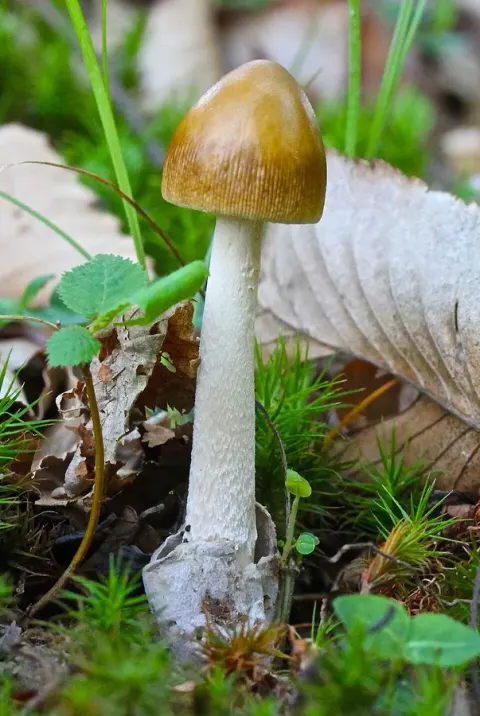
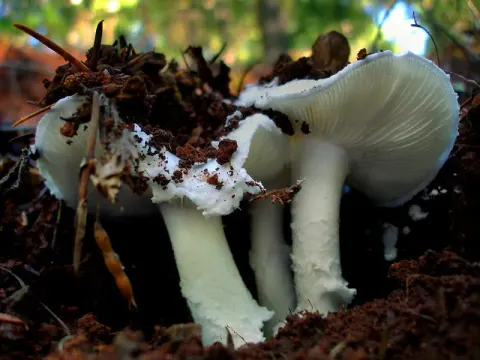
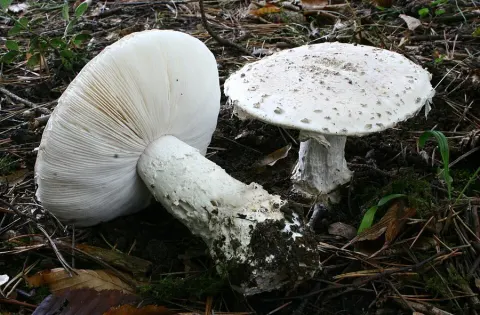
Dokumentasi Amanita rubrovolvata menurut asosiasi foto pada record takson iNaturalist. Kredit: anonymous. Identitas mengikuti sumber; bukan penentuan spesimen independen.
- Jenis
- Fotografi
- Kredit
- (c) anonymous, some rights reserved (CC BY-SA)
- Lisensi
- CC BY-SA 4.0
- Sumber media
- Buka entri sumber
Dokumentasi tambahan
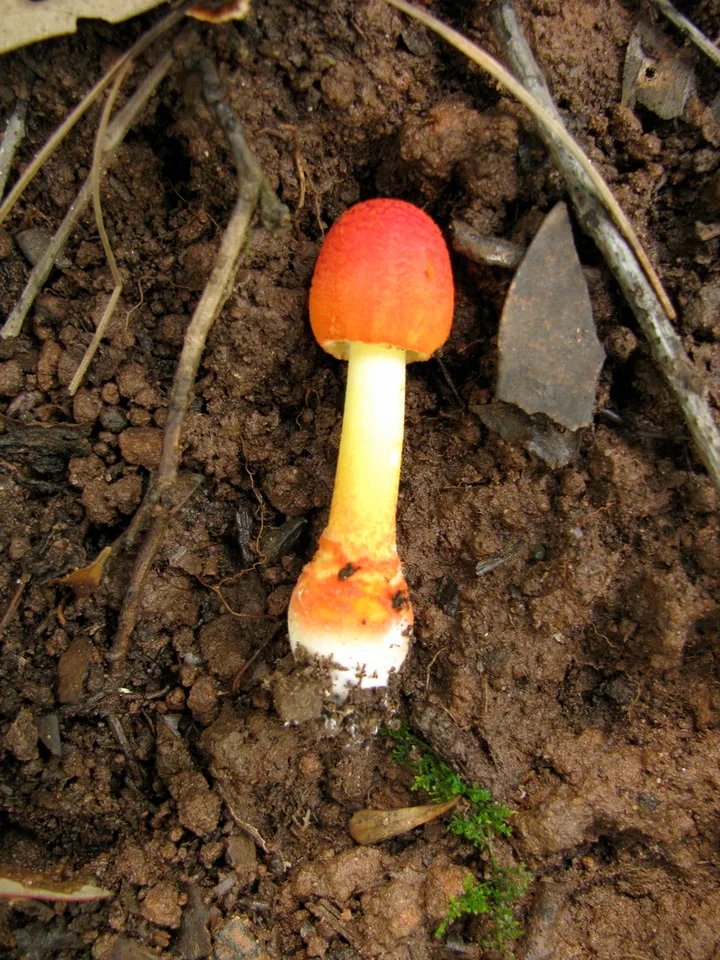
Foto yang diasosiasikan dengan Amanita rubrovolvata pada iNaturalist. Identifikasi mengikuti sumber; bukan penentuan spesimen independen.
Kredit dan penggunaan
(c) anonymous, some rights reserved (CC BY-SA)
Ukuran dan format gambar disesuaikan tanpa pemotongan, retus, atau penambahan skala. Lisensi sumber dipertahankan.
Sumber profil
- [1] Amanita rubrovolvata — Wikipedia (en)
- [2] Catalogue of Life Base2026-09-11 — Amanita rubrovolvata
- [3] Dokumentasi visual — Amanita rubrovolvata
- [4] Dokumentasi visual — Amanita rubrovolvata
Rujukan halaman ini
Fungi. Amanita rubrovolvata. Rilis data fungi-2026-10-12-expansion-2. https://fungi-atlas.mgadib.chatgpt.site/jamur/amanita-rubrovolvata/.
Status: impor sumber; pemeriksaan editorial per profil belum selesai. Untuk klaim biologis, gunakan rujukan pada bagian terkait dan periksa konteks sumber aslinya.