Ciri dan struktur
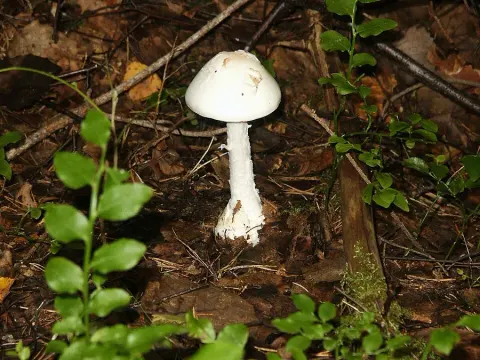
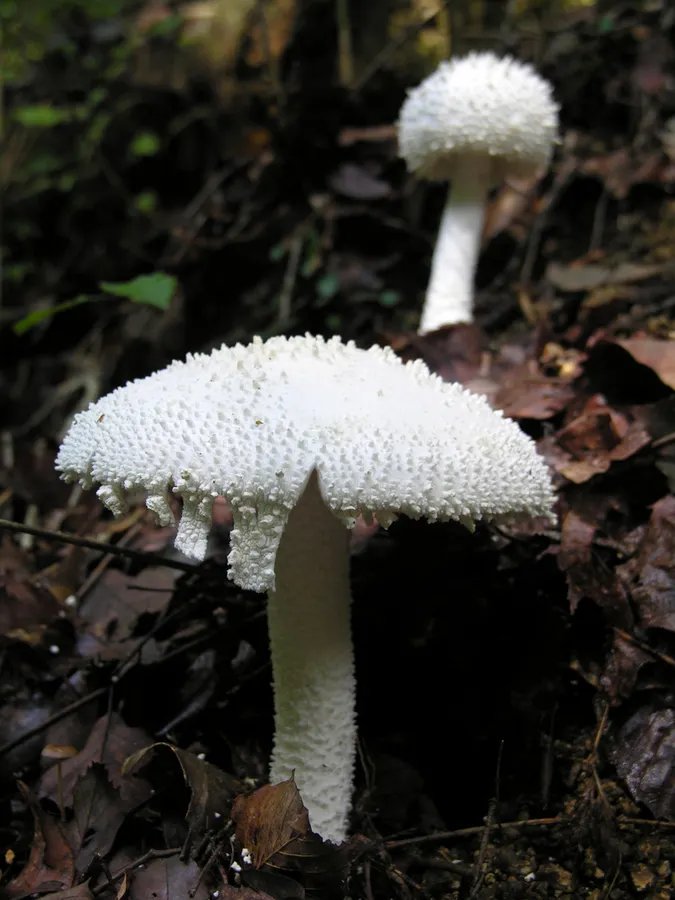
Basidiomata medium-sized to large. Pileus 50–140 mm wide, white to slightly yellowish-white (1A2) with age, ovoid at first, hemispherical when expanding, later convex to plano-convex to flat; slightly depressed, dry, shiny, densely covered with conical to subconcal warts; margin appendiculate, incurved; context 8–13 mm thick, thinning evenly towards margin, white, turning yellowish-white (1A2) when cut or bruised. Universal veil on pileus as conical, subconic to pyramidal warts, 5–10 mm thick, white, easily detachable when touched, sometimes washed away by rains, turning slightly yellowish-white (1A2) with age. Lamellae 12–15 mm thick, free, white (17A1) crowded, with 8–9 lamellae per cm at margin; lamellulae attenuate, of 4–5 lengths, plentiful, white to cream. Stipe 75–140 × 26–22 mm (excluding bulb), white (16A1), slightly tapering upwards, the upper part covered by flocculent squamules, the lower part covered by irregularly arranged, conical to sub-conical warts; context white, solid, turning light yellowish (1A3) when cut or bruised. Bulb 23–29 × 23–30 mm, subglobose, ovoid to napiform, white, slightly yellowish-white with age. Universal veil on stipe base as white conical to subconical warts. Partial veil superior, white, submembranous, thick, covered with white conical warts, fragile, easily detachable when touched. Odour unpleasant. Taste not recorded. Spore print white. Basidiospores [180/9/4] (7.5–)8–10.5(–11) × (5.5–)5.8–7.5 µm, [ L = 8–10 µm, L ' = 9.05 µm; W = 6.0–6.7 µm, W ' = 6.45 µm; Q = (1.22–)1.33–1.55(–1.66), Q = 1.33–1.46, Q ' = 1.41], colourless, hyaline, thin walled, smooth, amyloid, broadly ellipsoid to ellipsoid; apiculus lateral to sublateral, up to 1 µm long; contents monoguttulate.
Habitat dan peran ekologis
Solitary to subgregarious in temperate mixed forest dominated by Quercus leucotrichophora and Cedrus deodara at 1850–2050 m a.s.l. Known distribution: This species was originally described from Japan. It has also been reported from China (Yang 1997), South Korea (Kim et al. 1993), Thailand (Sanmee et al. 2008) and now India.
- Habitat atau konteks temuan
- hutan
- Substrat
- Informasi belum tersedia pada sumber rilis ini.
- Peran atau konteks
- Belum dikategorikan pada rilis ini.
Reproduksi
Basidiomata medium-sized to large. Pileus 50–140 mm wide, white to slightly yellowish-white (1A2) with age, ovoid at first, hemispherical when expanding, later convex to plano-convex to flat; slightly depressed, dry, shiny, densely covered with conical to subconcal warts; margin appendiculate, incurved; context 8–13 mm thick, thinning evenly towards margin, white, turning yellowish-white (1A2) when cut or bruised. Universal veil on pileus as conical, subconic to pyramidal warts, 5–10 mm thick, white, easily detachable when touched, sometimes washed away by rains, turning slightly yellowish-white (1A2) with age. Lamellae 12–15 mm thick, free, white (17A1) crowded, with 8–9 lamellae per cm at margin; lamellulae attenuate, of 4–5 lengths, plentiful, white to cream.
Catatan identitas dan cakupan
- Nama diterima mengikuti Catalogue of Life Base2026-09-11; uraian mempertahankan konsep dan nama sumber aslinya.
- Preserve original treatment localities, hosts and substrate scope. Materials examined describe documented specimens, not the full global range.
- Impor dan terjemahan otomatis belum diperiksa editorial per profil. Struktur reproduktif yang disebutkan tidak membuktikan seluruh siklus hidup diketahui.
- Pengukuran pada uraian mengikuti spesimen, kultur, dan metode sumber; angka tidak diperluas ke semua populasi.
Catatan distribusi dalam narasi mengikuti sumbernya. Dokumentasi spesimen atau foto mengikuti catatan sumber. Bukti wilayah Indonesia dan penilaian konservasi tidak disimpulkan dari gambar.
Melihat dengan konteks
Dokumentasi Amanita virgineoides menurut asosiasi foto pada record takson iNaturalist. Kredit: Yasunori Koide. Identitas mengikuti sumber; bukan penentuan spesimen independen.
- Jenis
- Fotografi
- Kredit
- (c) Yasunori Koide, some rights reserved (CC BY-SA)
- Lisensi
- CC BY-SA 4.0
- Sumber media
- Buka entri sumber
Dokumentasi tambahan
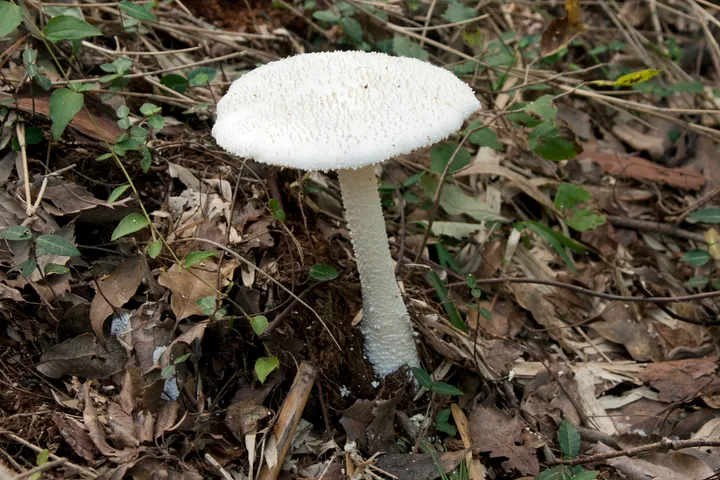
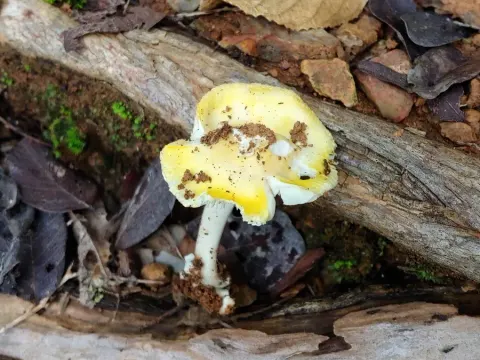
Foto yang diasosiasikan dengan Amanita virgineoides pada iNaturalist. Identifikasi mengikuti sumber; bukan penentuan spesimen independen.
Kredit dan penggunaan
(c) Σ64, some rights reserved (CC BY)
Ukuran dan format gambar disesuaikan tanpa pemotongan, retus, atau penambahan skala. Lisensi sumber dipertahankan.
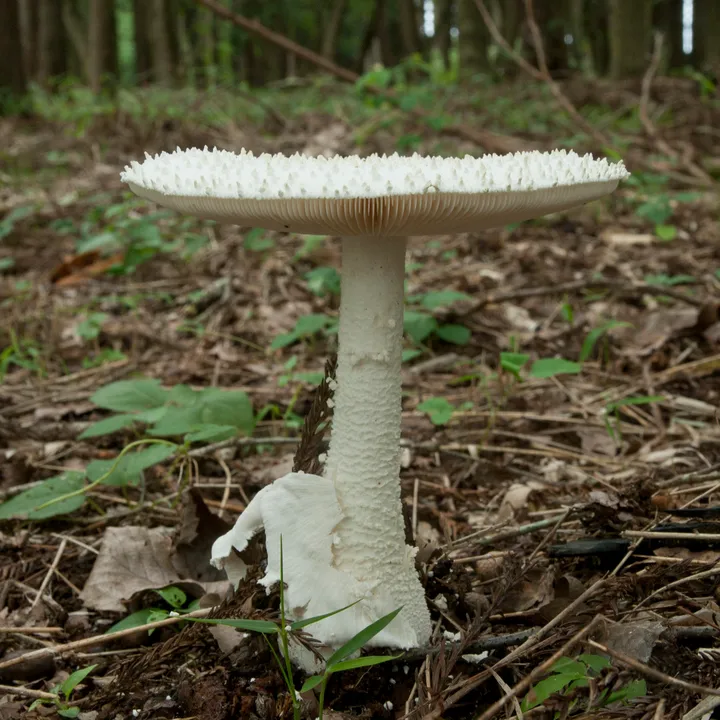
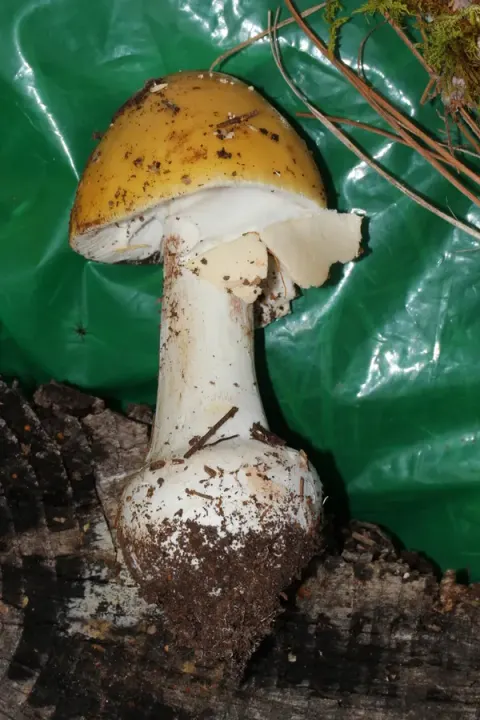
Foto yang diasosiasikan dengan Amanita virgineoides pada iNaturalist. Identifikasi mengikuti sumber; bukan penentuan spesimen independen.
Kredit dan penggunaan
(c) Σ64, some rights reserved (CC BY)
Ukuran dan format gambar disesuaikan tanpa pemotongan, retus, atau penambahan skala. Lisensi sumber dipertahankan.
Sumber profil
- [1] Amanita tullossiana, a new species, and two new records of Amanita section Lepidella from north-western Himalaya, India — Amanita virgineoides
- [2] Catalogue of Life Base2026-09-11 — Amanita virgineoides
- [3] Dokumentasi visual — Amanita virgineoides
- [4] Dokumentasi visual — Amanita virgineoides
- [5] Dokumentasi visual — Amanita virgineoides
Rujukan halaman ini
Fungi. Amanita virgineoides. Rilis data fungi-2026-10-12-expansion-2. https://fungi-atlas.mgadib.chatgpt.site/jamur/amanita-virgineoides/.
Status: impor sumber; pemeriksaan editorial per profil belum selesai. Untuk klaim biologis, gunakan rujukan pada bagian terkait dan periksa konteks sumber aslinya.