Ciri dan struktur
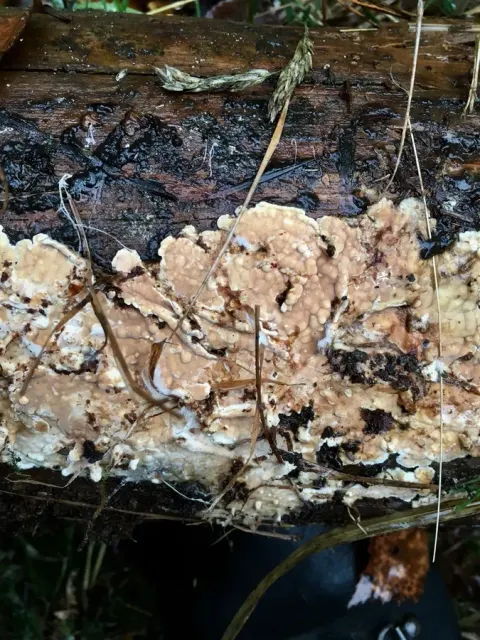
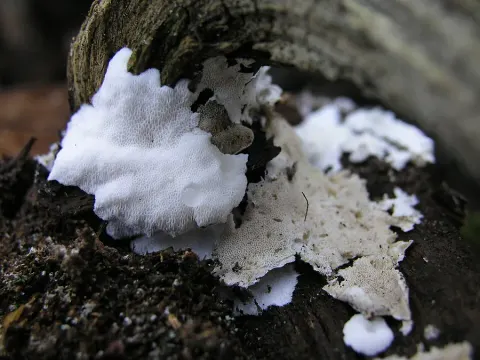
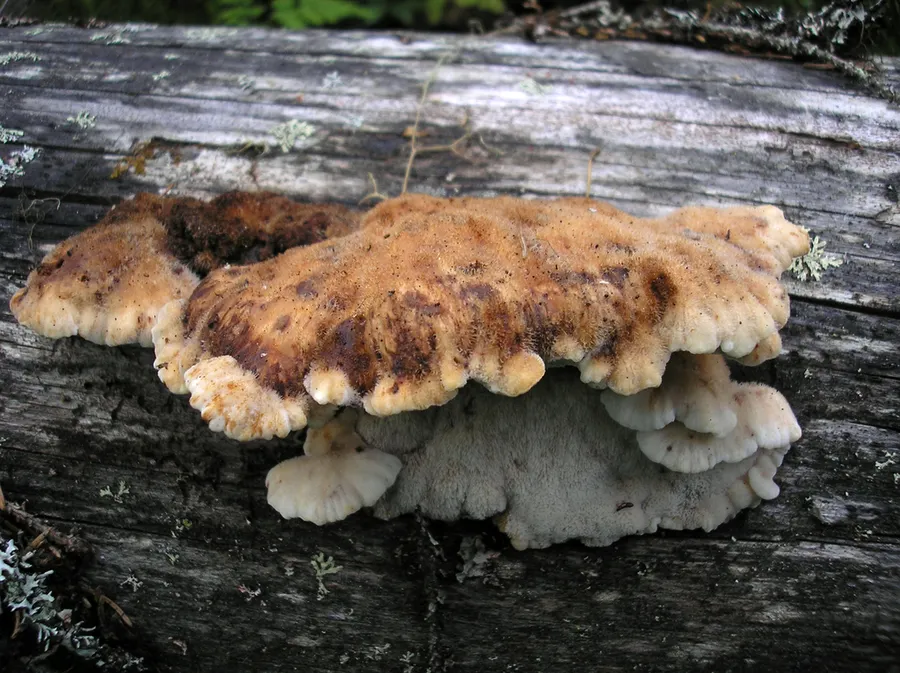
The fungus has fruit bodies that range in form from crust-like to effused-reflexed (mostly crust-like, with edges curling out to form rudimentary caps). Individual fruit bodies measure up to 15 cm wide, and have a dirty whitish to light buff surface colour that becomes reddish brown when dry or if bruised. Amylocystis lapponica has a monomitic hyphal system, containing only generative hyphae. These hyphae are mostly thick-walled and measure 4–10.5 μm thick. The spores are cylindrical, hyaline, and smooth, measuring 8–11 by 2.5–3.5 μm. They are unreactive in Melzer's reagent. Oligoporus fragilis is similar in appearance, but can be distinguished microscopically from Amylocystis lapponica by the lack of amyloid cystidia.
Habitat dan peran ekologis
Amylocystis lapponica decomposes fallen conifer wood, in which it causes brown rot. Its preferential hosts are spruce and larch, although it is occasionally found on fir. It has a circumboreal distribution in coniferous forests. In Europe, the fungus is restricted almost exclusively to old-growth forests. Several conditions are required to support local populations, including: "vegetative continuity (never cut), natural tree species composition, multi-aged structure, rich presence of dead wood in various stages of decay, relatively large area of virgin forest surrounded by near-natural forest, and a stable, cold and humid meso- and microclimate." Because of this requirement the species is rare. For example, in the Czech Republic, despite the long and intensive history of polypore study in that area, A. lapponica has only been recorded from the Boubínský prales virgin forest, even though there are other old-growth forests in the country. Similarly, in Poland it is known only from Białowieża Forest (Białowieża National Park). Both the Czech and Polish locations have a similar management history–"minimal influence by man". In contrast to its rarity in Central and Southern Europe, A. lapponica is known from hundreds of localities in Finland and Sweden, and dozens in Norway.
- Habitat atau konteks temuan
- hutan
- Substrat
- Informasi belum tersedia pada sumber rilis ini.
- Peran atau konteks
- Belum dikategorikan pada rilis ini.
Reproduksi
Amylocystis lapponica has a monomitic hyphal system, containing only generative hyphae. These hyphae are mostly thick-walled and measure 4–10.5 μm thick. The spores are cylindrical, hyaline, and smooth, measuring 8–11 by 2.5–3.5 μm. They are unreactive in Melzer's reagent.
Catatan identitas dan cakupan
- Nama diterima mengikuti Catalogue of Life Base2026-09-11; uraian mempertahankan konsep dan nama sumber aslinya.
- Original geographic, specimen and life-cycle scope retained; source import awaits individual editorial review.
- Impor dan terjemahan otomatis belum diperiksa editorial per profil. Struktur reproduktif yang disebutkan tidak membuktikan seluruh siklus hidup diketahui.
- Pengukuran pada uraian mengikuti spesimen, kultur, dan metode sumber; angka tidak diperluas ke semua populasi.
Catatan distribusi dalam narasi mengikuti sumbernya. Dokumentasi spesimen atau foto mengikuti catatan sumber. Bukti wilayah Indonesia dan penilaian konservasi tidak disimpulkan dari gambar.
Melihat dengan konteks
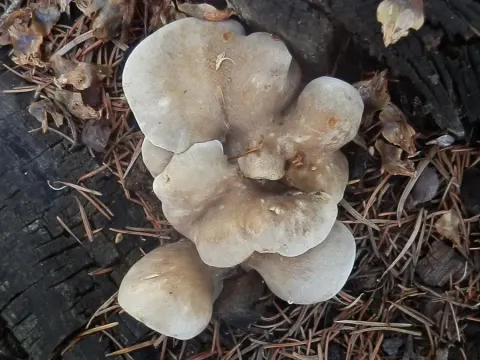
Dokumentasi Amylocystis lapponica menurut asosiasi foto pada record takson iNaturalist. Kredit: caspar s. Identitas mengikuti sumber; bukan penentuan spesimen independen.
- Jenis
- Fotografi
- Kredit
- (c) caspar s, some rights reserved (CC BY)
- Lisensi
- CC BY 4.0
- Sumber media
- Buka entri sumber
Dokumentasi tambahan
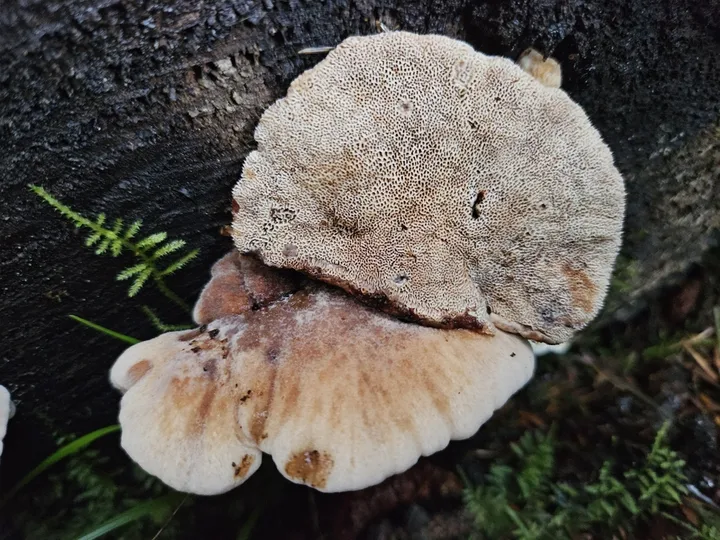
Foto yang diasosiasikan dengan Amylocystis lapponica pada iNaturalist. Identifikasi mengikuti sumber; bukan penentuan spesimen independen.
Kredit dan penggunaan
(c) Mandy Hackney, some rights reserved (CC BY), uploaded by Mandy Hackney
Ukuran dan format gambar disesuaikan tanpa pemotongan, retus, atau penambahan skala. Lisensi sumber dipertahankan.
Sumber profil
- [1] Amylocystis lapponica — Wikipedia (en)
- [2] Catalogue of Life Base2026-09-11 — Amylocystis lapponica
- [3] Dokumentasi visual — Amylocystis lapponica
- [4] Dokumentasi visual — Amylocystis lapponica
Rujukan halaman ini
Fungi. Amylocystis lapponica. Rilis data fungi-2026-10-12-expansion-2. https://fungi-atlas.mgadib.chatgpt.site/jamur/amylocystis-lapponica/.
Status: impor sumber; pemeriksaan editorial per profil belum selesai. Untuk klaim biologis, gunakan rujukan pada bagian terkait dan periksa konteks sumber aslinya.