01 / Morfologi

Ciri dan struktur

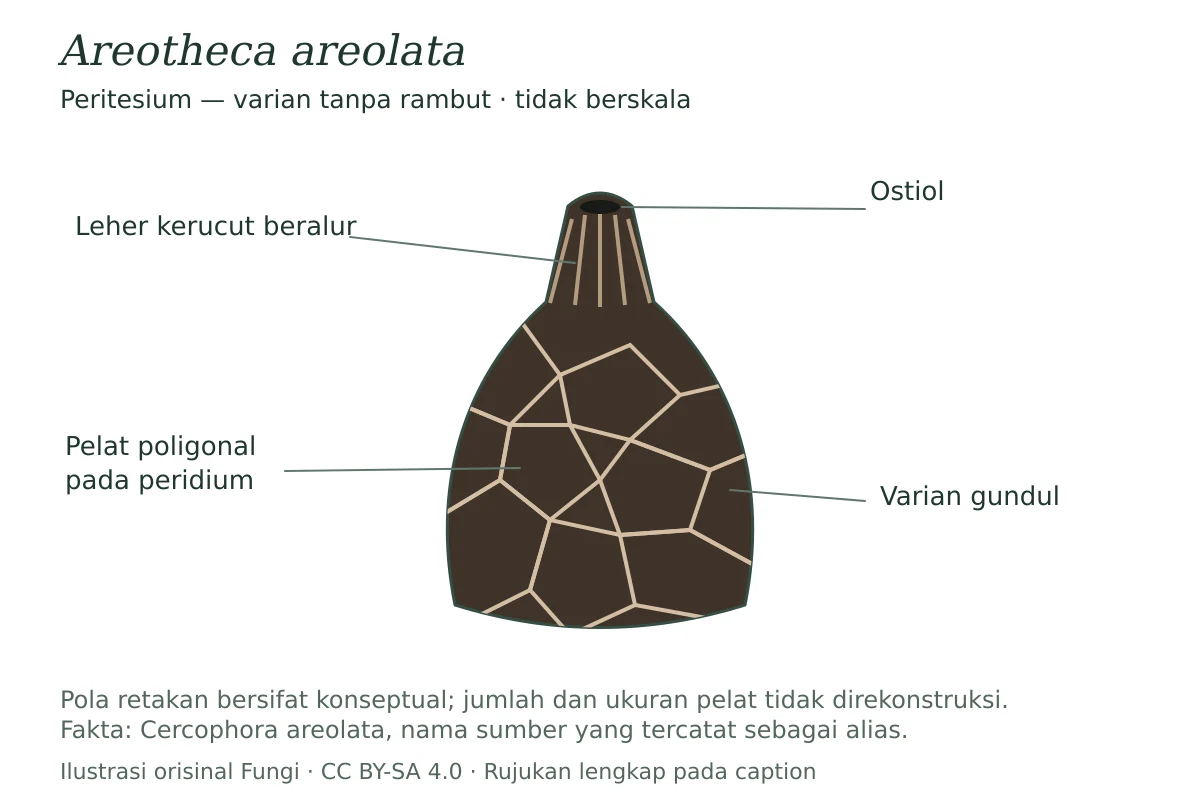
Cercophora areolata produces perithecia, also known as ascomata, which are fruiting bodies with necks. The perithecia of C. areolata are described as ovoid to conical, aggregated, non-stromatic, ostiolate (have small pores for the discharge of spores), and they have cone-shaped, ridged necks. Perithecia may be glabrous, enveloped with flexuous, brown, septate thick hairs or with short, hyaline (colourless), cylindrical, septate hairs. The perithecia are also characterized as superficial, in which the perithecia appear along the stalk, similar to the phenotype of the Ophiocordyceps species. The peridium, the protective covering of the perithecium, appears pseudoparenchymatous, meaning it resembles the parenchyma of plant tissue, but consists of fungal hyphae woven together. The peridium is further described as black-brown, opaque, carbonaceous, has 3 layers and is areolate. C. areolata has the most distinct areolate pattern, in which the peridium cracks into broad polygone plates along edges of hyaline cells. The peridial cells in the outer layer resemble the shape of a prism, are thick-walled, and are in a radial arrangement in each polygone. The peridial cells in the middle layer appear flattened. Perithecial contents are yellow, similar to Lasiosphaeria ovina and some Cercophora species. However, L. ovina and other Cercophora species present contrasting peridium, which are more membranaceous and ochraceous (ochre-coloured) to light brown. When specimens are desiccated, the yellow colour dissipates. The areolate peridium is similar to Lasiosphaeria dichroospora, Bombardia manihotis, Sordaria striata, Cercophora coprogena, C. californica, Zopfiella, and Cephalotheca.

Sebagian uraian ditampilkan dalam bahasa sumber; terjemahannya belum tersedia atau belum lolos pemeriksaan.

Rujukan: [1]

Pengukuran mengikuti objek, spesimen atau kultur, dan metode yang disebutkan sumber. Baca uraian asli untuk konteks lengkap.

02 / Kehidupan

Habitat dan peran ekologis

Cercophora areolata is a fimicolous or coprophilous fungus, a fungus that preferably colonizes the dung of herbivores. Animal dung serves as a nutrient-rich source for coprophilous fungi, providing high content of nitrogen and carbohydrate. C. areolata has been isolated from porcupine dung.

Sebagian uraian ditampilkan dalam bahasa sumber; terjemahannya belum tersedia atau belum lolos pemeriksaan.

Rujukan: [1]

Habitat atau konteks temuan
Informasi belum tersedia pada sumber rilis ini.
Substrat
Informasi belum tersedia pada sumber rilis ini.
Peran atau konteks
Belum dikategorikan pada rilis ini.
Temukan hubungan serupa
03 / Siklus hidup

Reproduksi

Cercophora areolata produces perithecia, also known as ascomata, which are fruiting bodies with necks. The perithecia of C. areolata are described as ovoid to conical, aggregated, non-stromatic, ostiolate (have small pores for the discharge of spores), and they have cone-shaped, ridged necks. Perithecia may be glabrous, enveloped with flexuous, brown, septate thick hairs or with short, hyaline (colourless), cylindrical, septate hairs. The perithecia are also characterized as superficial, in which the perithecia appear along the stalk, similar to the phenotype of the Ophiocordyceps species. As a member of the Ascomycota, C. areolata has asci, sacs that grow in the ascomata and house the developing sexual spores.

Sebagian uraian ditampilkan dalam bahasa sumber; terjemahannya belum tersedia atau belum lolos pemeriksaan.

Rujukan: [1]

Sinonim menurut acuan taksonomi rilis: Cercophora areolata
04 / Batas informasi

Catatan identitas dan cakupan

  • Nama diterima mengikuti Catalogue of Life Base2026-09-11; uraian mempertahankan konsep dan nama sumber aslinya.
  • Original geographic, specimen and life-cycle scope retained; source import awaits individual editorial review.
  • Impor dan terjemahan otomatis belum diperiksa editorial per profil. Struktur reproduktif yang disebutkan tidak membuktikan seluruh siklus hidup diketahui.
  • Pengukuran pada uraian mengikuti spesimen, kultur, dan metode sumber; angka tidak diperluas ke semua populasi.

Catatan distribusi dalam narasi mengikuti sumbernya. Dokumentasi spesimen atau foto mengikuti catatan sumber. Bukti wilayah Indonesia dan penilaian konservasi tidak disimpulkan dari gambar.

05 / Dokumentasi

Melihat dengan konteks

Skema konseptual peritesium Areotheca areolata, dicatat sebagai Cercophora areolata pada sumber: badan ovoid–kerucut tanpa rambut, leher kerucut beralur dengan ostiol, serta peridium gelap yang retak menjadi pelat poligonal. Tidak berskala; proporsi dan pola retakan disederhanakan, bukan peta sel atau salinan spesimen.

Jenis
Ilustrasi skematis
Kredit
Ilustrasi orisinal Fungi berdasarkan uraian: Wikipedia contributors — Cercophora areolata — Wikipedia (en). Sumber: CC BY-SA4.0. Perubahan: skema anatomi konseptual, label dan caption Indonesia; bukan penyalinan gambar sumber.
Sumber media
Buka entri sumber

Gambar menunjukkan objek menurut identifikasi sumber, bukan verifikasi independen spesimen oleh Fungi. Tidak ada skala baru yang ditambahkan.

06 / Rujukan

Sumber profil

  1. [1] Cercophora areolata — Wikipedia (en)Bagian sumber: Frozen revision 1336882146
    Tanggal penghimpunan sumber: 2026-10-12
    Media sumber: CC BY-SA4.0 · Wikipedia contributors
  2. [2] Catalogue of Life Base2026-09-11 — Areotheca areolataBagian sumber: ColDP NameUsage.tsv ID 9YNGD; accepted species; source 2073
    Tanggal penghimpunan sumber: 2026-10-12

Adaptasi teks: CC BY-SA 4.0. Wikipedia contributors — Cercophora areolata — Wikipedia (en)

Uraian asli dan riwayat sumber

Riwayat atau halaman sumber

Ringkasan sumber

Cercophora areolata produces perithecia, also known as ascomata, which are fruiting bodies with necks. The perithecia of C. areolata are described as ovoid to conical, aggregated, non-stromatic, ostiolate (have small pores for the discharge of spores), and they have cone-shaped, ridged necks. Perithecia may be glabrous, enveloped with flexuous, brown, septate thick hairs or with short, hyaline (colourless), cylindrical, septate hairs. The perithecia are also characterized as superficial, in which the perithecia appear along the stalk, similar to the phenotype of the Ophiocordyceps species.

Revisi sumber

Morfologi sumber

Cercophora areolata produces perithecia, also known as ascomata, which are fruiting bodies with necks. The perithecia of C. areolata are described as ovoid to conical, aggregated, non-stromatic, ostiolate (have small pores for the discharge of spores), and they have cone-shaped, ridged necks. Perithecia may be glabrous, enveloped with flexuous, brown, septate thick hairs or with short, hyaline (colourless), cylindrical, septate hairs. The perithecia are also characterized as superficial, in which the perithecia appear along the stalk, similar to the phenotype of the Ophiocordyceps species. The peridium, the protective covering of the perithecium, appears pseudoparenchymatous, meaning it resembles the parenchyma of plant tissue, but consists of fungal hyphae woven together. The peridium is further described as black-brown, opaque, carbonaceous, has 3 layers and is areolate. C. areolata has the most distinct areolate pattern, in which the peridium cracks into broad polygone plates along edges of hyaline cells. The peridial cells in the outer layer resemble the shape of a prism, are thick-walled, and are in a radial arrangement in each polygone. The peridial cells in the middle layer appear flattened. Perithecial contents are yellow, similar to Lasiosphaeria ovina and some Cercophora species. However, L. ovina and other Cercophora species present contrasting peridium, which are more membranaceous and ochraceous (ochre-coloured) to light brown. When specimens are desiccated, the yellow colour dissipates. The areolate peridium is similar to Lasiosphaeria dichroospora, Bombardia manihotis, Sordaria striata, Cercophora coprogena, C. californica, Zopfiella, and Cephalotheca.

Revisi sumber

Ekologi sumber

Cercophora areolata is a fimicolous or coprophilous fungus, a fungus that preferably colonizes the dung of herbivores. Animal dung serves as a nutrient-rich source for coprophilous fungi, providing high content of nitrogen and carbohydrate. C. areolata has been isolated from porcupine dung.

Revisi sumber

Struktur reproduksi sumber

Cercophora areolata produces perithecia, also known as ascomata, which are fruiting bodies with necks. The perithecia of C. areolata are described as ovoid to conical, aggregated, non-stromatic, ostiolate (have small pores for the discharge of spores), and they have cone-shaped, ridged necks. Perithecia may be glabrous, enveloped with flexuous, brown, septate thick hairs or with short, hyaline (colourless), cylindrical, septate hairs. The perithecia are also characterized as superficial, in which the perithecia appear along the stalk, similar to the phenotype of the Ophiocordyceps species. As a member of the Ascomycota, C. areolata has asci, sacs that grow in the ascomata and house the developing sexual spores.

Revisi sumber

Rujukan halaman ini

Fungi. Areotheca areolata. Rilis data fungi-2026-10-12-expansion-2. https://fungi-atlas.mgadib.chatgpt.site/jamur/areotheca-areolata/.

Status: impor sumber; pemeriksaan editorial per profil belum selesai. Untuk klaim biologis, gunakan rujukan pada bagian terkait dan periksa konteks sumber aslinya.