Ciri dan struktur
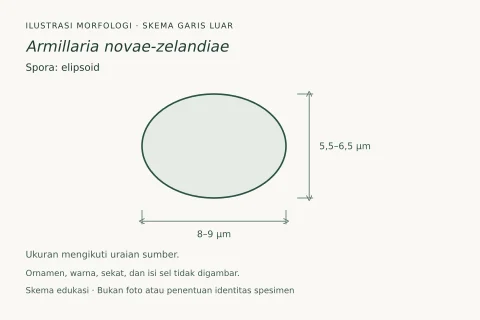
The fruit bodies have caps that are initially convex before flattening in age, and reach diameters between 4 and 7 cm. The cap has a smooth surface that becomes sticky when wet. Young specimens can have short, dark hairs on the center. The cap color is reddish to brownish, becoming paler towards the edge, and frequently has darker, irregularly shaped bruise spots. The cap margin appears grooved or furrowed due to the thin flesh (measuring 0.5–1 mm thick) and the gills underneath. The gills have an adnate to somewhat decurrent attachment to the stipe. They are somewhat distantly spaced, 0.75–1 mm wide, and initially white to cream before darkening to pinkish-tan in maturity. The stipe is brownish, darker towards the bottom, and measures 8 – 10 cm long by 2–3 mm thick, with a broader base measuring 4–5 mm. It has a ring, and whitish patches of cottony mycelium on its surface below the ring. The ring develops from a dense, white and cottony partial veil that becomes ragged as the cap grows, and sometimes persists as a temporary cortina. Rhizomorphs, if present, are black, branched, and 1–2 mm thick. The spore print is white. Spores are smooth, hyaline (translucent), inamyloid, and have an ovoid to somewhat more or less spherical shape. They typically measure in the range 8–10 by 5.5–6.5 μm. The basidia are club-shaped, four-spored, and 25–35 by 5.5–6 μm, and have a clamp at their bases. Additional basidia may arise from the basal clamp, a branching pattern that distinguishes this species from other Armillaria. This feature becomes less visually prominent as the hymenium matures and neighboring basidia expand and become crowded.
Habitat dan peran ekologis
The fruit bodies of Armillaria nabsnona grow in groups, but not clustered together at the base. They are ditemukan pada pohon-pohon kayu keras (terutama Alnus) di daerah pesisir. Although it buah yang paling umum terjadi pada musim gugur, telah tercatat berbuah di musim semi di Oregon Jarak jamur ini awalnya digambarkan mencakup sekitar Pasifik Northwest region Amerika Utara, termasuk negara bagian AS Washington, Oregon, California, Idaho, Alaska, dan Canadian province British Columbia. Pada 2008 tercatat di Hawaii; pada 2009, dilaporkan dari Hokkaido Island in di Jepang utara. Japanese researchers telah melaporkan hubungan simbiosis dengan orkid Gastrodia elata.
- Habitat atau konteks temuan
- Informasi belum tersedia pada sumber rilis ini.
- Substrat
- Informasi belum tersedia pada sumber rilis ini.
- Peran atau konteks
- Belum dikategorikan pada rilis ini.
Reproduksi
The spore print is white. Spores are smooth, hyaline (translucent), inamyloid, and have an ovoid to somewhat more or less spherical shape. They typically measure in the range 8–10 by 5.5–6.5 μm. The basidia are club-shaped, four-spored, and 25–35 by 5.5–6 μm, and have a clamp at their bases. Additional basidia may arise from the basal clamp, a branching pattern that distinguishes this species from other Armillaria. This feature becomes less visually prominent as the hymenium matures and neighboring basidia expand and become crowded. The mycelium of the fungus is bioluminescent.
Catatan identitas dan cakupan
- Nama diterima mengikuti Catalogue of Life Base2026-09-11; uraian mempertahankan konsep dan nama sumber aslinya.
- Original geographic, specimen and life-cycle scope retained; source import awaits individual editorial review.
- Impor dan terjemahan otomatis belum diperiksa editorial per profil. Struktur reproduktif yang disebutkan tidak membuktikan seluruh siklus hidup diketahui.
- Pengukuran pada uraian mengikuti spesimen, kultur, dan metode sumber; angka tidak diperluas ke semua populasi.
Catatan distribusi dalam narasi mengikuti sumbernya. Dokumentasi spesimen atau foto mengikuti catatan sumber. Bukti wilayah Indonesia dan penilaian konservasi tidak disimpulkan dari gambar.
Melihat dengan konteks
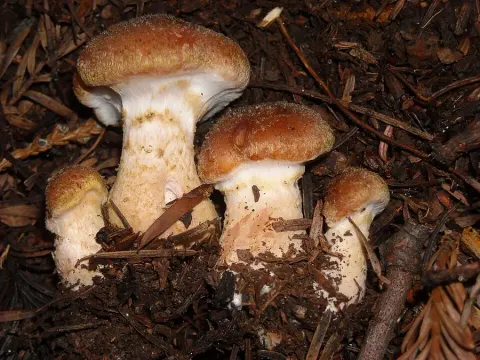
Dokumentasi Armillaria nabsnona menurut asosiasi foto pada record takson iNaturalist. Kredit: Alan Rockefeller. Identitas mengikuti sumber; bukan penentuan spesimen independen.
- Jenis
- Fotografi
- Kredit
- (c) Alan Rockefeller, some rights reserved (CC BY), uploaded by Alan Rockefeller
- Lisensi
- CC BY 4.0
- Sumber media
- Buka entri sumber
Dokumentasi tambahan
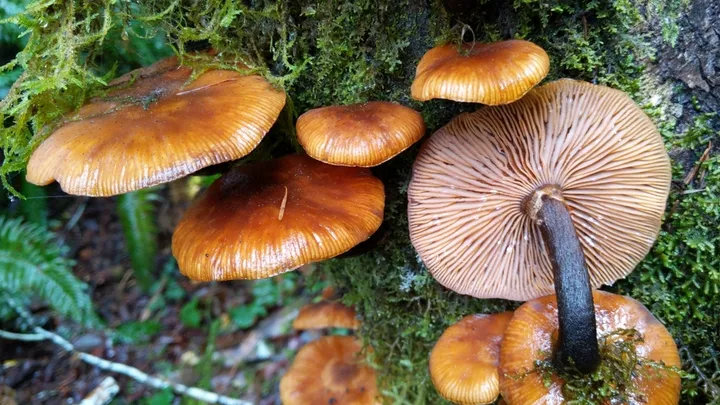
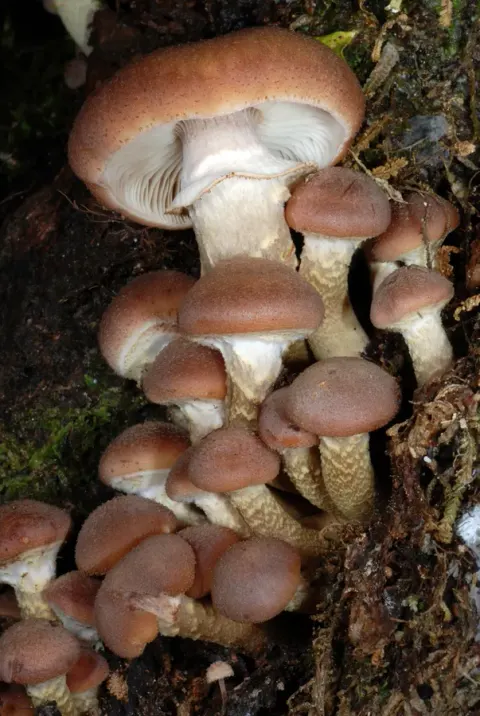
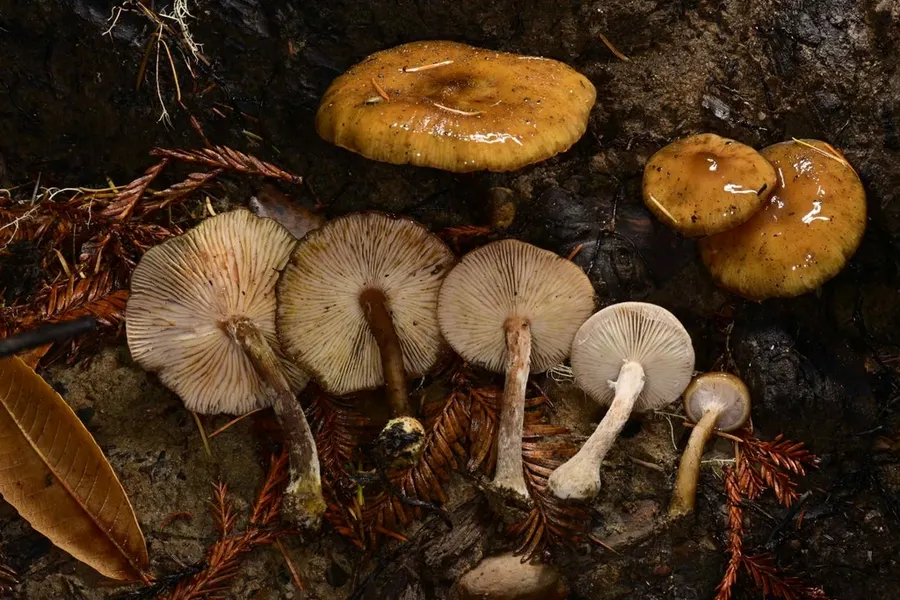
Foto yang diasosiasikan dengan Armillaria nabsnona pada iNaturalist. Identifikasi mengikuti sumber; bukan penentuan spesimen independen.
Kredit dan penggunaan
(c) Alan Rockefeller, some rights reserved (CC BY), uploaded by Alan Rockefeller
Ukuran dan format gambar disesuaikan tanpa pemotongan, retus, atau penambahan skala. Lisensi sumber dipertahankan.
Sumber profil
- [1] Armillaria nabsnona — Wikipedia (en)
- [2] Catalogue of Life Base2026-09-11 — Armillaria nabsnona
- [3] Dokumentasi visual — Armillaria nabsnona
- [4] Dokumentasi visual — Armillaria nabsnona
Rujukan halaman ini
Fungi. Armillaria nabsnona. Rilis data fungi-2026-10-12-expansion-2. https://fungi-atlas.mgadib.chatgpt.site/jamur/armillaria-nabsnona/.
Status: impor sumber; pemeriksaan editorial per profil belum selesai. Untuk klaim biologis, gunakan rujukan pada bagian terkait dan periksa konteks sumber aslinya.