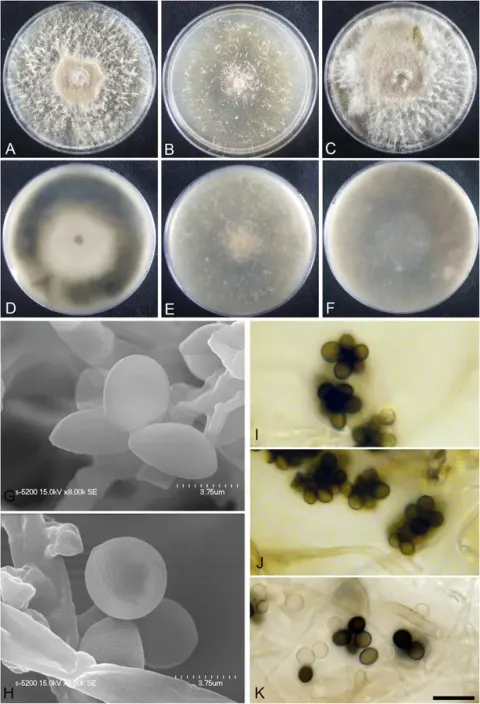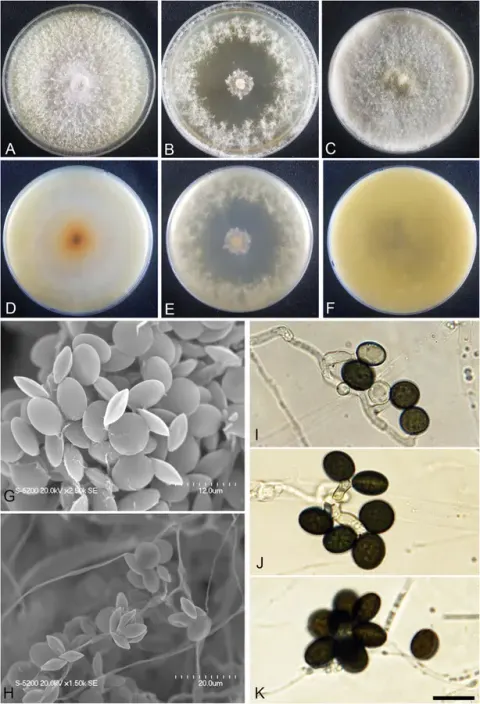
Ciri dan struktur
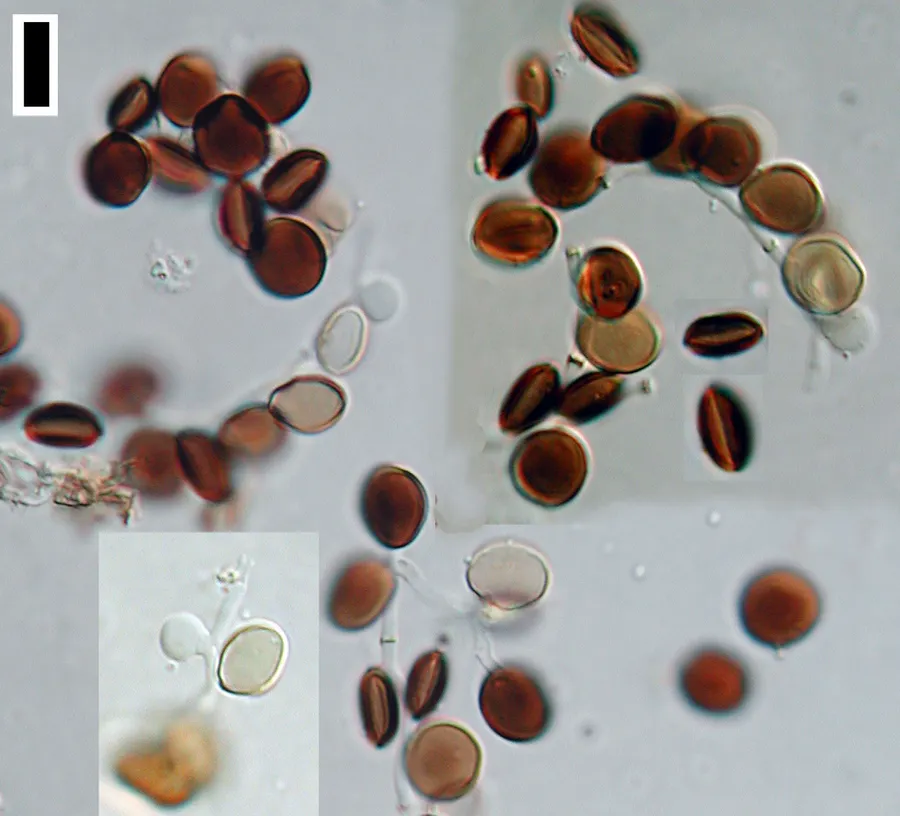
Asexual morph: Mycelium consisting on smooth hyaline, branched, septate hyphae measuring 1.5–5 µm in diameter. Colonies are small, rounded or ovoid, dark brown, 50–400 µm in diameter. Conidiophore mother cells subspherical, lageniform or barrel-shaped, 4–5 × 3–5 µm (n = 30). Conidiophores cylindrical, straight or flexuous, septate, hyaline excepting for the thick brown or dark brown transversal septa, 20–140 × 3–4 µm (n = 30). Conidiogenous cells cylindrical, occurring between the conidiophore septa, 0.9–1.8 µm. Conidia dark brown, smooth, polygonal with rounded angles to hemispherical, measuring (8–)9–11(–12) × 8–9 µm, with one or two concentric pale rings. Sterile cells spherical, triangular or polygonal, with refractive bodies inside, paler than conidia, 6–9 µm in diameter. Culture characteristics colonies flat spreading on MEA 2%, with moderate aerial mycelium, reverse whitish, no esporulate on culture.
Habitat dan peran ekologis
Arthrinium puccinioides is the only species of Arthrinium with polygonal conida. It shows a genetic relationship with other species found in Carex sp. hosts, such as A. caricicola, A. curvatum var. minus, A. japonicum or A. sporophleum. The present sample fits the original description of A. puccinioides by Kunze and Schmidt (1823) as well as those by Ellis et al. (1951), Ellis (1965), and Scheuer (1996). Germany: Berlin: Köpenick, Stellingdamm, on dead leaves of Carex arenaria, 26 April 2017, R. Jarling (MA-Fungi 91746, AP26418).
- Habitat atau konteks temuan
- Informasi belum tersedia pada sumber rilis ini.
- Substrat
- Informasi belum tersedia pada sumber rilis ini.
- Peran atau konteks
- Belum dikategorikan pada rilis ini.
Reproduksi
Asexual morph: Mycelium consisting on smooth hyaline, branched, septate hyphae measuring 1.5–5 µm in diameter. Colonies are small, rounded or ovoid, dark brown, 50–400 µm in diameter. Conidiophore mother cells subspherical, lageniform or barrel-shaped, 4–5 × 3–5 µm (n = 30). Conidiophores cylindrical, straight or flexuous, septate, hyaline excepting for the thick brown or dark brown transversal septa, 20–140 × 3–4 µm (n = 30). Conidiogenous cells cylindrical, occurring between the conidiophore septa, 0.9–1.8 µm. Conidia dark brown, smooth, polygonal with rounded angles to hemispherical, measuring (8–)9–11(–12) × 8–9 µm, with one or two concentric pale rings. Sterile cells spherical, triangular or polygonal, with refractive bodies inside, paler than conidia, 6–9 µm in diameter.
Catatan identitas dan cakupan
- Nama diterima mengikuti Catalogue of Life Base2026-09-11; uraian mempertahankan konsep dan nama sumber aslinya.
- Preserve original treatment localities, hosts and substrate scope. Materials examined describe documented specimens, not the full global range.
- Impor dan terjemahan otomatis belum diperiksa editorial per profil. Struktur reproduktif yang disebutkan tidak membuktikan seluruh siklus hidup diketahui.
- Pengukuran pada uraian mengikuti spesimen, kultur, dan metode sumber; angka tidak diperluas ke semua populasi.
Catatan distribusi dalam narasi mengikuti sumbernya. Dokumentasi spesimen atau foto mengikuti catatan sumber. Bukti wilayah Indonesia dan penilaian konservasi tidak disimpulkan dari gambar.
Melihat dengan konteks
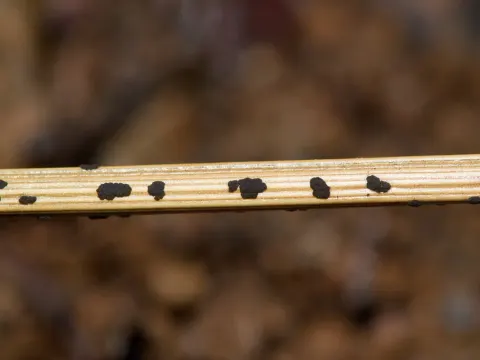
Dokumentasi Arthrinium puccinioides menurut asosiasi foto pada record takson iNaturalist. Kredit: Jerry Cooper. Identitas mengikuti sumber; bukan penentuan spesimen independen.
- Jenis
- Fotografi
- Kredit
- (c) Jerry Cooper, some rights reserved (CC BY), uploaded by Jerry Cooper
- Lisensi
- CC BY 4.0
- Sumber media
- Buka entri sumber
Dokumentasi tambahan
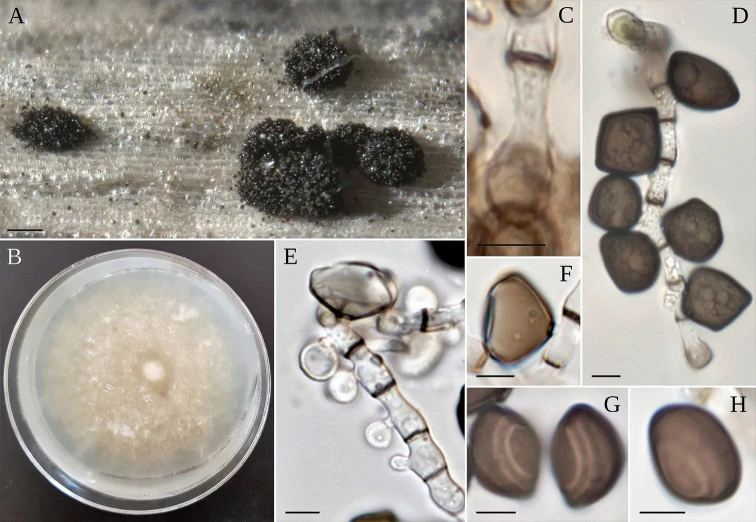
A. puccinioides A colony on host B colony on MEA C conidiophore mother cell D–F conidiophore bearing conidia G–H conidia in side view. Scale bars: 100 µm (A); 5 µm (C–H).
Kredit dan penggunaan
Ángel Pintos, Pablo Alvarado, Juan Planas, Rene Jarling
Ukuran dan format gambar disesuaikan tanpa pemotongan, retus, atau penambahan skala. Lisensi sumber dipertahankan.
Sumber profil
- [1] Six new species of Arthrinium from Europe and notes about A. caricicola and other species found in Carex spp. hosts — Arthrinium puccinioides
- [2] Catalogue of Life Base2026-09-11 — Arthrinium puccinioides
- [3] Dokumentasi visual — Arthrinium puccinioides
- [4] Dokumentasi visual — Arthrinium puccinioides
Rujukan halaman ini
Fungi. Arthrinium puccinioides. Rilis data fungi-2026-10-12-expansion-2. https://fungi-atlas.mgadib.chatgpt.site/jamur/arthrinium-puccinioides/.
Status: impor sumber; pemeriksaan editorial per profil belum selesai. Untuk klaim biologis, gunakan rujukan pada bagian terkait dan periksa konteks sumber aslinya.