Ciri dan struktur
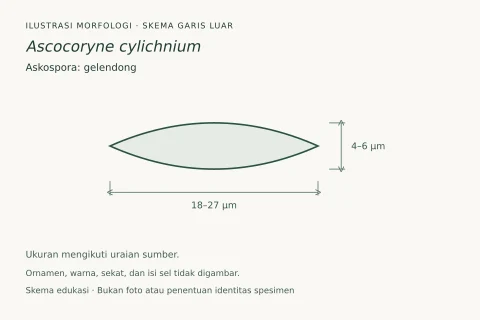
This fungus is characterized by a fruiting body (technically an apothecium) with a pinkish-purple color and more or less gelatinous consistency. The apothecia, typically 0.5 to 1.5 cm in diameter, start with a roughly spherical shape, then eventually flatten out to become shallowly cup-shaped with a wavy edge and smooth upper surface. The lower surface may be covered with small particles (granular), and the apothecia are either attached directly to the growing surface (sessile), or have a rudimentary stem. The apothecia are accompanied by a conidial form, where non-sexual spores are generated. The conidial form consists of sporodochia, a cushion-like asexual fruiting body mass consisting of short conidiophores (specialized stalks that bear conidia). The sporodochia are similar in color and consistency to the apothecia but very variable in shape, typically club-, spoon-, or tongue-shaped, and bearing minute, cylindrical, straight or curved conidia. As the fungus matures and the apothecia enlarge and press against each other, the apothecia coalesce to form a gelatinous, irregular mass. The flesh, similar to the appearance of the fungus, is pinkish-purple and gelatinous. The odor and taste of A. sarcoides are not distinctive. Ascocoryne sarcoides is not considered edible. The spores are translucent (hyaline), smooth, have an ellipsoid shape, with dimensions of 12–16 by 3–5 μm. Spores contain one or two oil droplets. The spore print is white. The imperfect (conidial) form of the fungus produces smooth, hyaline spores that are 3–3.5 by 1–2 μm. The asci (sexual spore-bearing cells) have a cylindrical shape, with dimensions of 115–125 by 8–10 μm.
Habitat dan peran ekologis
This species has a broad distribution in forested areas of North America and Europe. A saprobic fungus, it derives nutrients from decaying organic matter, and as such is usually found growing on the stumps and logs of fallen deciduous trees. However, it is also found on a variety of living trees as well. For example, in Europe it has been found on the stems of living spruce (Picea abies) in Finland, China, Cuba, Iceland, Korea, and Taiwan. In Hawaii, it grows on trunks of fallen Cibotium and Aleurites trees. A. sarcoides occurs most frequently in late summer and autumn.
- Habitat atau konteks temuan
- Informasi belum tersedia pada sumber rilis ini.
- Substrat
- Informasi belum tersedia pada sumber rilis ini.
- Peran atau konteks
- Pengurai
Reproduksi
This fungus is characterized by a fruiting body (technically an apothecium) with a pinkish-purple color and more or less gelatinous consistency. The apothecia, typically 0.5 to 1.5 cm in diameter, start with a roughly spherical shape, then eventually flatten out to become shallowly cup-shaped with a wavy edge and smooth upper surface. The lower surface may be covered with small particles (granular), and the apothecia are either attached directly to the growing surface (sessile), or have a rudimentary stem. The apothecia are accompanied by a conidial form, where non-sexual spores are generated. The conidial form consists of sporodochia, a cushion-like asexual fruiting body mass consisting of short conidiophores (specialized stalks that bear conidia).
Catatan identitas dan cakupan
- Nama diterima mengikuti Catalogue of Life Base2026-09-11; uraian mempertahankan konsep dan nama sumber aslinya.
- Original geographic, specimen and life-cycle scope retained; source import awaits individual editorial review.
- Impor dan terjemahan otomatis belum diperiksa editorial per profil. Struktur reproduktif yang disebutkan tidak membuktikan seluruh siklus hidup diketahui.
- Pengukuran pada uraian mengikuti spesimen, kultur, dan metode sumber; angka tidak diperluas ke semua populasi.
Catatan distribusi dalam narasi mengikuti sumbernya. Dokumentasi spesimen atau foto mengikuti catatan sumber. Bukti wilayah Indonesia dan penilaian konservasi tidak disimpulkan dari gambar.
Melihat dengan konteks
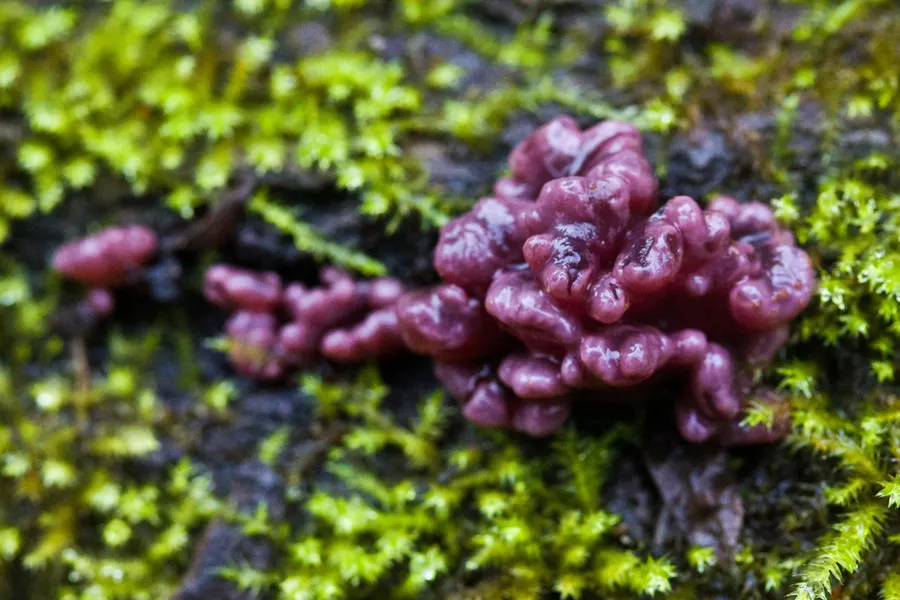
Dokumentasi Ascocoryne sarcoides menurut asosiasi foto pada record takson iNaturalist. Kredit: Ken-ichi Ueda. Identitas mengikuti sumber; bukan penentuan spesimen independen.
- Jenis
- Fotografi
- Kredit
- (c) Ken-ichi Ueda, some rights reserved (CC BY)
- Lisensi
- CC BY 4.0
- Sumber media
- Buka entri sumber
Dokumentasi tambahan
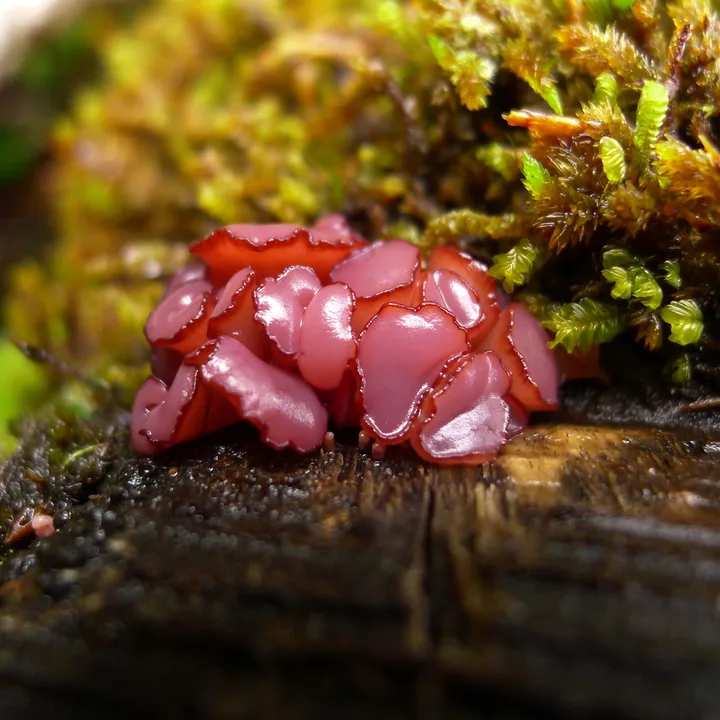
Foto yang diasosiasikan dengan Ascocoryne sarcoides pada iNaturalist. Identifikasi mengikuti sumber; bukan penentuan spesimen independen.
Kredit dan penggunaan
(c) Sarah Richardson, some rights reserved (CC BY), uploaded by Sarah Richardson
Ukuran dan format gambar disesuaikan tanpa pemotongan, retus, atau penambahan skala. Lisensi sumber dipertahankan.
Sumber profil
- [1] Ascocoryne sarcoides — Wikipedia (en)
- [2] Catalogue of Life Base2026-09-11 — Ascocoryne sarcoides
- [3] Dokumentasi visual — Ascocoryne sarcoides
- [4] Dokumentasi visual — Ascocoryne sarcoides
Rujukan halaman ini
Fungi. Ascocoryne sarcoides. Rilis data fungi-2026-10-12-expansion-2. https://fungi-atlas.mgadib.chatgpt.site/jamur/ascocoryne-sarcoides/.
Status: impor sumber; pemeriksaan editorial per profil belum selesai. Untuk klaim biologis, gunakan rujukan pada bagian terkait dan periksa konteks sumber aslinya.