01 / Morfologi

Ciri dan struktur

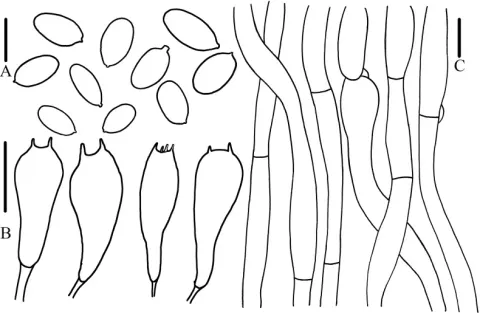
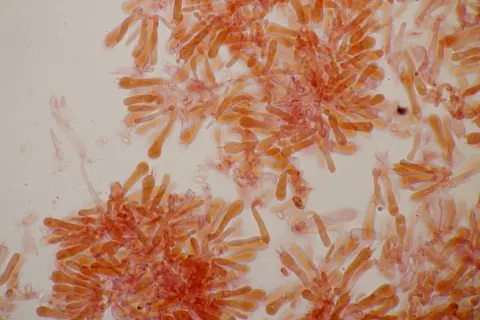
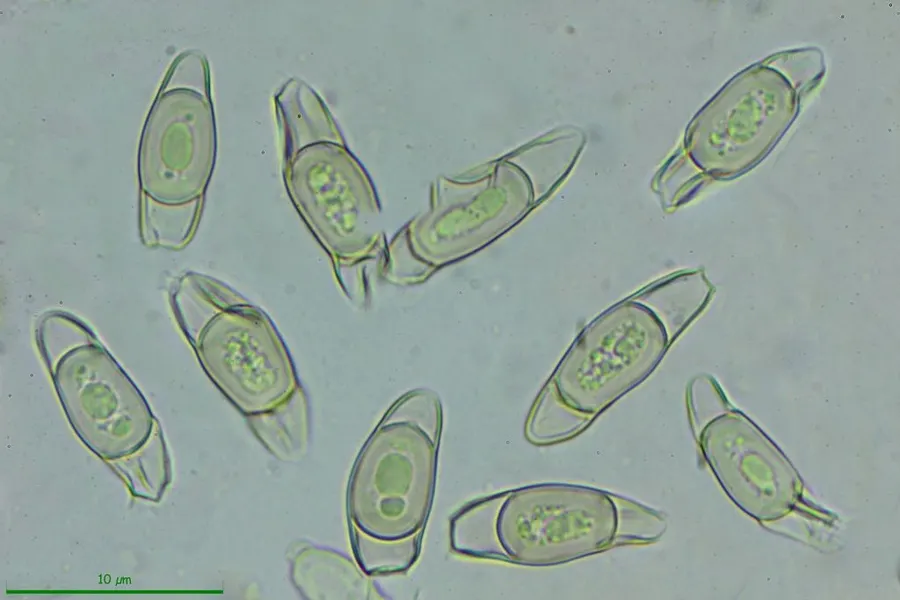
The cap is initially round to convex before flattening, reaching a diameter of 8 – 20 mm. The caps of young fruit bodies have a smooth surface that is covered with smooth fibrils. The cap color is white to pale grey, changing to grayish brown in maturity. The cap margin is initially rolled inward. The flesh is thin, with a whitish to brownish color; it has an unpleasant odor and a farinaceous (mealy) taste. The thick, widely spaced gills have an attached to somewhat decurrent attachment to the stem. They are whitish to grayish brown, often poorly developed, sometimes forked near the cap margin, and have edges covered with fine granules. The stipe measures 1 – 3 cm long by 2 – 3 mm thick. Its surface has fine white fibers on a grayish brown background. The base of the cap sometimes is finely velvety and white. Initially solid, the stipe becomes hollow in age. Asterophora parasitica produces a white spore print. The edibility of the mushrooms is unknown. Spores are elliptical, smooth, hyaline (translucent), and measure 5–6 by 3–4 μm. Chlamydospores produced by the gills are spindle-shaped to oval, usually thick-walled, and measure 12–17 by 9–10 μm.

Sebagian uraian ditampilkan dalam bahasa sumber; terjemahannya belum tersedia atau belum lolos pemeriksaan.

Rujukan: [1]

Pengukuran mengikuti objek, spesimen atau kultur, dan metode yang disebutkan sumber. Baca uraian asli untuk konteks lengkap.

02 / Kehidupan

Habitat dan peran ekologis

Fruit bodies tumbuh dalam kelompok atau kelompok pada jamur yang membusuk dari Lactarius and Russula species, terutama yang berada dalam kelompok Russula nigricans. It has been reported from Europe and North America. Although not jarang terjadi di Eropa Selatan dan Tengah, namun jarang terjadi di Skandinavia, di mana tidak tumbuh di luar batas utara spesies Quercus (oak), yang menunjukkan bahwa sifat tanah di mana jamur tuan rumah tumbuh dapat mempengaruhi kesesuaian sebagai substrat untuk A. parasitica. Dibutuhkan waktu sekitar tiga minggu untuk A. parasitica menyelesaikan perkembangannya pada agaric. Jamur Asterotremella albida telah diisolasi dari jaringan gill Asterophora parasitica. Bumbu, yang juga ditemukan pada Asterophora lycoperdoides, adalah tremelloid, yang berarti memiliki parenthesomes berbentuk cangkir.

Sebagian uraian ditampilkan dalam bahasa sumber; terjemahannya belum tersedia atau belum lolos pemeriksaan.

Rujukan: [1]

Habitat atau konteks temuan
Informasi belum tersedia pada sumber rilis ini.
Substrat
Informasi belum tersedia pada sumber rilis ini.
Peran atau konteks
Belum dikategorikan pada rilis ini.
Temukan hubungan serupa
03 / Siklus hidup

Reproduksi

The cap is initially round to convex before flattening, reaching a diameter of 8 – 20 mm. The caps of young fruit bodies have a smooth surface that is covered with smooth fibrils. The cap color is white to pale grey, changing to grayish brown in maturity. The cap margin is initially rolled inward. The flesh is thin, with a whitish to brownish color; it has an unpleasant odor and a farinaceous (mealy) taste. The thick, widely spaced gills have an attached to somewhat decurrent attachment to the stem. They are whitish to grayish brown, often poorly developed, sometimes forked near the cap margin, and have edges covered with fine granules. The stipe measures 1 – 3 cm long by 2 – 3 mm thick. Its surface has fine white fibers on a grayish brown background.

Sebagian uraian ditampilkan dalam bahasa sumber; terjemahannya belum tersedia atau belum lolos pemeriksaan.

Rujukan: [1]

Sinonim menurut acuan taksonomi rilis: Agaricus parasiticus; Agaricus parasiticus var. agaricola; Agaricus parasiticus var. pallescens; Agaricus parasiticus var. pilipes; Agaricus pilipes; Agaricus umbratus; Fungus pilipes; Gymnopus parasiticus; Gymnopus pilipes; Hypolyssus baryanus; Hypomyces baryanus; Merulius parasiticus; Nyctalis parasitica; Ugola baryana
04 / Batas informasi

Catatan identitas dan cakupan

  • Nama diterima mengikuti Catalogue of Life Base2026-09-11; uraian mempertahankan konsep dan nama sumber aslinya.
  • Original geographic, specimen and life-cycle scope retained; source import awaits individual editorial review.
  • Impor dan terjemahan otomatis belum diperiksa editorial per profil. Struktur reproduktif yang disebutkan tidak membuktikan seluruh siklus hidup diketahui.
  • Pengukuran pada uraian mengikuti spesimen, kultur, dan metode sumber; angka tidak diperluas ke semua populasi.

Catatan distribusi dalam narasi mengikuti sumbernya. Dokumentasi spesimen atau foto mengikuti catatan sumber. Bukti wilayah Indonesia dan penilaian konservasi tidak disimpulkan dari gambar.

05 / Dokumentasi

Melihat dengan konteks

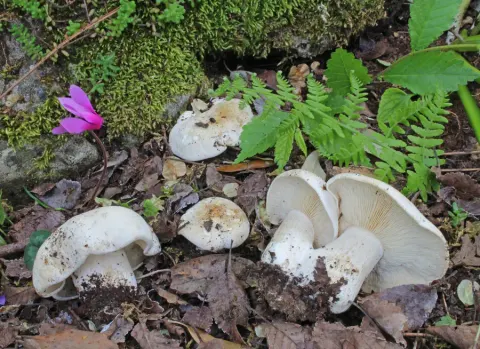
Dokumentasi Asterophora parasitica menurut asosiasi foto pada record takson iNaturalist. Kredit: Alan Rockefeller. Identitas mengikuti sumber; bukan penentuan spesimen independen.

Jenis
Fotografi
Kredit
(c) Alan Rockefeller, some rights reserved (CC BY), uploaded by Alan Rockefeller
Lisensi
CC BY 4.0
Sumber media
Buka entri sumber

Gambar menunjukkan objek menurut identifikasi sumber, bukan verifikasi independen spesimen oleh Fungi. Tidak ada skala baru yang ditambahkan.

06 / Rujukan

Sumber profil

  1. [1] Asterophora parasitica — Wikipedia (en)Bagian sumber: Frozen revision 1364398807
    Tanggal penghimpunan sumber: 2026-10-12
    Teks sumber: CC BY-SA4.0 · Wikipedia contributors
  2. [2] Catalogue of Life Base2026-09-11 — Asterophora parasiticaBagian sumber: ColDP NameUsage.tsv ID 5W5ZW; accepted species; source 2073
    Tanggal penghimpunan sumber: 2026-10-12
  3. [3] Dokumentasi visual — Asterophora parasiticaBagian sumber: Individual media record; identification follows the source, not independent determination
    Tanggal penghimpunan sumber: 2026-10-12
    Media sumber: CC BY 4.0 · (c) Alan Rockefeller, some rights reserved (CC BY), uploaded by Alan Rockefeller

Adaptasi teks: CC BY-SA 4.0. Wikipedia contributors — Asterophora parasitica — Wikipedia (en)

Uraian asli dan riwayat sumber

Riwayat atau halaman sumber

Ringkasan sumber

Asterophora parasitica, commonly known as the parasitic Asterophora or the Russula parasite, is a species of fungus that grows as a parasite on other mushrooms. The fruit bodies are small, with silky fibers on the surface of grayish caps and thick, widely spaced gills. Mushrooms fruit in clusters on the decaying remains of Lactarius and Russula species, particularly those in the Russula nigricans group. Found primarily in temperate zones of Europe and North America, the fungus is widespread but not common.

Revisi sumber

Morfologi sumber

The cap is initially round to convex before flattening, reaching a diameter of 8 – 20 mm. The caps of young fruit bodies have a smooth surface that is covered with smooth fibrils. The cap color is white to pale grey, changing to grayish brown in maturity. The cap margin is initially rolled inward. The flesh is thin, with a whitish to brownish color; it has an unpleasant odor and a farinaceous (mealy) taste. The thick, widely spaced gills have an attached to somewhat decurrent attachment to the stem. They are whitish to grayish brown, often poorly developed, sometimes forked near the cap margin, and have edges covered with fine granules. The stipe measures 1 – 3 cm long by 2 – 3 mm thick. Its surface has fine white fibers on a grayish brown background. The base of the cap sometimes is finely velvety and white. Initially solid, the stipe becomes hollow in age. Asterophora parasitica produces a white spore print. The edibility of the mushrooms is unknown. Spores are elliptical, smooth, hyaline (translucent), and measure 5–6 by 3–4 μm. Chlamydospores produced by the gills are spindle-shaped to oval, usually thick-walled, and measure 12–17 by 9–10 μm.

Revisi sumber

Ekologi sumber

Fruit bodies grow in groups or clusters on the decomposing mushrooms of Lactarius and Russula species, particularly those in the Russula nigricans group. It has been reported from Europe and North America. Although not uncommon in southern and central Europe, it is rare in Scandinavia, where it does not grow outside the northern limit of Quercus (oak) species, suggesting that character of the soil in which the host mushrooms grow can affect the suitability as a substrate for A. parasitica. It takes about three weeks for A. parasitica to complete its development on an agaric. The yeast Asterotremella albida has been isolated from the gill tissue of Asterophora parasitica. The yeast, which is also found on Asterophora lycoperdoides, is tremelloid, meaning it has cup-shaped parenthesomes.

Revisi sumber

Struktur reproduksi sumber

The cap is initially round to convex before flattening, reaching a diameter of 8 – 20 mm. The caps of young fruit bodies have a smooth surface that is covered with smooth fibrils. The cap color is white to pale grey, changing to grayish brown in maturity. The cap margin is initially rolled inward. The flesh is thin, with a whitish to brownish color; it has an unpleasant odor and a farinaceous (mealy) taste. The thick, widely spaced gills have an attached to somewhat decurrent attachment to the stem. They are whitish to grayish brown, often poorly developed, sometimes forked near the cap margin, and have edges covered with fine granules. The stipe measures 1 – 3 cm long by 2 – 3 mm thick. Its surface has fine white fibers on a grayish brown background.

Revisi sumber

Rujukan halaman ini

Fungi. Asterophora parasitica. Rilis data fungi-2026-10-12-expansion-2. https://fungi-atlas.mgadib.chatgpt.site/jamur/asterophora-parasitica/.

Status: impor sumber; pemeriksaan editorial per profil belum selesai. Untuk klaim biologis, gunakan rujukan pada bagian terkait dan periksa konteks sumber aslinya.