Ciri dan struktur
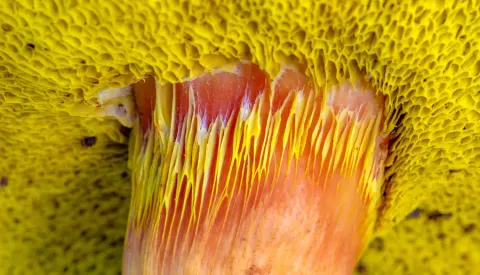
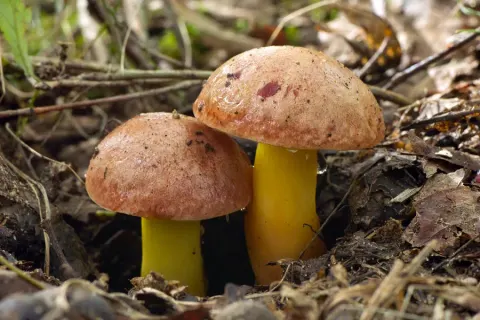
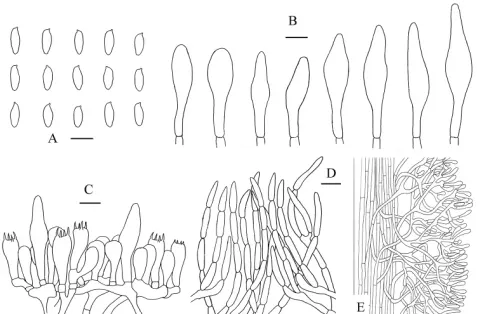
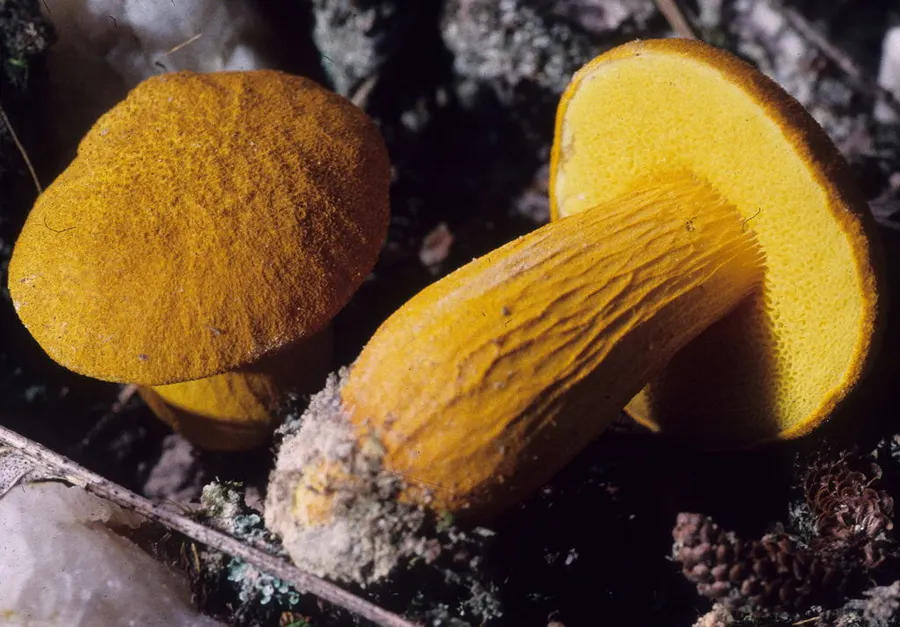
The cap is initially convex before becoming broadly convex to flattened in age, and attains a diameter of 3 – 9.5 cm. The cap surface is dry, and, in young individuals, has a powdery coating that will stain hands yellow if handled. Later, the cap becomes tomentose (hairy), and sometimes develops small cracks. The cap color is bright orange-yellow, sometimes mixed with olive tints. The flesh is white to cream, and does not bruise blue when injured or exposed to air by cutting. Its odor is not distinctive, and its taste either not distinctive or acidic. The pore surface is initially yellow to yellow orange, becoming olive-yellow to greenish yellow in age, sometimes developing bright crimson to crimson-orange tints. The tube attachment to the stem is adnate to subdecurrent (running slightly down the length of the stem) and often depressed near the stem at maturity. The pores are angular, radially elongated near the stem, and typically more than 1 mm wide in maturity. Tubes are up to 1.5 cm deep. The stem is 5 – 9 cm long, 5 – 12 mm thick, and either nearly equal in width throughout or slightly enlarged in either end. The stem surface is usually reticulate at least on the upper portion of mature specimens, although this characteristic is less pronounced or absent in young individuals. The mycelium at the base of the stem is white. The stem has neither a partial veil nor an annulus. Aureoboletus auriflammeus produces an olive-brown to ochre-brown spore print. It is not known if the fruit bodies are edible. Spores are roughly elliptical to somewhat spindle-shaped, smooth, nearly hyaline (translucent), and measure 8–12 by 3–5 μm.
Habitat dan peran ekologis
The fruit bodies of Aureoboletus auriflammeus grow singly, scattered, or in groups on the ground in woods in a mycorrhizal association with oaks. The fruiting season is between July and November. An occasional species, its range covers New York south to Florida and west to Ohio and Tennessee.
- Habitat atau konteks temuan
- Informasi belum tersedia pada sumber rilis ini.
- Substrat
- tanah
- Peran atau konteks
- Mitra tumbuhan
Reproduksi
The cap is initially convex before becoming broadly convex to flattened in age, and attains a diameter of 3 – 9.5 cm. The cap surface is dry, and, in young individuals, has a powdery coating that will stain hands yellow if handled. Later, the cap becomes tomentose (hairy), and sometimes develops small cracks. The cap color is bright orange-yellow, sometimes mixed with olive tints. The flesh is white to cream, and does not bruise blue when injured or exposed to air by cutting. Its odor is not distinctive, and its taste either not distinctive or acidic. The pore surface is initially yellow to yellow orange, becoming olive-yellow to greenish yellow in age, sometimes developing bright crimson to crimson-orange tints.
Catatan identitas dan cakupan
- Nama diterima mengikuti Catalogue of Life Base2026-09-11; uraian mempertahankan konsep dan nama sumber aslinya.
- Original geographic, specimen and life-cycle scope retained; source import awaits individual editorial review.
- Impor dan terjemahan otomatis belum diperiksa editorial per profil. Struktur reproduktif yang disebutkan tidak membuktikan seluruh siklus hidup diketahui.
- Pengukuran pada uraian mengikuti spesimen, kultur, dan metode sumber; angka tidak diperluas ke semua populasi.
Catatan distribusi dalam narasi mengikuti sumbernya. Dokumentasi spesimen atau foto mengikuti catatan sumber. Bukti wilayah Indonesia dan penilaian konservasi tidak disimpulkan dari gambar.
Melihat dengan konteks
Dokumentasi Aureoboletus auriflammeus menurut asosiasi foto pada record takson iNaturalist. Kredit: mycowalt. Identitas mengikuti sumber; bukan penentuan spesimen independen.
- Jenis
- Fotografi
- Kredit
- (c) mycowalt, some rights reserved (CC BY-SA), uploaded by mycowalt
- Lisensi
- CC BY-SA 4.0
- Sumber media
- Buka entri sumber
Dokumentasi tambahan
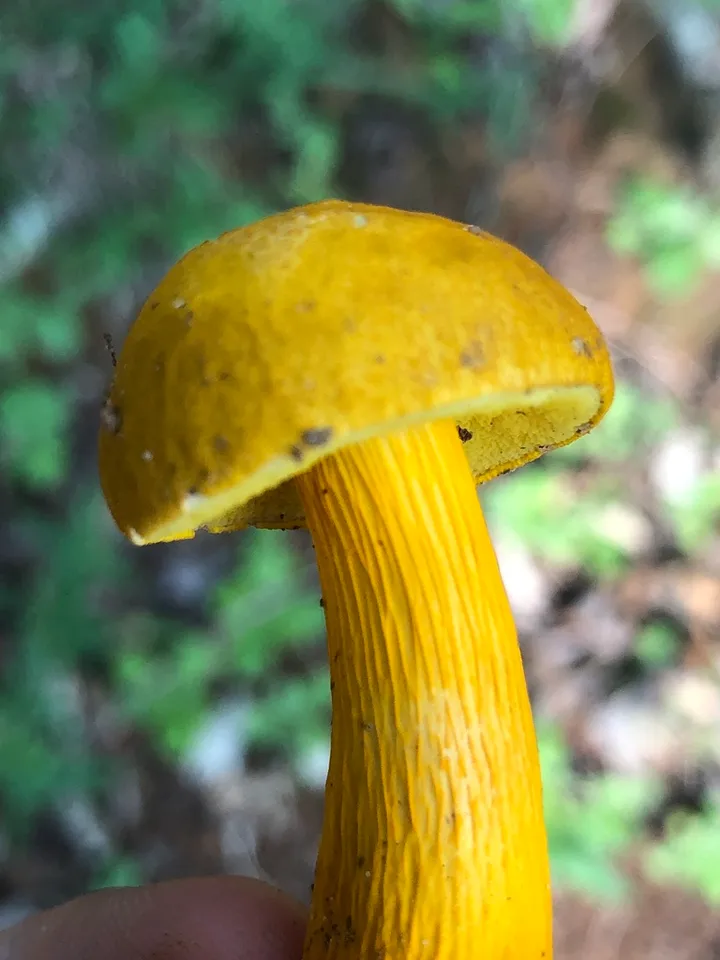
Foto yang diasosiasikan dengan Aureoboletus auriflammeus pada iNaturalist. Identifikasi mengikuti sumber; bukan penentuan spesimen independen.
Kredit dan penggunaan
(c) casey, some rights reserved (CC BY), uploaded by casey
Ukuran dan format gambar disesuaikan tanpa pemotongan, retus, atau penambahan skala. Lisensi sumber dipertahankan.
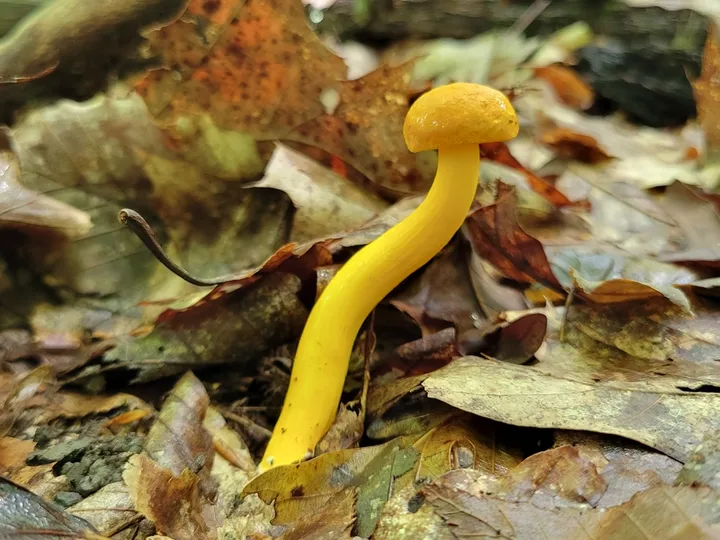
Foto yang diasosiasikan dengan Aureoboletus auriflammeus pada iNaturalist. Identifikasi mengikuti sumber; bukan penentuan spesimen independen.
Kredit dan penggunaan
(c) Beth Ace, some rights reserved (CC BY), uploaded by Beth Ace
Ukuran dan format gambar disesuaikan tanpa pemotongan, retus, atau penambahan skala. Lisensi sumber dipertahankan.
Sumber profil
- [1] Aureoboletus auriflammeus — Wikipedia (en)
- [2] Catalogue of Life Base2026-09-11 — Aureoboletus auriflammeus
- [3] Dokumentasi visual — Aureoboletus auriflammeus
- [4] Dokumentasi visual — Aureoboletus auriflammeus
- [5] Dokumentasi visual — Aureoboletus auriflammeus
Rujukan halaman ini
Fungi. Aureoboletus auriflammeus. Rilis data fungi-2026-10-12-expansion-2. https://fungi-atlas.mgadib.chatgpt.site/jamur/aureoboletus-auriflammeus/.
Status: impor sumber; pemeriksaan editorial per profil belum selesai. Untuk klaim biologis, gunakan rujukan pada bagian terkait dan periksa konteks sumber aslinya.