Ciri dan struktur
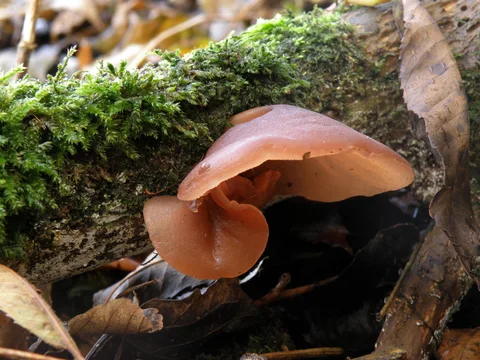
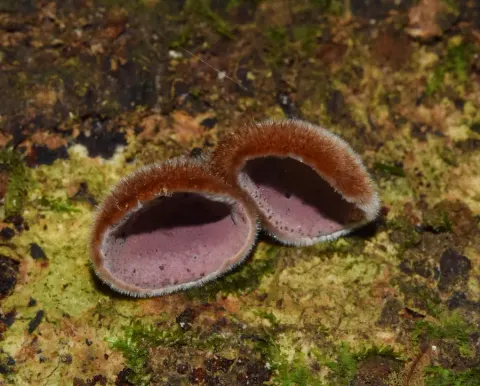
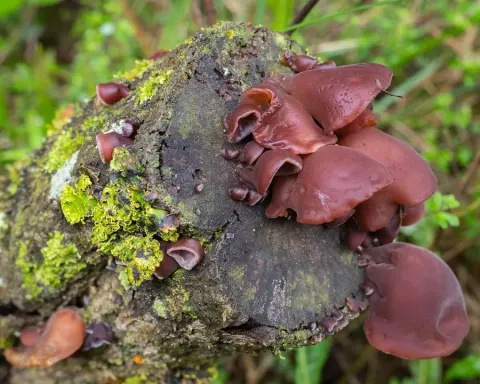
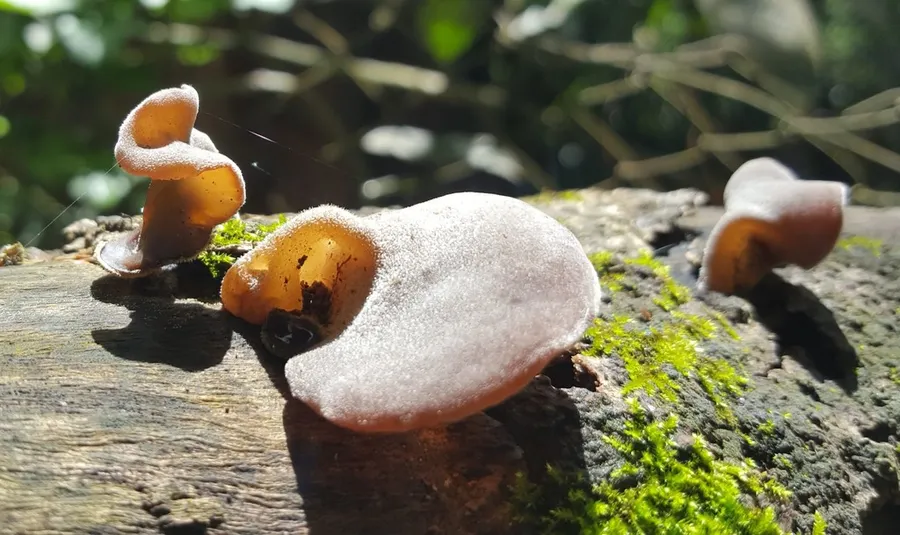
Fructifications tough cartilaginous-gelatinous, superior surface mouse grey to olive brown when fresh, drying dark olive brown, inferior surface greyish brown, drying dull brownish black. Substipitate, gregarious or caespitose, pendent, inversely cupulate, becoming irregularly inversely cupulate with undulate margins, to 10 cm diam. Superior surface pilose, covered with thick-walled, hyaline hairs, 5-6 µm diam., up to 450 µm long, apically rounded or acute, aggregated into tufts. Internal hyphae hyaline, thin-walled, septate, 2.5-5 µm diam., clamp connections present; medulla readily distinguishable, composed of hyphae arranged parallel to the surface. Hymenium inferior, composed of dikaryophyses and basidia; dikaryophyses slender, branched, extending beyond the basidia, becoming strongly agglutinated and metamorphosed, forming a tough surface layer; basidia cylindrical-subclavate, becoming transverely 3-septate, 50-75 x 5.5-8 µm; sterigmata cylindrical, to 70 µm. long. Basidiospores white in mass, curved-cylindrical to allantoid, hyaline, thin-walled, obscurely apiculate, 12.5-18.5-(21) x 6-7µm. Germination by germ tubes or by repetition.
Habitat dan peran ekologis
On dead bark and wood of (1) Beilschmiedia tawa, Rotoehu State Forest, 22 May 1964, R. F. R. McNabb; (2) Cordyline australis, Raoul Island, Brodie's Inlet, 16 Jan. 1950, R. Cooper; (3) Corynocarpus laevigatus, Wellington, 7 April 1923, J. C. Neill; (4) Hymenanthera novae-zelandiae, South West King Island, Jan. 1950, G. T. S. Baylis; (5) Macropiper excelsum, South West King Island, 24 Jan. 1952, G. T. S. Baylis; (6) Melicytus ramiflorus, Auckland, Three Kings, July 1931, J. Hodgkins; (7) M. ramiflorus, Paparata, Oct. 1946, G. H. Cunningham; (8) M. ramiflorus, Orakei Bush, Aug. 1948, J. M. Dingley; (9) M. ramiflorus. Lake Papaitonga, 26 Aug. 1955, G. H. Cunningham; (10) M. ramiflorus, Little Barrier Island, 10 June 1956, F. J. Newhook; (II) M. ramiflorus, Anawhata, 10 May 1964, R. F. R. McNabb; (12) Myoporum laetum, Great King Island, 28 April 1946, E. G. Turbott & L. C. Bell; (13) Senecio stewartiae, Stewart Island, July1942, E. Willis; unknown hosts (14) Purewa, July 1897, T. F. Cheeseman; (15) Raoul Island, 1908, W. R. B. Oliver; (16) Lake Papaitonga, 4 Sept. 1919, G. H. Cunningham; (17) Feilding, April 1926, H. H. Allan; (18) Nihotupu, Nov. 1930, M. Hodgkins; (19) Waikoratu, 29 Jan. 1945, E.
- Habitat atau konteks temuan
- Informasi belum tersedia pada sumber rilis ini.
- Substrat
- Informasi belum tersedia pada sumber rilis ini.
- Peran atau konteks
- Belum dikategorikan pada rilis ini.
Reproduksi
Fructifications tough cartilaginous-gelatinous, superior surface mouse grey to olive brown when fresh, drying dark olive brown, inferior surface greyish brown, drying dull brownish black. Substipitate, gregarious or caespitose, pendent, inversely cupulate, becoming irregularly inversely cupulate with undulate margins, to 10 cm diam. Superior surface pilose, covered with thick-walled, hyaline hairs, 5-6 µm diam., up to 450 µm long, apically rounded or acute, aggregated into tufts. Internal hyphae hyaline, thin-walled, septate, 2.5-5 µm diam., clamp connections present; medulla readily distinguishable, composed of hyphae arranged parallel to the surface. Hymenium inferior, composed of dikaryophyses and basidia; dikaryophyses slender, branched, extending beyond the basidia, becoming strongly agglutinated and metamorphosed, forming a tough surface layer; basidia cylindrical-subclavate, becoming transverely 3-septate, 50-75 x 5.5-8 µm; sterigmata cylindrical, to 70 µm. long.
Catatan identitas dan cakupan
- Nama diterima mengikuti Catalogue of Life Base2026-09-11; uraian mempertahankan konsep dan nama sumber aslinya.
- Historical description as cited by BiotaNZ. Preserve explicit New Zealand/locality, host and specimen qualifiers. Distribution is the cited source scope, not a current global range.
- Impor dan terjemahan otomatis belum diperiksa editorial per profil. Struktur reproduktif yang disebutkan tidak membuktikan seluruh siklus hidup diketahui.
- Pengukuran pada uraian mengikuti spesimen, kultur, dan metode sumber; angka tidak diperluas ke semua populasi.
Catatan distribusi dalam narasi mengikuti sumbernya. Dokumentasi spesimen atau foto mengikuti catatan sumber. Bukti wilayah Indonesia dan penilaian konservasi tidak disimpulkan dari gambar.
Melihat dengan konteks
Dokumentasi Auricularia nigricans menurut asosiasi foto pada record takson iNaturalist. Kredit: alessandradalia. Identitas mengikuti sumber; bukan penentuan spesimen independen.
- Jenis
- Fotografi
- Kredit
- (c) alessandradalia, some rights reserved (CC BY-SA), uploaded by alessandradalia
- Lisensi
- CC BY-SA 4.0
- Sumber media
- Buka entri sumber
Dokumentasi tambahan
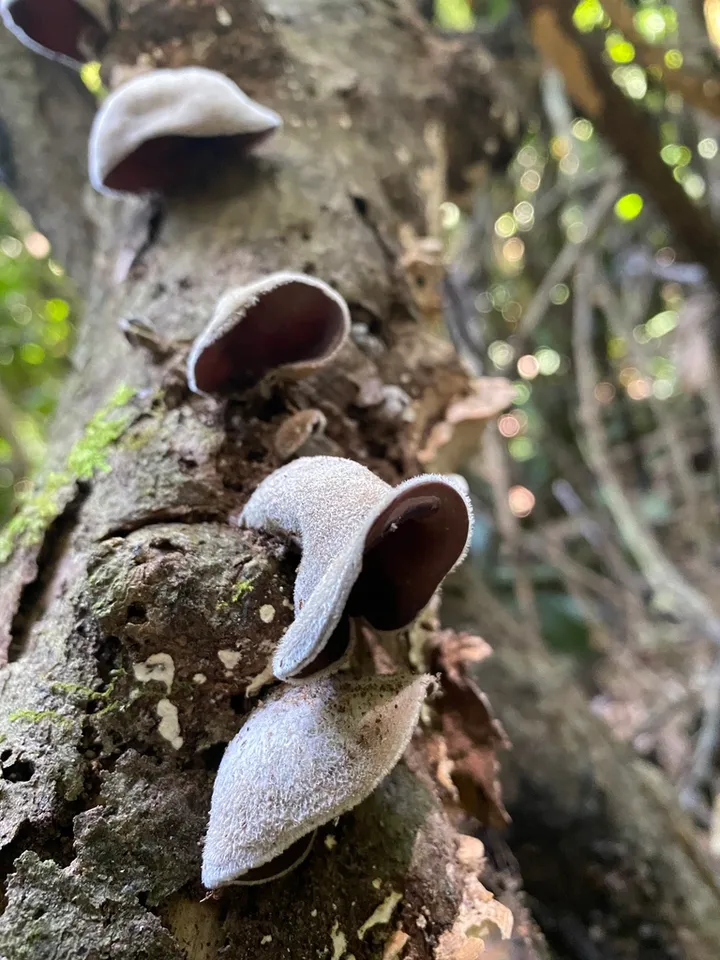
Foto yang diasosiasikan dengan Auricularia nigricans pada iNaturalist. Identifikasi mengikuti sumber; bukan penentuan spesimen independen.
Kredit dan penggunaan
(c) tlaloc27, some rights reserved (CC BY), uploaded by tlaloc27
Ukuran dan format gambar disesuaikan tanpa pemotongan, retus, atau penambahan skala. Lisensi sumber dipertahankan.
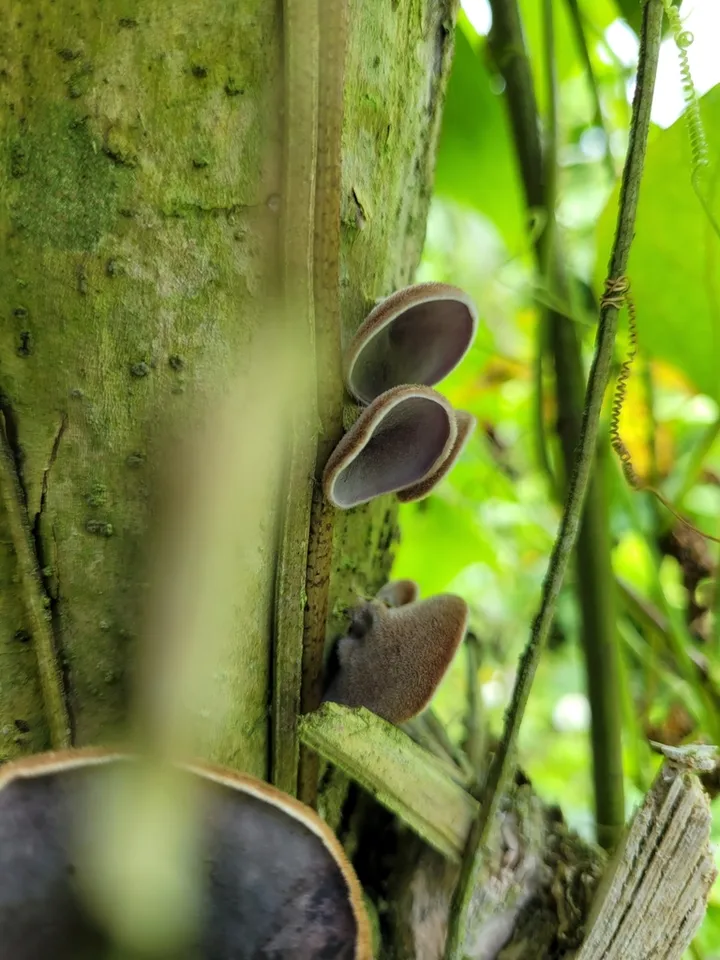
Foto yang diasosiasikan dengan Auricularia nigricans pada iNaturalist. Identifikasi mengikuti sumber; bukan penentuan spesimen independen.
Kredit dan penggunaan
(c) Wes Gapp, some rights reserved (CC BY), uploaded by Wes Gapp
Ukuran dan format gambar disesuaikan tanpa pemotongan, retus, atau penambahan skala. Lisensi sumber dipertahankan.
Sumber profil
- [1] McNabb, R.F.R. 1964: New Zealand Tremellales - I. New Zealand Journal of Botany 2(4): 403-414. — Auricularia polytricha
- [2] Catalogue of Life Base2026-09-11 — Auricularia nigricans
- [3] Dokumentasi visual — Auricularia nigricans
- [4] Dokumentasi visual — Auricularia nigricans
- [5] Dokumentasi visual — Auricularia nigricans
Rujukan halaman ini
Fungi. Auricularia nigricans. Rilis data fungi-2026-10-12-expansion-2. https://fungi-atlas.mgadib.chatgpt.site/jamur/auricularia-nigricans/.
Status: impor sumber; pemeriksaan editorial per profil belum selesai. Untuk klaim biologis, gunakan rujukan pada bagian terkait dan periksa konteks sumber aslinya.