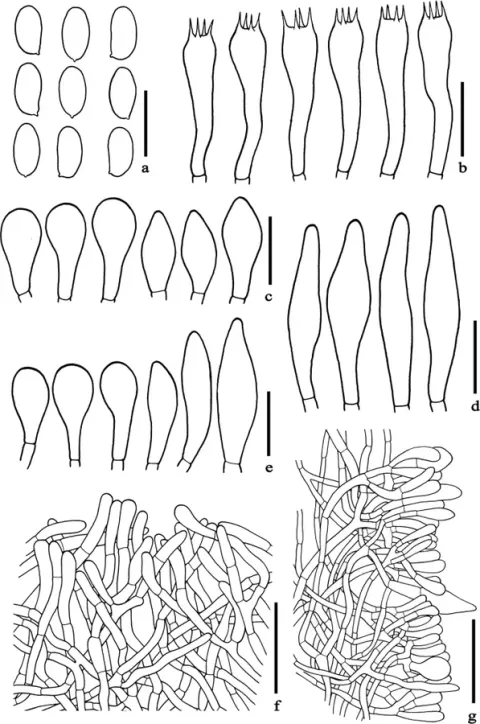
Ciri dan struktur
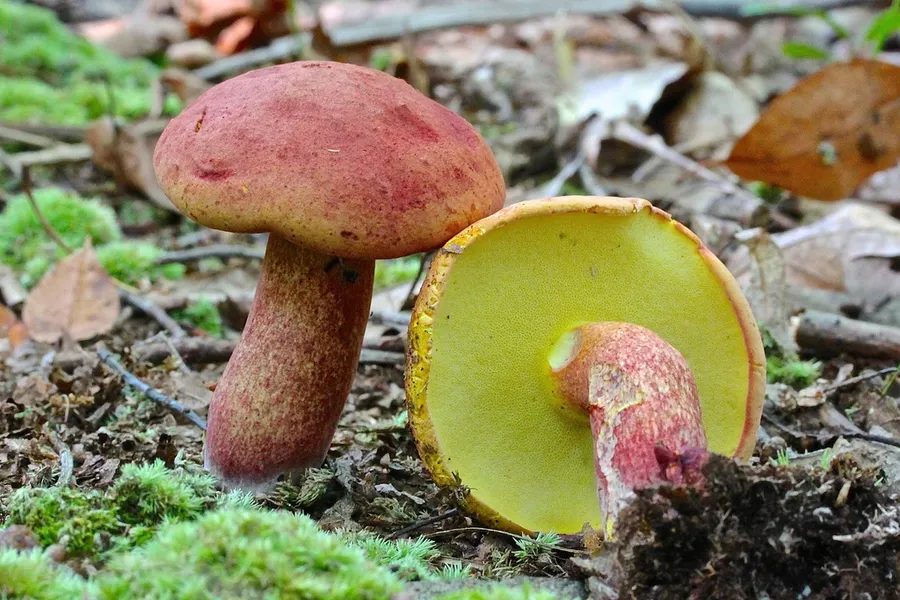
The color of the cap is light red when young and brick red in maturity. It is one of several types of boletes that have the unusual reaction of the pore surface producing a dark blue/indigo when injured, although the reaction is slower than with other bluing boletes. When the flesh is exposed it also turns a dark blue, but less dramatically than the pore surface. The stem is 5-10 cm long and 1-3 cm thick.
Habitat dan peran ekologis
Bolete berwarna dua ini tersebar dari wilayah Great Lakes di tenggara Canada and, terutama di timur Pegunungan Rocky, sejauh selatan sampai ke Florida peninsula, dan ke Midwest as sejauh Wisconsin. Hal ini biasanya ditemukan di hutan berdaun dan biasanya tumbuh di bawah atau dekat pohon berdaun lebar, terutama ek. Hal ini juga ditemukan di China and Nepal. Distribusi yang tidak biasa ini adalah bagian dari Grayan disjunction, sebuah fenomena yang ditandai oleh spesies yang hidup di satu benua atau pulau dan kemudian juga di sisi lain dunia tanpa spesimen spesies yang hidup di antara habitat tertentu. Grayan disjunction tidak jarang terjadi di antara jamur.
- Habitat atau konteks temuan
- hutan
- Substrat
- Informasi belum tersedia pada sumber rilis ini.
- Peran atau konteks
- Belum dikategorikan pada rilis ini.
Reproduksi
Variety borealis has a slightly darker color scheme than the main species. The coloration in general is darker; the cap can vary from a bright apple red to a dark brick red with maturity, to almost purple in some instances. The pore surface has a varying coloration of orange red to red and becoming a dull brown red with age. The bruising coloration is a blue green and the spore print is olive brown. The distribution of variety borealis is relatively small, ranging from Michigan to the upper New England states. The similar distribution and coloration to Boletus carminiporus has caused the two to be confused. New molecular evidence shows that borealis is not closely related to Baorangia bicolor var. bicolor.
Catatan identitas dan cakupan
- Nama diterima mengikuti Catalogue of Life Base2026-09-11; uraian mempertahankan konsep dan nama sumber aslinya.
- Original geographic, specimen and life-cycle scope retained; source import awaits individual editorial review.
- Impor dan terjemahan otomatis belum diperiksa editorial per profil. Struktur reproduktif yang disebutkan tidak membuktikan seluruh siklus hidup diketahui.
- Pengukuran pada uraian mengikuti spesimen, kultur, dan metode sumber; angka tidak diperluas ke semua populasi.
Catatan distribusi dalam narasi mengikuti sumbernya. Dokumentasi spesimen atau foto mengikuti catatan sumber. Bukti wilayah Indonesia dan penilaian konservasi tidak disimpulkan dari gambar.
Melihat dengan konteks
Dokumentasi Baorangia bicolor menurut asosiasi foto pada record takson iNaturalist. Kredit: Fluff Berger. Identitas mengikuti sumber; bukan penentuan spesimen independen.
- Jenis
- Fotografi
- Kredit
- (c) Fluff Berger, some rights reserved (CC BY-SA), uploaded by Fluff Berger
- Lisensi
- CC BY-SA 4.0
- Sumber media
- Buka entri sumber
Dokumentasi tambahan
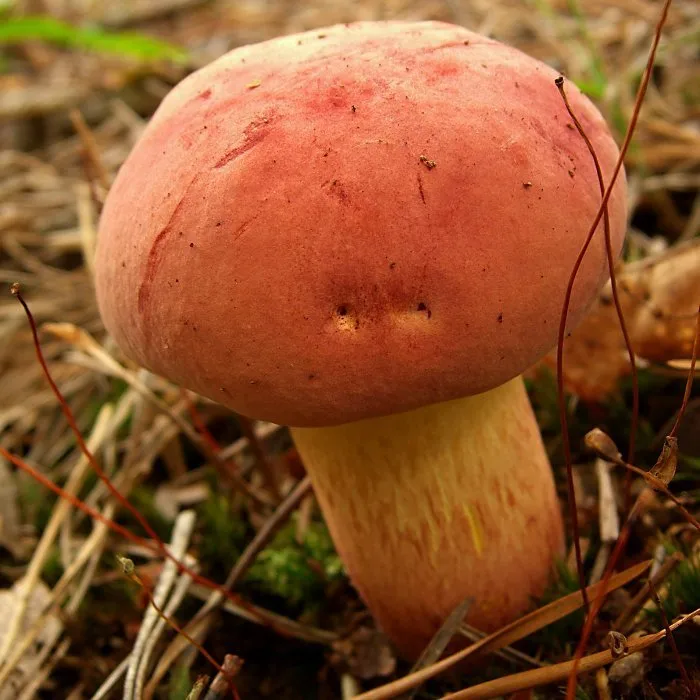
Foto yang diasosiasikan dengan Baorangia bicolor pada iNaturalist. Identifikasi mengikuti sumber; bukan penentuan spesimen independen.
Kredit dan penggunaan
(c) Jason Hollinger, some rights reserved (CC BY)
Ukuran dan format gambar disesuaikan tanpa pemotongan, retus, atau penambahan skala. Lisensi sumber dipertahankan.
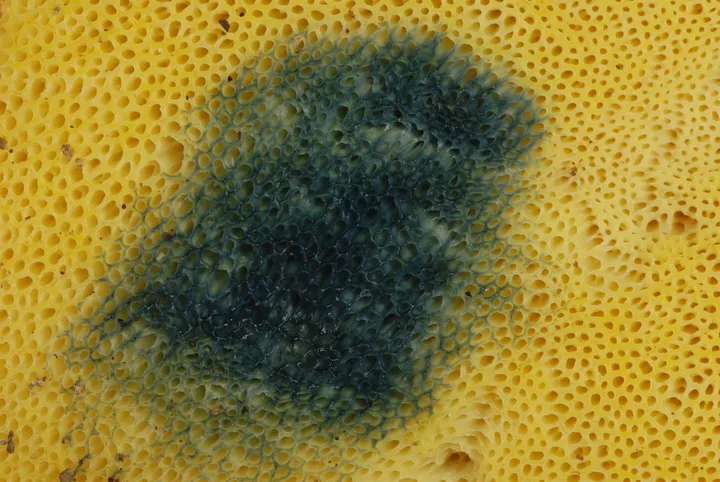
Foto yang diasosiasikan dengan Baorangia bicolor pada iNaturalist. Identifikasi mengikuti sumber; bukan penentuan spesimen independen.
Kredit dan penggunaan
(c) Douglas Goldman, some rights reserved (CC BY-SA), uploaded by Douglas Goldman
Ukuran dan format gambar disesuaikan tanpa pemotongan, retus, atau penambahan skala. Lisensi sumber dipertahankan.
Sumber profil
- [1] Baorangia bicolor — Wikipedia (en)
- [2] Catalogue of Life Base2026-09-11 — Baorangia bicolor
- [3] Dokumentasi visual — Baorangia bicolor
- [4] Dokumentasi visual — Baorangia bicolor
- [5] Dokumentasi visual — Baorangia bicolor
Rujukan halaman ini
Fungi. Baorangia bicolor. Rilis data fungi-2026-10-12-expansion-2. https://fungi-atlas.mgadib.chatgpt.site/jamur/baorangia-bicolor/.
Status: impor sumber; pemeriksaan editorial per profil belum selesai. Untuk klaim biologis, gunakan rujukan pada bagian terkait dan periksa konteks sumber aslinya.