Ciri dan struktur
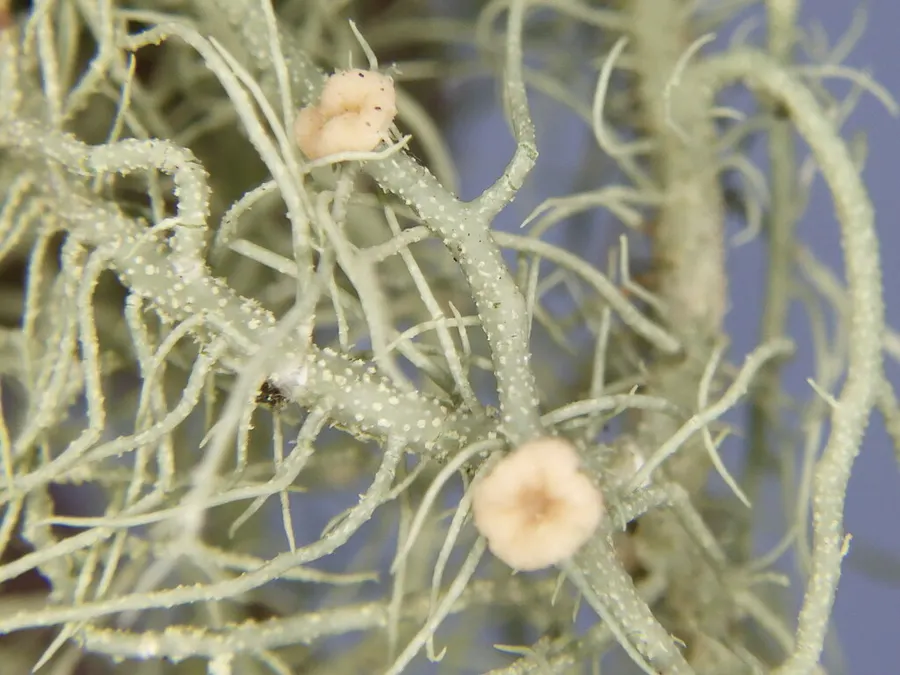
Biatoropsis usnearum forms distinctive growths, known as basidiomata, on its host lichens. These structures show considerable variation in their appearance, but typically appear as rounded, convex swellings with a narrowed base. The basidiomata can range in colour from pale pink to reddish brown or black, and measure between 0.2 and 2.5 mm in diameter. Their surface is usually smooth, though occasionally it may become warty. The texture is cartilaginous, similar to firm jelly. The species in its strict sense (sensu stricto) is characterised by large, pale pinkish brown basidiomata that may sometimes become darker. These typical forms can be distinguished from other members of the species complex by this consistent colouration and size, though some specimens may darken due to parasitic fungi. The development of these structures follows a characteristic pattern. The infection begins in the outer protective layer () of the host lichen, where it triggers changes in the host's own thread-like structures (hyphae). The first visible signs are pale to reddish spots on the lichen's surface, where the number of algal cells is already reduced. As the fungus grows upward through the host's cortex, it begins producing reproductive structures, eventually forming a mature gall that lacks algal cells entirely. The internal structure of these growths consists of microscopic threads called hyphae, which measure 2-3 μm in width. These hyphae have uniform walls and lack specialised connecting structures known as clamp connections. The fungus connects to its host through specialised feeding structures called haustorial branches.
Habitat dan peran ekologis
Biatoropsis usnearum sensu stricto is found growing specifically on six Usnea species: U. subfloridana, U. barbata, U. cavernosa, U. florida, U. glabrescens, and U. intermedia. The species has been confirmed from several locations in Europe (Austria, Finland, Poland, Sweden, and Scotland) and North America (Alberta and British Columbia in Canada, Minnesota in USA). However, its true distribution is likely more extensive than currently documented. Many historical records and reported locations for this species need to be reevaluated, as specimens previously identified as B. usnearum may represent other species in the complex. Research suggests there may be patterns in how these fungi have evolved to interact with their hosts – lichenicolous fungi that are phylogenetically related to lichens themselves tend to target the algal symbionts in lichen associations, while those from primarily non-lichenised fungal groups (like B. usnearum) appear better adapted to parasitising the fungal component of the lichen. The fungus preferentially infects young and growing parts of the host, particularly branch tips, fibrils (small branches), and areas beneath developing reproductive structures. Notably, when the fungus infects a part of the lichen, it suppresses the production of usnic acid, a characteristic lichen compound, in the infected area.
- Habitat atau konteks temuan
- Informasi belum tersedia pada sumber rilis ini.
- Substrat
- Informasi belum tersedia pada sumber rilis ini.
- Peran atau konteks
- Belum dikategorikan pada rilis ini.
Reproduksi
Biatoropsis usnearum forms distinctive growths, known as basidiomata, on its host lichens. These structures show considerable variation in their appearance, but typically appear as rounded, convex swellings with a narrowed base. The basidiomata can range in colour from pale pink to reddish brown or black, and measure between 0.2 and 2.5 mm in diameter. Their surface is usually smooth, though occasionally it may become warty. The texture is cartilaginous, similar to firm jelly. The species in its strict sense (sensu stricto) is characterised by large, pale pinkish brown basidiomata that may sometimes become darker. These typical forms can be distinguished from other members of the species complex by this consistent colouration and size, though some specimens may darken due to parasitic fungi.
Catatan identitas dan cakupan
- Nama diterima mengikuti Catalogue of Life Base2026-09-11; uraian mempertahankan konsep dan nama sumber aslinya.
- Original geographic, specimen and life-cycle scope retained; source import awaits individual editorial review.
- Impor dan terjemahan otomatis belum diperiksa editorial per profil. Struktur reproduktif yang disebutkan tidak membuktikan seluruh siklus hidup diketahui.
- Pengukuran pada uraian mengikuti spesimen, kultur, dan metode sumber; angka tidak diperluas ke semua populasi.
Catatan distribusi dalam narasi mengikuti sumbernya. Dokumentasi spesimen atau foto mengikuti catatan sumber. Bukti wilayah Indonesia dan penilaian konservasi tidak disimpulkan dari gambar.
Melihat dengan konteks
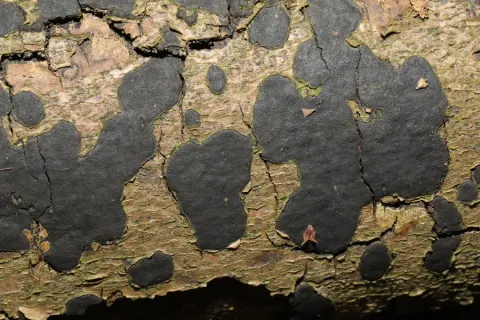
Dokumentasi Biatoropsis usnearum menurut asosiasi foto pada record takson iNaturalist. Kredit: Jonny Tostenson. Identitas mengikuti sumber; bukan penentuan spesimen independen.
- Jenis
- Fotografi
- Kredit
- no rights reserved, uploaded by Jonny Tostenson
- Lisensi
- CC0 1.0
- Sumber media
- Buka entri sumber
Dokumentasi tambahan
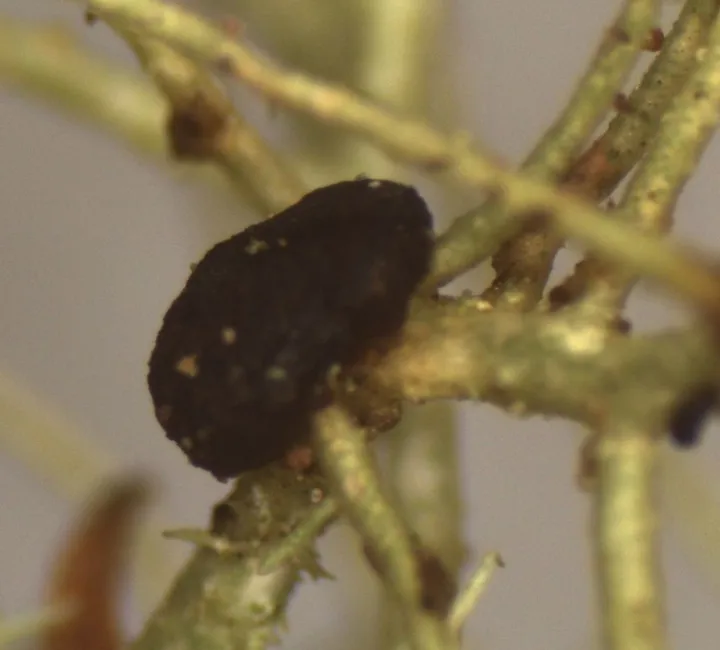
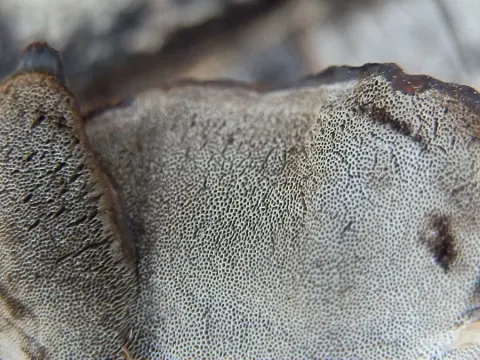
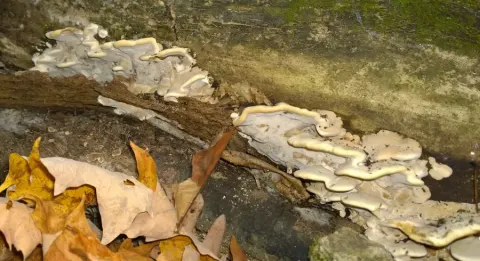
Foto yang diasosiasikan dengan Biatoropsis usnearum pada iNaturalist. Identifikasi mengikuti sumber; bukan penentuan spesimen independen.
Kredit dan penggunaan
(c) Possums' End, some rights reserved (CC BY), uploaded by Possums' End
Ukuran dan format gambar disesuaikan tanpa pemotongan, retus, atau penambahan skala. Lisensi sumber dipertahankan.
Sumber profil
- [1] Biatoropsis usnearum — Wikipedia (en)
- [2] Catalogue of Life Base2026-09-11 — Biatoropsis usnearum
- [3] Dokumentasi visual — Biatoropsis usnearum
- [4] Dokumentasi visual — Biatoropsis usnearum
Rujukan halaman ini
Fungi. Biatoropsis usnearum. Rilis data fungi-2026-10-12-expansion-2. https://fungi-atlas.mgadib.chatgpt.site/jamur/biatoropsis-usnearum/.
Status: impor sumber; pemeriksaan editorial per profil belum selesai. Untuk klaim biologis, gunakan rujukan pada bagian terkait dan periksa konteks sumber aslinya.