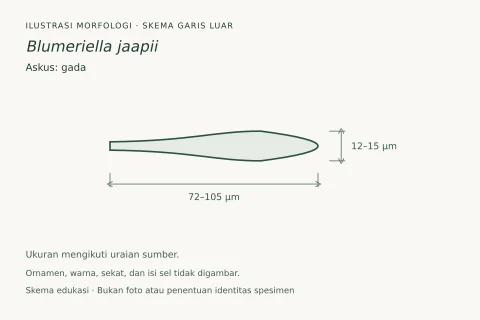
Ciri dan struktur
The structures of this fungal pathogen appear on both sides of the leaves of the plant as small red-brown spots, typically measuring 1-5mm in diameter, with dark purple borders. On the stem, the lesions caused by the pathogen are slightly sunken and purple-brown in color. If the pathogen is allowed to spread, the lesions will eventually take over and the plant will turn brown and then die. A key diagnostic feature of Blumeriella kerriae is the presence of acervuli containing conidiophores and conidia within the lesions and leaf spots. The spores may be visible as white clusters in the center of the spots, particularly in wet conditions. The conidia are filiform, curved, hyaline, and 1–3 septate. The morphology of Blumeriella kerriae is an important factor in identifying and managing the disease, as it helps distinguish it from other plant pathogens that may cause similar symptoms.
Habitat dan peran ekologis
Blumeriella kerriae is limited to the leaves and stems of plants in the Kerria genus, which includes early flowering, deciduous shrubs that are common in gardens. The most popular of these shrubs is Kerria japonica, commonly known as Japanese Kerria. These shrubs grow in full to part-shade landscapes and are cold hardy. They grow best in USDA zones 4 through 9, UK zone 4, and central and southern China to southern Korea and Japan. The fungus thrives in moist conditions, and can quickly become difficult to control. Due to these factors, the popularity of Kerria shrubs has dropped significantly in areas where Blumeriella kerriae has been identified.
- Habitat atau konteks temuan
- Informasi belum tersedia pada sumber rilis ini.
- Substrat
- Informasi belum tersedia pada sumber rilis ini.
- Peran atau konteks
- Belum dikategorikan pada rilis ini.
Reproduksi
The structures of this fungal pathogen appear on both sides of the leaves of the plant as small red-brown spots, typically measuring 1-5mm in diameter, with dark purple borders. On the stem, the lesions caused by the pathogen are slightly sunken and purple-brown in color. If the pathogen is allowed to spread, the lesions will eventually take over and the plant will turn brown and then die. A key diagnostic feature of Blumeriella kerriae is the presence of acervuli containing conidiophores and conidia within the lesions and leaf spots. The spores may be visible as white clusters in the center of the spots, particularly in wet conditions. The conidia are filiform, curved, hyaline, and 1–3 septate.
Catatan identitas dan cakupan
- Nama diterima mengikuti Catalogue of Life Base2026-09-11; uraian mempertahankan konsep dan nama sumber aslinya.
- Original geographic, specimen and life-cycle scope retained; source import awaits individual editorial review.
- Impor dan terjemahan otomatis belum diperiksa editorial per profil. Struktur reproduktif yang disebutkan tidak membuktikan seluruh siklus hidup diketahui.
- Pengukuran pada uraian mengikuti spesimen, kultur, dan metode sumber; angka tidak diperluas ke semua populasi.
Catatan distribusi dalam narasi mengikuti sumbernya. Dokumentasi spesimen atau foto mengikuti catatan sumber. Bukti wilayah Indonesia dan penilaian konservasi tidak disimpulkan dari gambar.
Melihat dengan konteks
Dokumentasi visual yang memenuhi pemeriksaan subjek dan hak penggunaan belum tersedia. Foto gejala, label, dan gambar yang meragukan tidak dihitung.
Sumber profil
Rujukan halaman ini
Fungi. Blumeriella kerriae. Rilis data fungi-2026-10-12-expansion-2. https://fungi-atlas.mgadib.chatgpt.site/jamur/blumeriella-kerriae/.
Status: impor sumber; pemeriksaan editorial per profil belum selesai. Untuk klaim biologis, gunakan rujukan pada bagian terkait dan periksa konteks sumber aslinya.