Ciri dan struktur
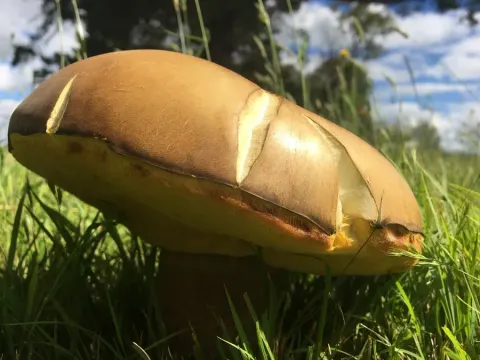
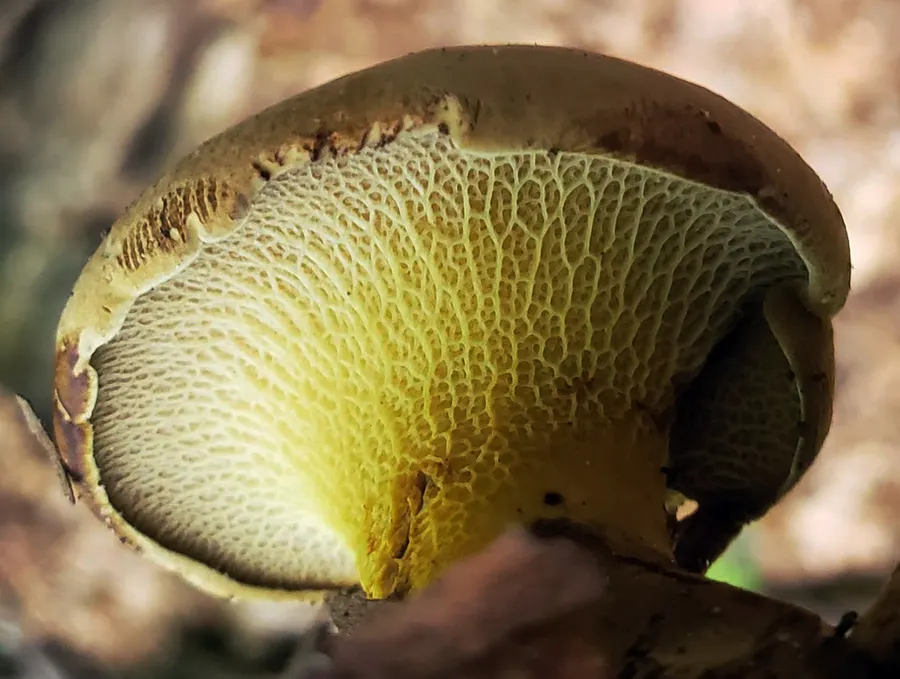
The cap is initially convex before becoming flattened to convex in maturity, and attains a diameter of 3.5-12 cm. The cap surface is dry to slightly sticky, and smooth or covered with tiny fibrils. Its color ranges from yellow brown to reddish brown, and will bruise dull yellow-brown. The pore surface is pale yellow to dull gold or olive, but will slowly turn blue and then reddish brown as a reaction to injury. The pores are boletinoid, meaning that they have a structure intermediate between gills and pores. They are about 1 mm wide, and the tube layer is 3-6 mm deep. The spore print is olive-brown. Unusual for boletes, it forms abundant sclerotia. These are spherical to roughly elliptical structures measuring 2–3 mm wide, which have a hard, black to dark brown rind and a hollow internal medulla. Occurring singly or in clumps of over 100, they are usually found between the mineral and organic layers of the soil. The sclerotia allow the fungus to survive harsh conditions such as low temperatures, and will rapidly colonize nearby soil when conditions are favorable.
Habitat dan peran ekologis
The fungus is found in eastern North America, from eastern Canada south to Alabama and west to Wisconsin. It is also found in Mexico. A common species, it fruits in summer and autumn. It has also been reported in Japan. The fruit bodies grow on the ground scattered or in groups, almost always near ash (Fraxinus spp.), but rarely near maple and white pine. The fungus has a mutualistic relationship with a parasitic aphid that occurs only on ash trees. The aphid feeds on the tree roots, and shelters inside hollow sclerotia formed by the fungus in the soil, or attached to the root system. The aphid secretes carbohydrates and other nutrients that benefit the fungus.
- Habitat atau konteks temuan
- Informasi belum tersedia pada sumber rilis ini.
- Substrat
- tanah
- Peran atau konteks
- Belum dikategorikan pada rilis ini.
Reproduksi
The cap is initially convex before becoming flattened to convex in maturity, and attains a diameter of 3.5-12 cm. The cap surface is dry to slightly sticky, and smooth or covered with tiny fibrils. Its color ranges from yellow brown to reddish brown, and will bruise dull yellow-brown. The pore surface is pale yellow to dull gold or olive, but will slowly turn blue and then reddish brown as a reaction to injury. The pores are boletinoid, meaning that they have a structure intermediate between gills and pores. They are about 1 mm wide, and the tube layer is 3-6 mm deep. The spore print is olive-brown.
Catatan identitas dan cakupan
- Nama diterima mengikuti Catalogue of Life Base2026-09-11; uraian mempertahankan konsep dan nama sumber aslinya.
- Original geographic, specimen and life-cycle scope retained; source import awaits individual editorial review.
- Impor dan terjemahan otomatis belum diperiksa editorial per profil. Struktur reproduktif yang disebutkan tidak membuktikan seluruh siklus hidup diketahui.
- Pengukuran pada uraian mengikuti spesimen, kultur, dan metode sumber; angka tidak diperluas ke semua populasi.
Catatan distribusi dalam narasi mengikuti sumbernya. Dokumentasi spesimen atau foto mengikuti catatan sumber. Bukti wilayah Indonesia dan penilaian konservasi tidak disimpulkan dari gambar.
Melihat dengan konteks
Dokumentasi Boletinellus merulioides menurut asosiasi foto pada record takson iNaturalist. Kredit: aarongunnar. Identitas mengikuti sumber; bukan penentuan spesimen independen.
- Jenis
- Fotografi
- Kredit
- (c) aarongunnar, some rights reserved (CC BY), uploaded by aarongunnar
- Lisensi
- CC BY 4.0
- Sumber media
- Buka entri sumber
Dokumentasi tambahan
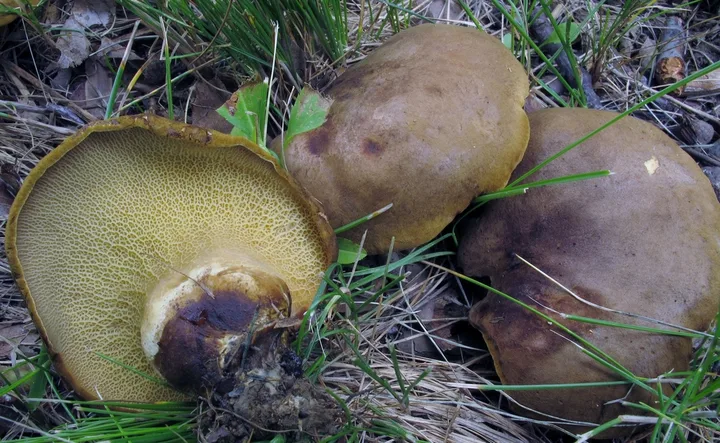
Foto yang diasosiasikan dengan Boletinellus merulioides pada iNaturalist. Identifikasi mengikuti sumber; bukan penentuan spesimen independen.
Kredit dan penggunaan
(c) mycowalt, some rights reserved (CC BY-SA), uploaded by mycowalt
Ukuran dan format gambar disesuaikan tanpa pemotongan, retus, atau penambahan skala. Lisensi sumber dipertahankan.
Sumber profil
- [1] Boletinellus merulioides — Wikipedia (en)
- [2] Catalogue of Life Base2026-09-11 — Boletinellus merulioides
- [3] Dokumentasi visual — Boletinellus merulioides
- [4] Dokumentasi visual — Boletinellus merulioides
Rujukan halaman ini
Fungi. Boletinellus merulioides. Rilis data fungi-2026-10-12-expansion-2. https://fungi-atlas.mgadib.chatgpt.site/jamur/boletinellus-merulioides/.
Status: impor sumber; pemeriksaan editorial per profil belum selesai. Untuk klaim biologis, gunakan rujukan pada bagian terkait dan periksa konteks sumber aslinya.