01 / Morfologi

Ciri dan struktur

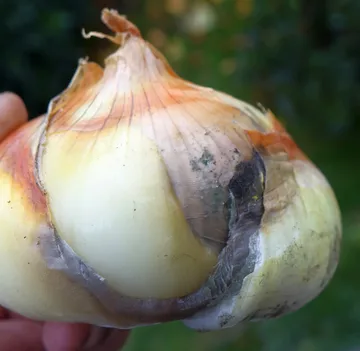
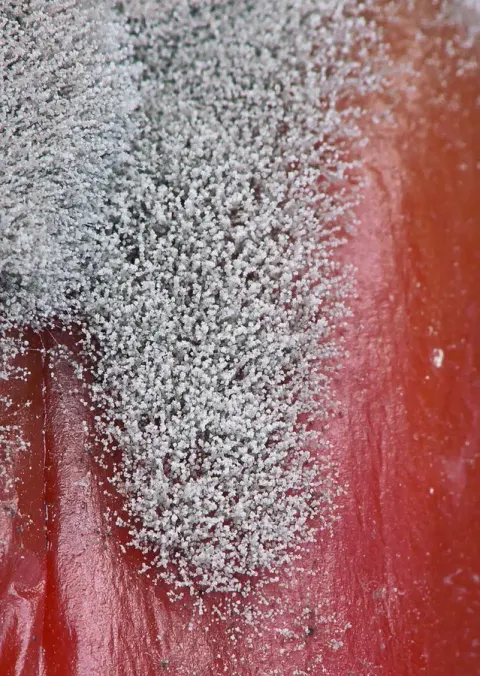
Botrytis elliptica is a necrotrophic fungal pathogen which infects species of plants in the Lilium genus, causing the disease commonly known as Lily Gray Mold. The symptoms of Lily Gray Mold include the appearance of water-soaked spots on leaves which appear white and increase in darkness with age, ranging from gray to brown. These spots may cover the entire leaf, complemented with a gray webbing, containing the fungal spores. The leaves will appear wilted and branches may die back. In addition to leaves, petals, stems, and buds may be infected, and this gray webbing will eventually cover the plant, feigning the appearance of gray flowers. Infected buds often rot. Lily Gray Mold disease, if not properly treated, will appear each year with increasing vigor. The disease cycle for Botrytis elliptica begins with infection of plants in spring. This may be derived from mycelium in overwintering sclerotia, which produce conidiophores to create conidia, the asexual spores of this fungus. The conidia germinate, often penetrating the young leaf tissue of the lily, although the flowers, buds, or stem may also suffer from infection. This infects cells, which collapse, disintegrate, and rot the tissue. This cycle is polycyclic. The conidiophores spread, producing more conidia to further infect new areas of the plant or spread to new plants. Additionally, B. elliptica reproduces sexually via a heterothallic mating system with two alleles: MAT1-1 and MAT1-2. All ascomycetes studied of B. elliptica contain these genes, which are orthologous to the alpha-domain protein (MAT1-1) and the HMG-domain protein (MAT1-2).

Sebagian uraian ditampilkan dalam bahasa sumber; terjemahannya belum tersedia atau belum lolos pemeriksaan.

Rujukan: [1]

Pengukuran mengikuti objek, spesimen atau kultur, dan metode yang disebutkan sumber. Baca uraian asli untuk konteks lengkap.

02 / Kehidupan

Habitat dan peran ekologis

As Lilium species are of great horticultural interest in ornamental production, B. elliptica must be prevented and managed to continue production. Plant breeders currently work to determine Botrytis-resistant cultivars of Lilium. The rapid accumulation of hydrogen peroxide, nitrous oxide, and antioxidant activity trigger in the plant's defense response, and long-term, highly concentrated increases contribute to high resistance in these plants. Cultivars displaying high resistance are the Oriental and Oriental x Trumpet hybrid lines, whereas the susceptible cultivars included Asiatic and Trumpet cultivars. Defense responses found in Lilium species are mediated by phytohormones involved in jasmonate signaling, increasing the transcription for defense-related proteins. These proteins include receptor kinases, antioxidant enzymes, polyphenol oxidase, pathogenesis-related proteins, and proteins involved in the phenylpropanoid metabolism. Highly resistant Lilium species cultivars express genes producing these proteins more effectively than in the susceptible cultivars.

Sebagian uraian ditampilkan dalam bahasa sumber; terjemahannya belum tersedia atau belum lolos pemeriksaan.

Rujukan: [1]

Habitat atau konteks temuan
Informasi belum tersedia pada sumber rilis ini.
Substrat
Informasi belum tersedia pada sumber rilis ini.
Peran atau konteks
Belum dikategorikan pada rilis ini.
Temukan hubungan serupa
03 / Siklus hidup

Reproduksi

Botrytis elliptica is a necrotrophic fungal pathogen which infects species of plants in the Lilium genus, causing the disease commonly known as Lily Gray Mold. The symptoms of Lily Gray Mold include the appearance of water-soaked spots on leaves which appear white and increase in darkness with age, ranging from gray to brown. These spots may cover the entire leaf, complemented with a gray webbing, containing the fungal spores. The leaves will appear wilted and branches may die back. In addition to leaves, petals, stems, and buds may be infected, and this gray webbing will eventually cover the plant, feigning the appearance of gray flowers. Infected buds often rot. Lily Gray Mold disease, if not properly treated, will appear each year with increasing vigor.

Sebagian uraian ditampilkan dalam bahasa sumber; terjemahannya belum tersedia atau belum lolos pemeriksaan.

Rujukan: [1]

Sinonim menurut acuan taksonomi rilis: Botrytis elliptica; Ovularia elliptica
04 / Batas informasi

Catatan identitas dan cakupan

  • Nama diterima mengikuti Catalogue of Life Base2026-09-11; uraian mempertahankan konsep dan nama sumber aslinya.
  • Original geographic, specimen and life-cycle scope retained; source import awaits individual editorial review.
  • Impor dan terjemahan otomatis belum diperiksa editorial per profil. Struktur reproduktif yang disebutkan tidak membuktikan seluruh siklus hidup diketahui.
  • Pengukuran pada uraian mengikuti spesimen, kultur, dan metode sumber; angka tidak diperluas ke semua populasi.

Catatan distribusi dalam narasi mengikuti sumbernya. Dokumentasi spesimen atau foto mengikuti catatan sumber. Bukti wilayah Indonesia dan penilaian konservasi tidak disimpulkan dari gambar.

05 / Dokumentasi

Melihat dengan konteks

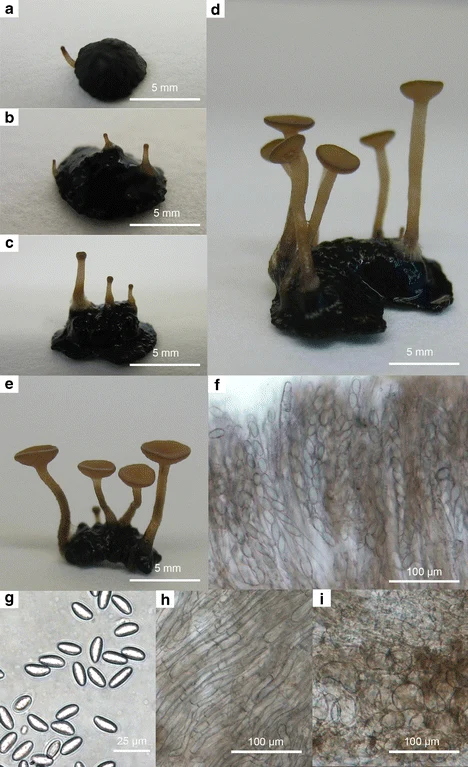
Pelat struktur reproduksi seksual Botrytis elliptica, meliputi primordium, apotesium, askus, dan askospora. Identifikasi dan keterangan mengikuti Gambar 2 pada sumber.

Jenis
Pelat ilmiah
Kredit
Terhem, Razak Bin; Staats, Martijn; van Kan, Jan A. L.
Lisensi
CC BY 4.0
Sumber media
Buka entri sumber

Gambar menunjukkan objek menurut identifikasi sumber, bukan verifikasi independen spesimen oleh Fungi. Tidak ada skala baru yang ditambahkan.

06 / Rujukan

Sumber profil

  1. [1] Botrytis elliptica — Wikipedia (en)Bagian sumber: Frozen revision 1306702569
    Tanggal penghimpunan sumber: 2026-10-12
    Teks sumber: CC BY-SA4.0 · Wikipedia contributors
  2. [2] Catalogue of Life Base2026-09-11 — Botrytis ellipticaBagian sumber: ColDP NameUsage.tsv ID MQLC; accepted species; source 2073
    Tanggal penghimpunan sumber: 2026-10-12
  3. [3] Dokumentasi visual — Botrytis ellipticaBagian sumber: Identitas mengikuti sumber dokumentasi; bukan penentuan spesimen independen.
    Tanggal penghimpunan sumber: 2026-10-17
    Media sumber: CC BY 4.0 · Terhem, Razak Bin; Staats, Martijn; van Kan, Jan A. L.

Adaptasi teks: CC BY-SA 4.0. Wikipedia contributors — Botrytis elliptica — Wikipedia (en)

Uraian asli dan riwayat sumber

Riwayat atau halaman sumber

Ringkasan sumber

Botrytis elliptica is a necrotrophic fungal pathogen which infects species of plants in the Lilium genus, causing the disease commonly known as Lily Gray Mold. The symptoms of Lily Gray Mold include the appearance of water-soaked spots on leaves which appear white and increase in darkness with age, ranging from gray to brown. These spots may cover the entire leaf, complemented with a gray webbing, containing the fungal spores. The leaves will appear wilted and branches may die back. In addition to leaves, petals, stems, and buds may be infected, and this gray webbing will eventually cover the plant, feigning the appearance of gray flowers.

Revisi sumber

Morfologi sumber

Botrytis elliptica is a necrotrophic fungal pathogen which infects species of plants in the Lilium genus, causing the disease commonly known as Lily Gray Mold. The symptoms of Lily Gray Mold include the appearance of water-soaked spots on leaves which appear white and increase in darkness with age, ranging from gray to brown. These spots may cover the entire leaf, complemented with a gray webbing, containing the fungal spores. The leaves will appear wilted and branches may die back. In addition to leaves, petals, stems, and buds may be infected, and this gray webbing will eventually cover the plant, feigning the appearance of gray flowers. Infected buds often rot. Lily Gray Mold disease, if not properly treated, will appear each year with increasing vigor. The disease cycle for Botrytis elliptica begins with infection of plants in spring. This may be derived from mycelium in overwintering sclerotia, which produce conidiophores to create conidia, the asexual spores of this fungus. The conidia germinate, often penetrating the young leaf tissue of the lily, although the flowers, buds, or stem may also suffer from infection. This infects cells, which collapse, disintegrate, and rot the tissue. This cycle is polycyclic. The conidiophores spread, producing more conidia to further infect new areas of the plant or spread to new plants. Additionally, B. elliptica reproduces sexually via a heterothallic mating system with two alleles: MAT1-1 and MAT1-2. All ascomycetes studied of B. elliptica contain these genes, which are orthologous to the alpha-domain protein (MAT1-1) and the HMG-domain protein (MAT1-2).

Revisi sumber

Ekologi sumber

As Lilium species are of great horticultural interest in ornamental production, B. elliptica must be prevented and managed to continue production. Plant breeders currently work to determine Botrytis-resistant cultivars of Lilium. The rapid accumulation of hydrogen peroxide, nitrous oxide, and antioxidant activity trigger in the plant's defense response, and long-term, highly concentrated increases contribute to high resistance in these plants. Cultivars displaying high resistance are the Oriental and Oriental x Trumpet hybrid lines, whereas the susceptible cultivars included Asiatic and Trumpet cultivars. Defense responses found in Lilium species are mediated by phytohormones involved in jasmonate signaling, increasing the transcription for defense-related proteins. These proteins include receptor kinases, antioxidant enzymes, polyphenol oxidase, pathogenesis-related proteins, and proteins involved in the phenylpropanoid metabolism. Highly resistant Lilium species cultivars express genes producing these proteins more effectively than in the susceptible cultivars.

Revisi sumber

Struktur reproduksi sumber

Botrytis elliptica is a necrotrophic fungal pathogen which infects species of plants in the Lilium genus, causing the disease commonly known as Lily Gray Mold. The symptoms of Lily Gray Mold include the appearance of water-soaked spots on leaves which appear white and increase in darkness with age, ranging from gray to brown. These spots may cover the entire leaf, complemented with a gray webbing, containing the fungal spores. The leaves will appear wilted and branches may die back. In addition to leaves, petals, stems, and buds may be infected, and this gray webbing will eventually cover the plant, feigning the appearance of gray flowers. Infected buds often rot. Lily Gray Mold disease, if not properly treated, will appear each year with increasing vigor.

Revisi sumber

Rujukan halaman ini

Fungi. Botrytis elliptica. Rilis data fungi-2026-10-12-expansion-2. https://fungi-atlas.mgadib.chatgpt.site/jamur/botrytis-elliptica/.

Status: impor sumber; pemeriksaan editorial per profil belum selesai. Untuk klaim biologis, gunakan rujukan pada bagian terkait dan periksa konteks sumber aslinya.