Ciri dan struktur
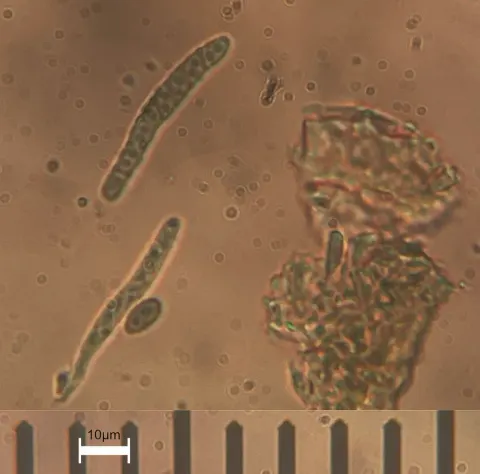
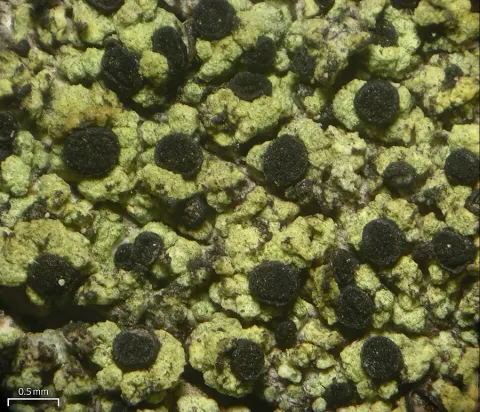
Calicium corynellum has specific morphological characteristics that set it apart from Calicium viride. The ascomata (fruiting bodies) of C. corynellum, are greyish white and has shorter stalks. It has narrow spores, a feature distinct from C. viride, which are broader. The thallus (the vegetative tissue of lichens) of C. corynellum is of a type, contrasting the to thallus of C. viride. In terms of chemical components, C. corynellum contains rhizocarpic and usnic acids. Although C. viride also contains rhizocarpic acid, it features epanorin instead of usnic acid. However, the concentration of these acids varies significantly in both species, making this factor less reliable for distinguishing between them.
Habitat dan peran ekologis
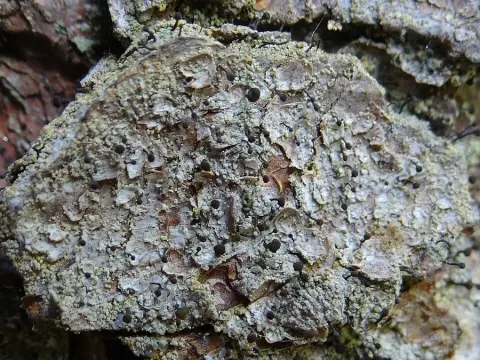
Found scattered across parts of Europe, North America, and Asia, Calicium corynellum prefers specific environmental conditions. Unlike most calicioid lichens, C. corynellum favours rock surfaces, primarily siliceous rocks, found in shaded and humid locations. This preference for rocky habitats differentiates it from many others in the same genus that grow on trees or soil, but also highlights its vulnerability to changes in its microenvironment, such as alterations in humidity and shading due to ecological changes or human activities. Ongoing evaluations for inclusion in the red list of lichens in Spain and Portugal emphasise the need for careful monitoring and conservation measures. Much like other lichen species, Calicium corynellum is integral to the ecosystems it inhabits. As a primary coloniser, it plays a role in soil formation by breaking down rock surfaces and incorporating organic matter into the mineral substrate. Its ability to fix atmospheric nitrogen also enriches the nutrient content of the surrounding environment. Lichens such as C. corynellum can indicate environmental health and air quality, as they are highly sensitive to air pollutants. By monitoring its presence or absence of these sensitive species, scientists can gauge the level of pollutants and inform environmental policies.
- Habitat atau konteks temuan
- Informasi belum tersedia pada sumber rilis ini.
- Substrat
- tanah
- Peran atau konteks
- Pembentuk liken
Reproduksi
Calicium corynellum has specific morphological characteristics that set it apart from Calicium viride. The ascomata (fruiting bodies) of C. corynellum, are greyish white and has shorter stalks. It has narrow spores, a feature distinct from C. viride, which are broader. The thallus (the vegetative tissue of lichens) of C. corynellum is of a type, contrasting the to thallus of C. viride.
Catatan identitas dan cakupan
- Nama diterima mengikuti Catalogue of Life Base2026-09-11; uraian mempertahankan konsep dan nama sumber aslinya.
- Original geographic, specimen and life-cycle scope retained; source import awaits individual editorial review.
- Impor dan terjemahan otomatis belum diperiksa editorial per profil. Struktur reproduktif yang disebutkan tidak membuktikan seluruh siklus hidup diketahui.
- Pengukuran pada uraian mengikuti spesimen, kultur, dan metode sumber; angka tidak diperluas ke semua populasi.
Catatan distribusi dalam narasi mengikuti sumbernya. Dokumentasi spesimen atau foto mengikuti catatan sumber. Bukti wilayah Indonesia dan penilaian konservasi tidak disimpulkan dari gambar.
Melihat dengan konteks
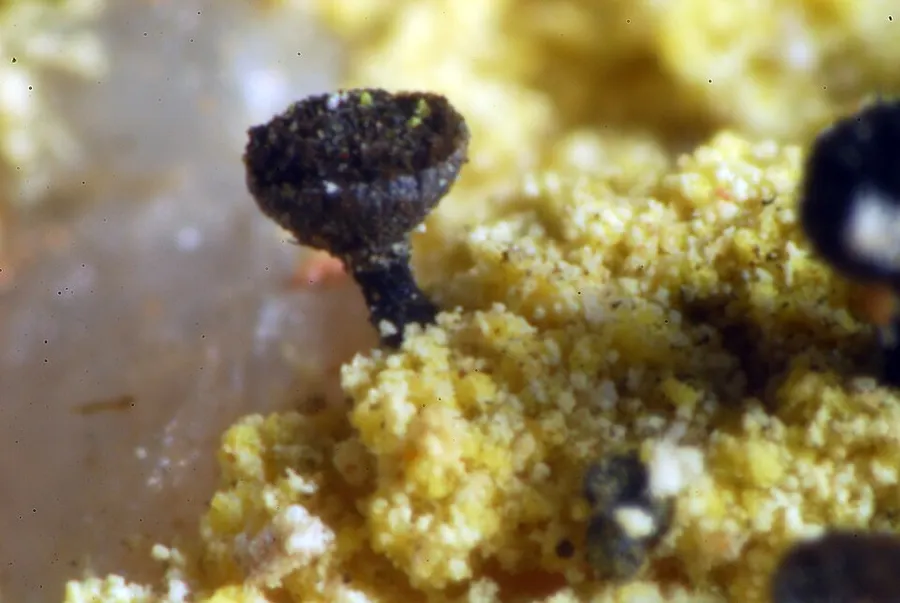
Dokumentasi Calicium corynellum dari Wikimedia Commons. A closeup of the caliclioid lichen Calicium corynellum , photographed in Calabria, Italy. Identifikasi mengikuti record berkas sumber.
- Jenis
- Fotografi
- Kredit
- Domenico Puntillo
- Lisensi
- CC BY-SA 4.0
- Sumber media
- Buka entri sumber
Sumber profil
- [1] Calicium corynellum — Wikipedia (en)
- [2] Catalogue of Life Base2026-09-11 — Calicium corynellum
- [3] Dokumentasi visual — Calicium corynellum
Rujukan halaman ini
Fungi. Calicium corynellum. Rilis data fungi-2026-10-12-expansion-2. https://fungi-atlas.mgadib.chatgpt.site/jamur/calicium-corynellum/.
Status: impor sumber; pemeriksaan editorial per profil belum selesai. Untuk klaim biologis, gunakan rujukan pada bagian terkait dan periksa konteks sumber aslinya.