Ciri dan struktur
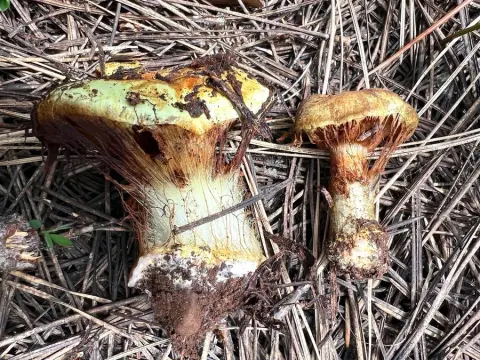
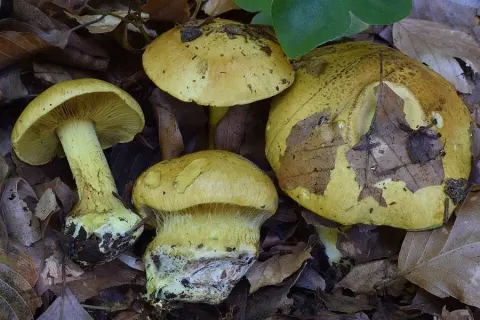
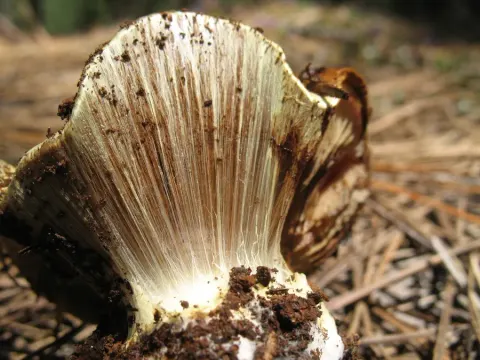
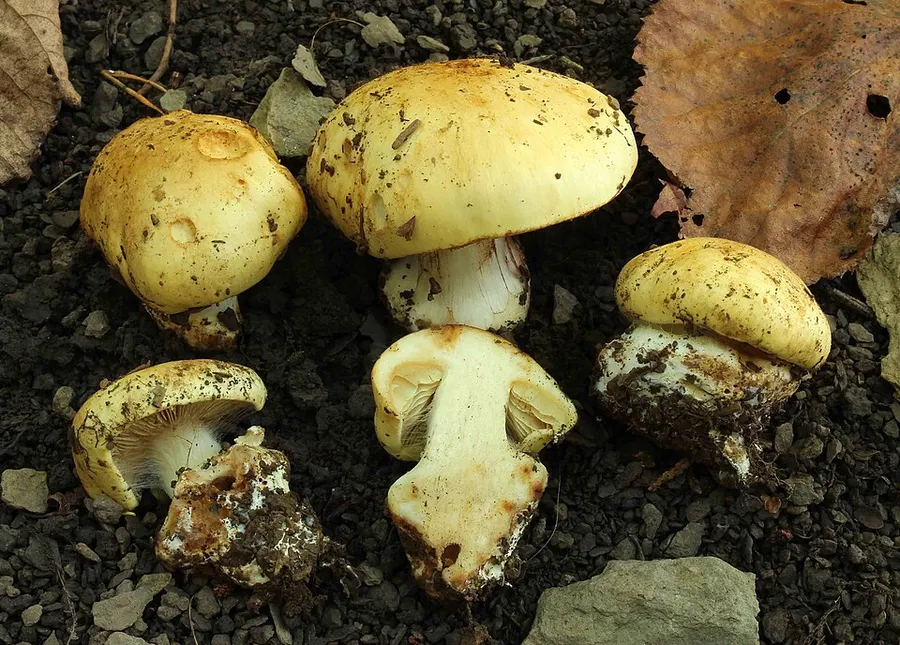
The cap of Calonarius osloensis is 3-7 cm, first convex, then flattening out with age. The surface of the cap is sticky, glossy and smooth, though the centre sometimes has dense, matted hairs. The colour of the cap changes little with age, other than the margin darkening from white to ochre, the rest of the cap staying ochre yellow to brown. The flesh is white when young, with spots on the stipe that stain yellowish-gray when wet. When damaged by a snail bite, the flesh can turn yellow.It does not change colour when stained with KOH. It has a radish- to dust-like earthy smell. Similarly, it tastes like radishes. The stipe measures 4-6 x .8-1.5 cm and has a marginate bulb at its bottom that is up to 3 cm wide. It has a universal veil that can vary in prominence, and is yellow when young, later turning brown, and slightly sticky. The stipe has a white, abundant cortina. Calonarius osloensis has crowded, 3-6 mm wide, yellowish gills, with slightly scalloped to serrated edges. The spores measure 11-12.5 x 6.5-7.5 μm, and are lemon-shaped, with distinct warts, and a suprahilar plage (smooth part of spore next to hilar appendix). The basidia are 9 x 11 μm wide, and bear 4 spores each. The trama of the gills measure 3-20 μm wide.
Habitat dan peran ekologis
It is native to south east Norway, specifically the Oslofjord area. It forms mycorrhiza with small-leaved linden trees, in calcareous (calcium-carbonate rich), shallow, soils with little leaf litter or humus. The IUCN estimates there are 260 mature individuals of this species left, with a continuing decline. It is therefore listed as endangered. Threats to the species include the decline of calcareous linden forests due to the land being developed for residential areas, or limestone quarries. Additionally, the invasion of Picea abies (Norway spruce) trees from adjacent plantations, as well as increased thickets of Ash and Maple, cause the soils to become more humid and acidic.
- Habitat atau konteks temuan
- hutan
- Substrat
- Informasi belum tersedia pada sumber rilis ini.
- Peran atau konteks
- Mitra tumbuhan
Reproduksi
The spores measure 11-12.5 x 6.5-7.5 μm, and are lemon-shaped, with distinct warts, and a suprahilar plage (smooth part of spore next to hilar appendix). The basidia are 9 x 11 μm wide, and bear 4 spores each. The trama of the gills measure 3-20 μm wide.
Catatan identitas dan cakupan
- Nama diterima mengikuti Catalogue of Life Base2026-09-11; uraian mempertahankan konsep dan nama sumber aslinya.
- Original geographic, specimen and life-cycle scope retained; source import awaits individual editorial review.
- Impor dan terjemahan otomatis belum diperiksa editorial per profil. Struktur reproduktif yang disebutkan tidak membuktikan seluruh siklus hidup diketahui.
- Pengukuran pada uraian mengikuti spesimen, kultur, dan metode sumber; angka tidak diperluas ke semua populasi.
Catatan distribusi dalam narasi mengikuti sumbernya. Dokumentasi spesimen atau foto mengikuti catatan sumber. Bukti wilayah Indonesia dan penilaian konservasi tidak disimpulkan dari gambar.
Melihat dengan konteks
Dokumentasi Calonarius osloensis dari Wikimedia Commons. Cortinarius osloensis Identifikasi mengikuti record berkas sumber.
- Jenis
- Fotografi
- Kredit
- Bálint Dima/Norsk institutt for naturforskning — Bálint Dima/Norsk institutt for naturforskning
- Lisensi
- CC BY 4.0
- Sumber media
- Buka entri sumber
Sumber profil
- [1] Calonarius osloensis — Wikipedia (en)
- [2] Catalogue of Life Base2026-09-11 — Calonarius osloensis
- [3] Dokumentasi visual — Calonarius osloensis
Rujukan halaman ini
Fungi. Calonarius osloensis. Rilis data fungi-2026-10-12-expansion-2. https://fungi-atlas.mgadib.chatgpt.site/jamur/calonarius-osloensis/.
Status: impor sumber; pemeriksaan editorial per profil belum selesai. Untuk klaim biologis, gunakan rujukan pada bagian terkait dan periksa konteks sumber aslinya.