Ciri dan struktur
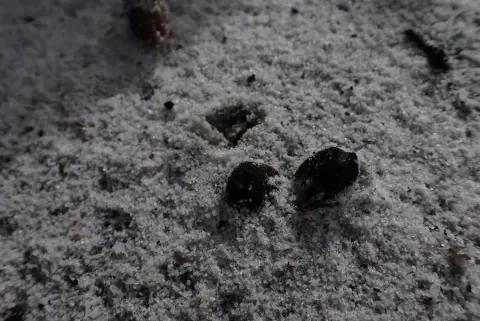
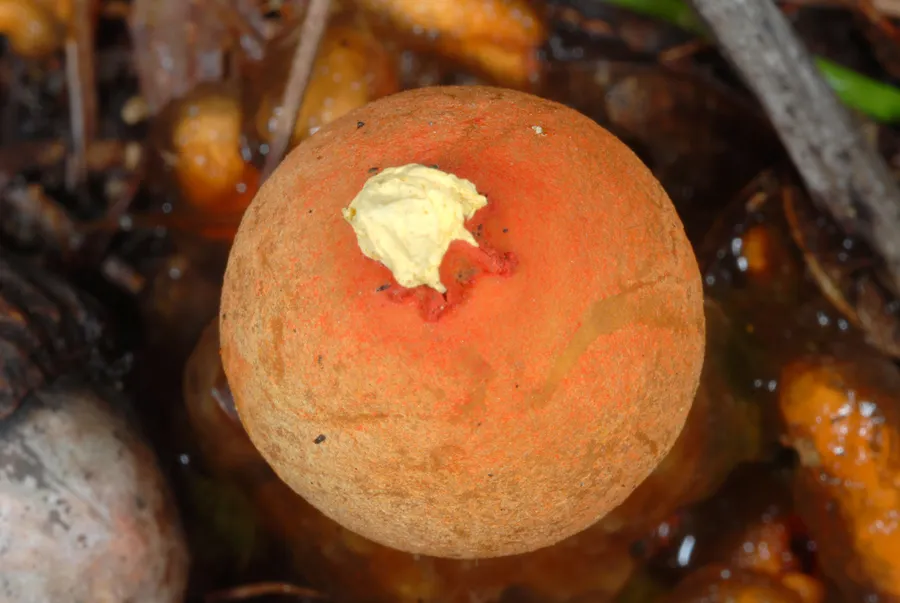
The appearance of the fruit bodies has been compared to amphibian eggs or "small red tomato[es] surrounded by jelly". They consist of a bright red, globose head atop a net-like stipe, covered in a thick gelatinous layer. These fruit bodies are initially hypogeous, but emerge from the ground as the stipe continues to expand. The head is up to 2 cm in diameter and typically nearly round, although in some populations, it is visibly oval and may be slightly smaller or larger. The internal structure of the head is complex, sometimes described as an exoperidium and endoperidium that each possess sublayers, and sometimes as distinct layers. The outermost is a yellowish, translucent coating of jelly-like material 4 to 9 mm thick, somewhat similar to a gelatinous universal veil. Below this coating is a thin, cinnabar-red membrane. As the mushroom ages, these outer layers break down and fall away from the head. Pieces of the red membrane become embedded in the remaining gelatinous material, giving them the appearance of small red seeds. This process reveals the endoperidium, a tough, non-gelatinous layer that does not break apart. When first revealed, it has a powdery, bright red surface that weathers to orange or pale yellow as the powder wears away. Bright red apical ridges or rays form a peristome. North American specimens typically have four to five such ridges, but Asian populations have been described with as many as seven. Contained inside the endoperidium is the gleba, or spore mass, which is white when young but buff or yellow in older specimens. Like the head, the stipe is covered in a gelatinous outer layer.
Habitat dan peran ekologis
Widely distributed, C. cinnabarinum can be found from Massachusetts south to Florida in the United States. Its range extends at least as far west as Texas, with possible populations in the Southwest, but is most common in the Appalachian Mountains where it becomes more frequent with increasing elevation. It is also present in Eastern Mexico, where it grows in the subtropical cloud forests of Veracruz and Hidalgo. In Central America, it is known from Belize's Chiquibul National Park, the cloud forests of Baja Verapaz and El Quiché in Guatemala, and Panama. The species is also recorded in South America, from Colombia as far southeast as Brazil, where it is described as rare. It has also been collected from a disjunct population in Asia, where it has been recorded from seven provinces in mainland China, mostly in the southeast, including Taiwan, as well as from Indonesia, Japan, and Jirisan in South Korea. Calostoma cinnabarinum was thought to be saprotrophic, and has been described in this manner in both scholarly and popular discussions of the species. However, this classification was the result of its taxonomic history and comparisons with saprotrophic fungi that are not closely related.
- Habitat atau konteks temuan
- hutan
- Substrat
- Informasi belum tersedia pada sumber rilis ini.
- Peran atau konteks
- Pengurai
Reproduksi
The head is up to 2 cm in diameter and typically nearly round, although in some populations, it is visibly oval and may be slightly smaller or larger. The internal structure of the head is complex, sometimes described as an exoperidium and endoperidium that each possess sublayers, and sometimes as distinct layers. The outermost is a yellowish, translucent coating of jelly-like material 4 to 9 mm thick, somewhat similar to a gelatinous universal veil. Below this coating is a thin, cinnabar-red membrane. As the mushroom ages, these outer layers break down and fall away from the head. Pieces of the red membrane become embedded in the remaining gelatinous material, giving them the appearance of small red seeds.
Catatan identitas dan cakupan
- Nama diterima mengikuti Catalogue of Life Base2026-09-11; uraian mempertahankan konsep dan nama sumber aslinya.
- Original geographic, specimen and life-cycle scope retained; source import awaits individual editorial review.
- Impor dan terjemahan otomatis belum diperiksa editorial per profil. Struktur reproduktif yang disebutkan tidak membuktikan seluruh siklus hidup diketahui.
- Pengukuran pada uraian mengikuti spesimen, kultur, dan metode sumber; angka tidak diperluas ke semua populasi.
Catatan distribusi dalam narasi mengikuti sumbernya. Dokumentasi spesimen atau foto mengikuti catatan sumber. Bukti wilayah Indonesia dan penilaian konservasi tidak disimpulkan dari gambar.
Melihat dengan konteks
Dokumentasi Calostoma cinnabarinum menurut asosiasi foto pada record takson iNaturalist. Kredit: Douglas Goldman. Identitas mengikuti sumber; bukan penentuan spesimen independen.
- Jenis
- Fotografi
- Kredit
- (c) Douglas Goldman, some rights reserved (CC BY-SA), uploaded by Douglas Goldman
- Lisensi
- CC BY-SA 4.0
- Sumber media
- Buka entri sumber
Dokumentasi tambahan
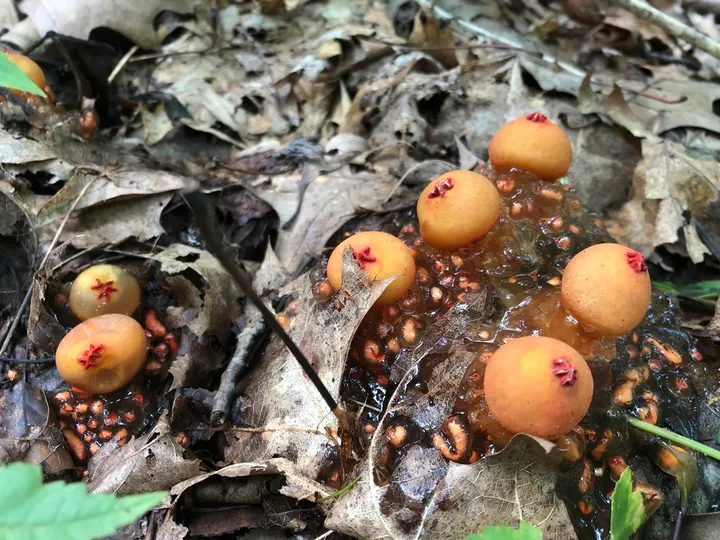
Foto yang diasosiasikan dengan Calostoma cinnabarinum pada iNaturalist. Identifikasi mengikuti sumber; bukan penentuan spesimen independen.
Kredit dan penggunaan
(c) Scott Morris, some rights reserved (CC BY), uploaded by Scott Morris
Ukuran dan format gambar disesuaikan tanpa pemotongan, retus, atau penambahan skala. Lisensi sumber dipertahankan.
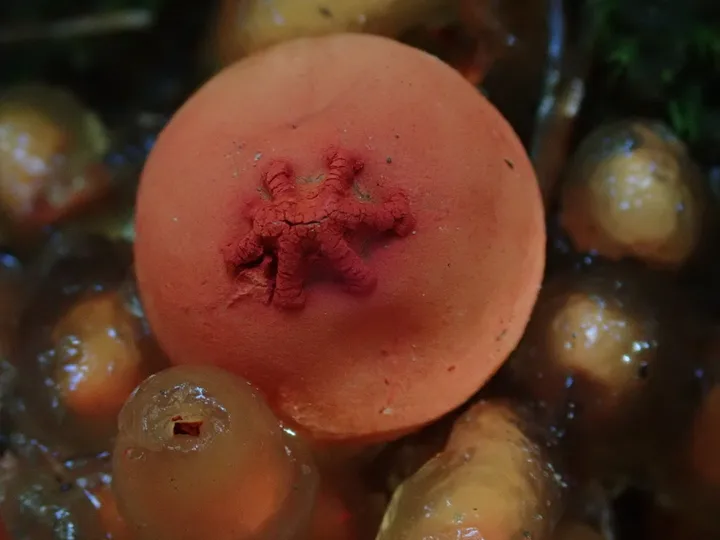
Foto yang diasosiasikan dengan Calostoma cinnabarinum pada iNaturalist. Identifikasi mengikuti sumber; bukan penentuan spesimen independen.
Kredit dan penggunaan
no rights reserved, uploaded by Lynn Harper
Ukuran dan format gambar disesuaikan tanpa pemotongan, retus, atau penambahan skala. Lisensi sumber dipertahankan.
Sumber profil
- [1] Calostoma cinnabarinum — Wikipedia (en)
- [2] Catalogue of Life Base2026-09-11 — Calostoma cinnabarinum
- [3] Dokumentasi visual — Calostoma cinnabarinum
- [4] Dokumentasi visual — Calostoma cinnabarinum
- [5] Dokumentasi visual — Calostoma cinnabarinum
Rujukan halaman ini
Fungi. Calostoma cinnabarinum. Rilis data fungi-2026-10-12-expansion-2. https://fungi-atlas.mgadib.chatgpt.site/jamur/calostoma-cinnabarinum/.
Status: impor sumber; pemeriksaan editorial per profil belum selesai. Untuk klaim biologis, gunakan rujukan pada bagian terkait dan periksa konteks sumber aslinya.