Ciri dan struktur
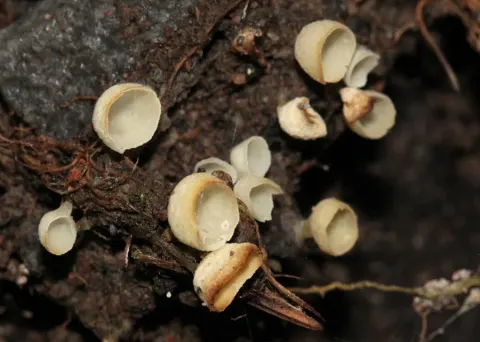
Pilei annual, scattered, membranous, tough, 2-3 mm. long, 1-3 mm. broad, pendulous when attached by a narrow vertex, or conical-cupulate when seated upon a somewhat broad base; exterior surface fawn or tan, darker peripherally, finely radiate-striate, or wrinkled, naked; margin acute, inturned or plane, entire or slightly lacerate; hymenial surface even, concave, bay-brown. Context white (brown in some old specimens), 150-250 µ thick, to 500 µ at the base, of radiately arranged sclerotioid compact hyphae; generative hyphae to 5 µ diameter, wall 1 µ thick, hyaline, branched, septate, tortuous. Hymenial layer to 70 µ deep, paraphyses subclavate. Basidia clavate, 40-56 x 7-9 µ, 2-4-spored. Spores obovate or elliptical, apiculate, 8-9.5 x 5-6 µ, smooth, hyaline.
Habitat dan peran ekologis
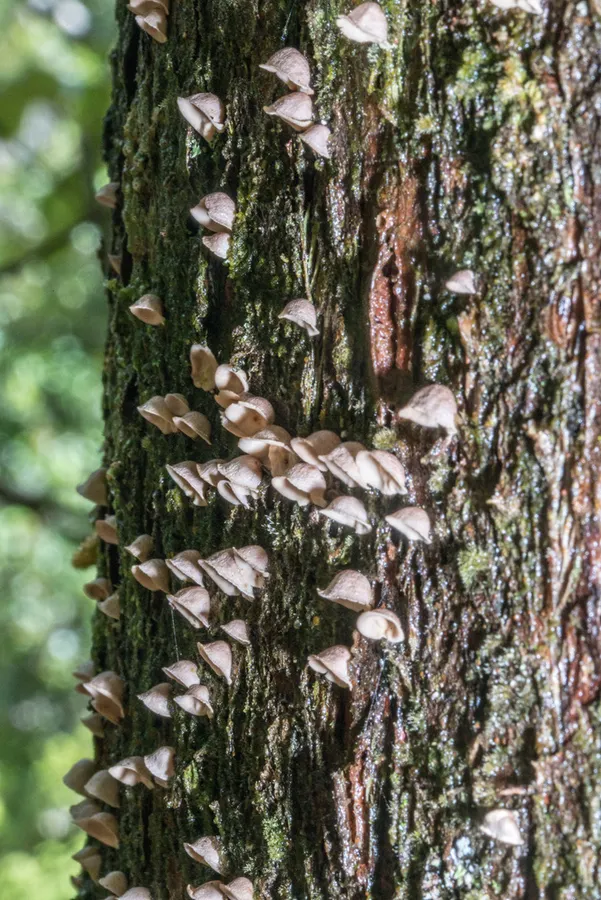
HABITAT. Scattered on bark of living and dead branches. The species is common on two endemic species of Podocarpus, called totara by the Maori, hence its specific name. It is often present on bark of living trunks or branches, though as frequent on dead branches. Close to C. hebe, it may be separated by the usually much larger size of pilei, thicker context with different hyphae, and differently shaped shorter spores. In Kew herbarium is filed one collection, ex totara bark, Buller Valley, Westland, T. Kirk, No. 236. It was placed by Cooke under the cover of C. cupulaeformis Berk. & Rav., a species which differs in possessing markedly angular, distorted, and irregular spores.
- Habitat atau konteks temuan
- Informasi belum tersedia pada sumber rilis ini.
- Substrat
- kayu; kulit kayu
- Peran atau konteks
- Belum dikategorikan pada rilis ini.
Reproduksi
Pilei annual, scattered, membranous, tough, 2-3 mm. long, 1-3 mm. broad, pendulous when attached by a narrow vertex, or conical-cupulate when seated upon a somewhat broad base; exterior surface fawn or tan, darker peripherally, finely radiate-striate, or wrinkled, naked; margin acute, inturned or plane, entire or slightly lacerate; hymenial surface even, concave, bay-brown. Context white (brown in some old specimens), 150-250 µ thick, to 500 µ at the base, of radiately arranged sclerotioid compact hyphae; generative hyphae to 5 µ diameter, wall 1 µ thick, hyaline, branched, septate, tortuous. Hymenial layer to 70 µ deep, paraphyses subclavate. Basidia clavate, 40-56 x 7-9 µ, 2-4-spored. Spores obovate or elliptical, apiculate, 8-9.5 x 5-6 µ, smooth, hyaline.
Catatan identitas dan cakupan
- Nama diterima mengikuti Catalogue of Life Base2026-09-11; uraian mempertahankan konsep dan nama sumber aslinya.
- Historical description as cited by BiotaNZ. Preserve explicit New Zealand/locality, host and specimen qualifiers. Distribution is the cited source scope, not a current global range.
- Impor dan terjemahan otomatis belum diperiksa editorial per profil. Struktur reproduktif yang disebutkan tidak membuktikan seluruh siklus hidup diketahui.
- Pengukuran pada uraian mengikuti spesimen, kultur, dan metode sumber; angka tidak diperluas ke semua populasi.
Catatan distribusi dalam narasi mengikuti sumbernya. Dokumentasi spesimen atau foto mengikuti catatan sumber. Bukti wilayah Indonesia dan penilaian konservasi tidak disimpulkan dari gambar.
Melihat dengan konteks
Dokumentasi Calyptella totara menurut asosiasi foto pada record takson iNaturalist. Kredit: Jeremy Rolfe. Identitas mengikuti sumber; bukan penentuan spesimen independen.
- Jenis
- Fotografi
- Kredit
- (c) Jeremy Rolfe, some rights reserved (CC BY), uploaded by Jeremy Rolfe
- Lisensi
- CC BY 4.0
- Sumber media
- Buka entri sumber
Dokumentasi tambahan
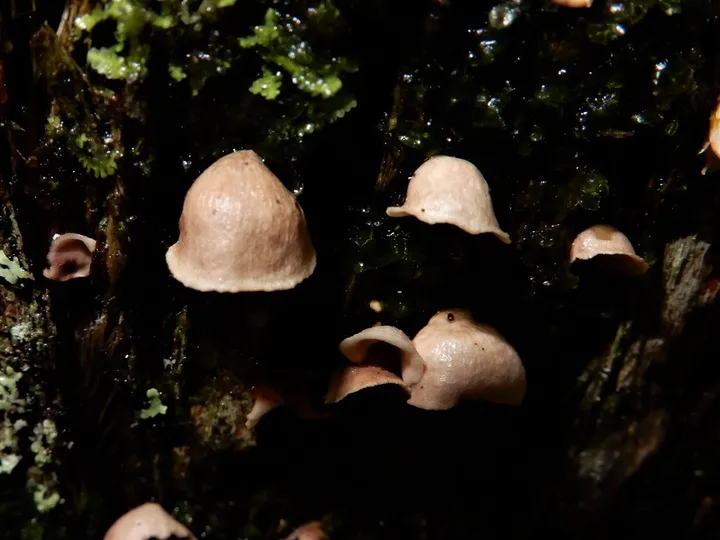
Foto yang diasosiasikan dengan Calyptella totara pada iNaturalist. Identifikasi mengikuti sumber; bukan penentuan spesimen independen.
Kredit dan penggunaan
(c) Grey Smith, some rights reserved (CC BY), uploaded by Grey Smith
Ukuran dan format gambar disesuaikan tanpa pemotongan, retus, atau penambahan skala. Lisensi sumber dipertahankan.
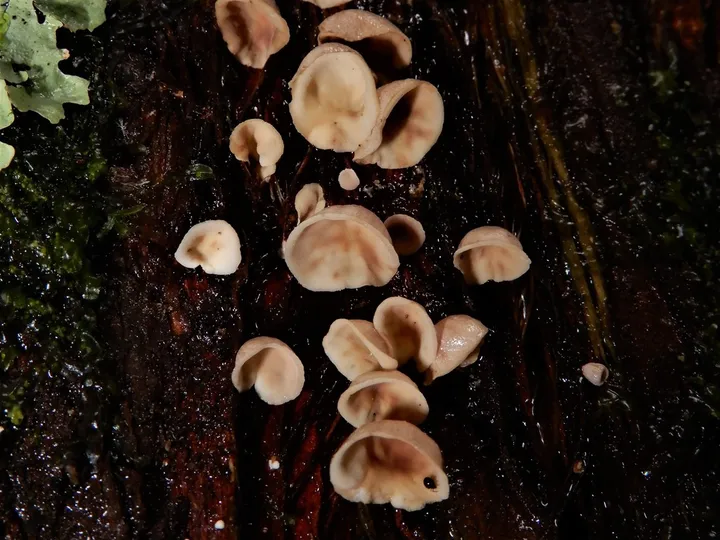
Foto yang diasosiasikan dengan Calyptella totara pada iNaturalist. Identifikasi mengikuti sumber; bukan penentuan spesimen independen.
Kredit dan penggunaan
(c) Grey Smith, some rights reserved (CC BY), uploaded by Grey Smith
Ukuran dan format gambar disesuaikan tanpa pemotongan, retus, atau penambahan skala. Lisensi sumber dipertahankan.
Sumber profil
- [1] Cunningham, G.H. 1948: New Zealand Polyporaceae. 3. The genus Polyporus. New Zealand Department of Scientific and Industrial Research, Plant Diseases Division, Bulletin. 74. — Cyphella totara
- [2] Catalogue of Life Base2026-09-11 — Calyptella totara
- [3] Dokumentasi visual — Calyptella totara
- [4] Dokumentasi visual — Calyptella totara
- [5] Dokumentasi visual — Calyptella totara
Rujukan halaman ini
Fungi. Calyptella totara. Rilis data fungi-2026-10-12-expansion-2. https://fungi-atlas.mgadib.chatgpt.site/jamur/calyptella-totara/.
Status: impor sumber; pemeriksaan editorial per profil belum selesai. Untuk klaim biologis, gunakan rujukan pada bagian terkait dan periksa konteks sumber aslinya.