01 / Morfologi

Ciri dan struktur

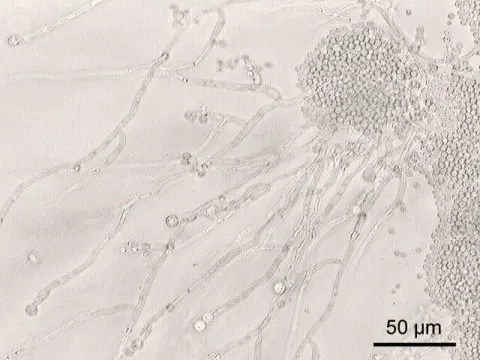
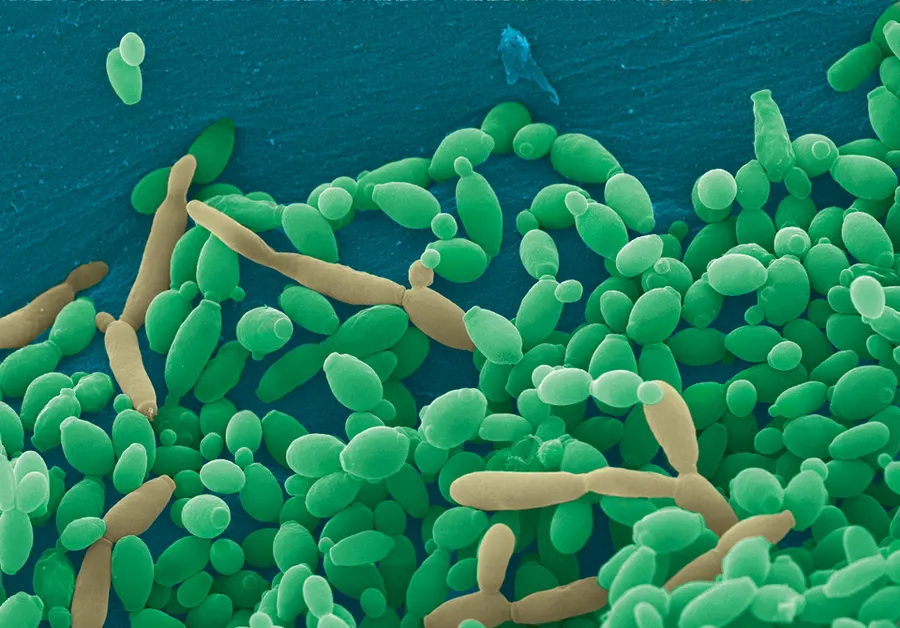
C. tropicalis is a vegetative cell with the shape from round to oval ranging from approximately 2 – 10 micrometers. A mould exhibits dimorphism forming a single-celled yeast or so-called blastoconidia which reproduces by simple budding. Conidia are the asexual units that are produced by budding of the tips or walls of the hyphae. Conidia are types of simple and unicellular bodies that could also take the form of multicellular cells with different shapes, sizes, and colors. Microconidia refer to small and unicellular conidia whereas macroconidia refer to large and multicellular conidia. There are different media on which C. tropicalis can grow effectively. A common medium used is the Sabouraud’s agar which contains peptone and sugar. This is enough for identifying the species but with a disadvantage of promoting mycelial growth and suppressing conidia formation. Another commonly used medium is the cornmeal agar which is useful in inducing formation of conidia. Potato-glucose, potato-carrot, tomato juice, lima bean and others are also types of media used for growth. The optimal temperature for growth is between 25-35 C and growth is enhanced if sugar or fat is added in the medium. Colonies of C. tropicalis are white, smooth and butyrous with a fringed border.

Sebagian uraian ditampilkan dalam bahasa sumber; terjemahannya belum tersedia atau belum lolos pemeriksaan.

Rujukan: [1]

Pengukuran mengikuti objek, spesimen atau kultur, dan metode yang disebutkan sumber. Baca uraian asli untuk konteks lengkap.

02 / Kehidupan

Habitat dan peran ekologis

Candida species are very pervasive yeasts that are distributed worldwide geographically. They are more likely to be found in tropical climate where temperature and humidity will enhance the adaptability of C. tropicalis.

Sebagian uraian ditampilkan dalam bahasa sumber; terjemahannya belum tersedia atau belum lolos pemeriksaan.

Rujukan: [1]

Habitat atau konteks temuan
Informasi belum tersedia pada sumber rilis ini.
Substrat
Informasi belum tersedia pada sumber rilis ini.
Peran atau konteks
Belum dikategorikan pada rilis ini.
Temukan hubungan serupa
03 / Siklus hidup

Reproduksi

C. tropicalis is a vegetative cell with the shape from round to oval ranging from approximately 2 – 10 micrometers. A mould exhibits dimorphism forming a single-celled yeast or so-called blastoconidia which reproduces by simple budding. Conidia are the asexual units that are produced by budding of the tips or walls of the hyphae. Conidia are types of simple and unicellular bodies that could also take the form of multicellular cells with different shapes, sizes, and colors. Microconidia refer to small and unicellular conidia whereas macroconidia refer to large and multicellular conidia. There are different media on which C. tropicalis can grow effectively. A common medium used is the Sabouraud’s agar which contains peptone and sugar.

Sebagian uraian ditampilkan dalam bahasa sumber; terjemahannya belum tersedia atau belum lolos pemeriksaan.

Rujukan: [1]

Sinonim menurut acuan taksonomi rilis: Atelosaccharomyces paratropicalis; Atelosaccharomyces tropicalis; Blastodendrion irritans; Blastodendrion kayongosi; Candida accraensis; Candida albicans var. tropicalis; Candida benhamiae; Candida bonordenii; Candida bronchialis; Candida enterica; Candida insolita; Candida nivea; Candida paratropicalis; Candida vulgaris; Castellania accraensis; Castellania bronchialis; Castellania burgessii; Castellania egyptiaca; Castellania enterica; Castellania faecalis; Castellania insolita; Castellania linguae-pilosae; Castellania metatropicalis; Castellania nivea; Castellania paratropicalis; Castellania tropicalis; Cryptococcus interdigitalis; Cryptococcus kayongosi; Cryptococcus linguae-pilosae; Endomyces bronchialis; Endomyces burgessii; Endomyces cruzii; Endomyces entericus; Endomyces faecalis; Endomyces insolitus; Endomyces niveus; Endomyces paratropicalis; Endomyces perryi; Geotrichoides vulgaris; Geotrichum issavi; Monilia accraensis; Monilia argentina; Monilia bonordenii; Monilia bronchialis; Monilia burgessii; Monilia egyptiaca; Monilia enterica; Monilia faecalis; Monilia insolita; Monilia kayongosi; Monilia metatropicalis; Monilia murmanica; Monilia nivea; Monilia paratropicalis; Monilia perryi; Monilia tropicalis; Myceloblastanon bronchiale; Myceloblastanon candidum; Myceloblastanon entericum; Myceloblastanon faecalis; Myceloblastanon insolitum; Myceloblastanon linguae-pilosae; Myceloblastanon niveum; Myceloblastanon paratropicale; Myceloblastanon tropicale; Mycocandida paratropicalis; Mycoderma issavi; Mycotorula dimorpha; Mycotorula interdigitalis; Mycotorula trimorpha; Mycotorula tropicalis; Mycotoruloides argentina; Mycotoruloides trimorpha; Oidium tropicale; Oospora arthurii; Parasaccharomyces candidus; Parasaccharomyces irritans; Parasaccharomyces talicei; Parendomyces perryi; Saccharomyces linguae-pilosae; Saccharomyces pleomorphus; Syringospora dimorpha; Syringospora interdigitalis; Syringospora issavi; Torulopsis interdigitalis; Torulopsis linguae-pilosae; Zymonema cruzii
04 / Batas informasi

Catatan identitas dan cakupan

  • Nama diterima mengikuti Catalogue of Life Base2026-09-11; uraian mempertahankan konsep dan nama sumber aslinya.
  • Original geographic, specimen and life-cycle scope retained; source import awaits individual editorial review.
  • Impor dan terjemahan otomatis belum diperiksa editorial per profil. Struktur reproduktif yang disebutkan tidak membuktikan seluruh siklus hidup diketahui.
  • Pengukuran pada uraian mengikuti spesimen, kultur, dan metode sumber; angka tidak diperluas ke semua populasi.

Catatan distribusi dalam narasi mengikuti sumbernya. Dokumentasi spesimen atau foto mengikuti catatan sumber. Bukti wilayah Indonesia dan penilaian konservasi tidak disimpulkan dari gambar.

05 / Dokumentasi

Melihat dengan konteks

Dokumentasi Candida tropicalis dari Wikimedia Commons. Pseudo-colored scanning electron micrograph of Candida tropicalis YC466 displaying both yeast and pseudohyphae. Identifikasi mengikuti record berkas sumber.

Jenis
Fotografi
Kredit
Djspring
Sumber media
Buka entri sumber

Gambar menunjukkan objek menurut identifikasi sumber, bukan verifikasi independen spesimen oleh Fungi. Tidak ada skala baru yang ditambahkan.

06 / Rujukan

Sumber profil

  1. [1] Candida tropicalis — Wikipedia (en)Bagian sumber: Frozen revision 1335789882
    Tanggal penghimpunan sumber: 2026-10-12
    Teks sumber: CC BY-SA4.0 · Wikipedia contributors
  2. [2] Catalogue of Life Base2026-09-11 — Candida tropicalisBagian sumber: ColDP NameUsage.tsv ID QLJM; accepted species; source 2073
    Tanggal penghimpunan sumber: 2026-10-12
  3. [3] Dokumentasi visual — Candida tropicalisBagian sumber: Individual media record; identification follows the source, not independent determination
    Tanggal penghimpunan sumber: 2026-10-12
    Media sumber: CC BY-SA 3.0 · Djspring

Adaptasi teks: CC BY-SA 4.0. Wikipedia contributors — Candida tropicalis — Wikipedia (en)

Uraian asli dan riwayat sumber

Riwayat atau halaman sumber

Ringkasan sumber

Candida tropicalis is a species of yeast in the genus Candida. It is a common pathogen in neutropenic hosts, in whom it may spread through the bloodstream to peripheral organs. For invasive disease, treatments include amphotericin B, echinocandins, or extended-spectrum triazole antifungals.

Revisi sumber

Morfologi sumber

C. tropicalis is a vegetative cell with the shape from round to oval ranging from approximately 2 – 10 micrometers. A mould exhibits dimorphism forming a single-celled yeast or so-called blastoconidia which reproduces by simple budding. Conidia are the asexual units that are produced by budding of the tips or walls of the hyphae. Conidia are types of simple and unicellular bodies that could also take the form of multicellular cells with different shapes, sizes, and colors. Microconidia refer to small and unicellular conidia whereas macroconidia refer to large and multicellular conidia. There are different media on which C. tropicalis can grow effectively. A common medium used is the Sabouraud’s agar which contains peptone and sugar. This is enough for identifying the species but with a disadvantage of promoting mycelial growth and suppressing conidia formation. Another commonly used medium is the cornmeal agar which is useful in inducing formation of conidia. Potato-glucose, potato-carrot, tomato juice, lima bean and others are also types of media used for growth. The optimal temperature for growth is between 25-35 C and growth is enhanced if sugar or fat is added in the medium. Colonies of C. tropicalis are white, smooth and butyrous with a fringed border.

Revisi sumber

Ekologi sumber

Candida species are very pervasive yeasts that are distributed worldwide geographically. They are more likely to be found in tropical climate where temperature and humidity will enhance the adaptability of C. tropicalis.

Revisi sumber

Struktur reproduksi sumber

C. tropicalis is a vegetative cell with the shape from round to oval ranging from approximately 2 – 10 micrometers. A mould exhibits dimorphism forming a single-celled yeast or so-called blastoconidia which reproduces by simple budding. Conidia are the asexual units that are produced by budding of the tips or walls of the hyphae. Conidia are types of simple and unicellular bodies that could also take the form of multicellular cells with different shapes, sizes, and colors. Microconidia refer to small and unicellular conidia whereas macroconidia refer to large and multicellular conidia. There are different media on which C. tropicalis can grow effectively. A common medium used is the Sabouraud’s agar which contains peptone and sugar.

Revisi sumber

Rujukan halaman ini

Fungi. Candida tropicalis. Rilis data fungi-2026-10-12-expansion-2. https://fungi-atlas.mgadib.chatgpt.site/jamur/candida-tropicalis/.

Status: impor sumber; pemeriksaan editorial per profil belum selesai. Untuk klaim biologis, gunakan rujukan pada bagian terkait dan periksa konteks sumber aslinya.