Ciri dan struktur
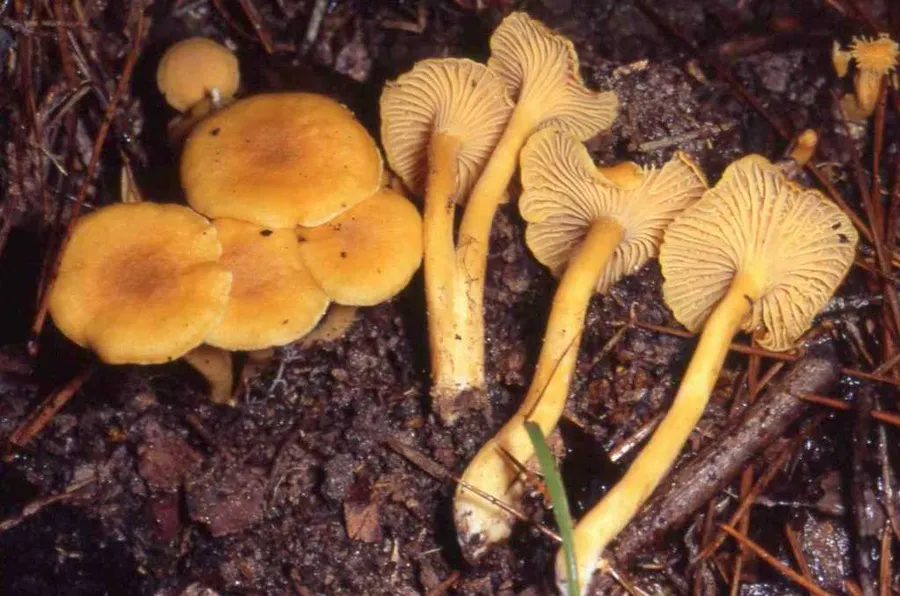
Pileus 10–30 mm diam, hemispheric to convex, becoming broadly conical to plane convex and faintly depressed in the disc, margin incurved when young, somewhat inflexed to straight with age or somewhat reflexed, not striate, not or faintly undulate or crenulate; hygrophanous, with dull appearance, some with greyish appressed fibrils at center and smooth at the margin when young, smooth to glabrescent with age; light yellow (2.5Y 8/6–8/8, 4A5). Hymenophore decurrent or shortly decurrent, with gills up to 3 mm deep, subdistant to more frequently distant, continuous, or forked at different levels, moderately thick; margin entire, at times with irregular anastomosis among folds, with short lamellulae-like folds; yellow to egg yellow (10YR 8/8) brighter than the pileus. Stipe (15–) 19–40 × 2–6 mm, central or at times slightly eccentric, equal, occasionally somewhat applanate, at times slightly fused or broader at base, solid to hollow, often furrowed especially below, hygrophanous, surface smooth, concolorous with the pileus; mycelium whitish to pale yellowish. Context 1–3 mm thick cream color to yellowish, odor mild, agreeable; taste mild, agreeable. Basidiospores 6.5–8.5 × 4.5–5 µm [ X – = 7.32–7.34 × 4.8–4.9 µm, X – = 1.49–1.52, (n = 2)], ellipsoid, smooth, thin-walled, hyaline, inamyloid, with granular contents or refractive droplets. Basidia (53–) 56–87 (–99) × 6–10 µm, narrowly clavate to subcylindrical, with 2–4 sterigmata, thin-walled, hyaline; subhymenium composed of cylindrical hyphae 3–5 µm diam. Cystidia absent. Pileipellis a cutis composed of hyphae 5–8 µm diam, intermingled in a compact arrangement, cylindrical, hyaline, inamyloid, with terminal hyphae cylindrical to somewhat subclavate, 62–75 × 6–10 µm, slightly thick-walled (<1 µm thick), smooth, hyaline, inamyloid, usually abundant.
Habitat dan peran ekologis
Solitary to gregarious, rare in the study area, on soil, in tropical oak forest, under Quercus oleoides and Q. sapotifolia, fruiting in June at the coastal plain of central Veracruz State, east coast of Mexico.
- Habitat atau konteks temuan
- hutan
- Substrat
- tanah
- Peran atau konteks
- Belum dikategorikan pada rilis ini.
Reproduksi
Pileus 10–30 mm diam, hemispheric to convex, becoming broadly conical to plane convex and faintly depressed in the disc, margin incurved when young, somewhat inflexed to straight with age or somewhat reflexed, not striate, not or faintly undulate or crenulate; hygrophanous, with dull appearance, some with greyish appressed fibrils at center and smooth at the margin when young, smooth to glabrescent with age; light yellow (2.5Y 8/6–8/8, 4A5). Hymenophore decurrent or shortly decurrent, with gills up to 3 mm deep, subdistant to more frequently distant, continuous, or forked at different levels, moderately thick; margin entire, at times with irregular anastomosis among folds, with short lamellulae-like folds; yellow to egg yellow (10YR 8/8) brighter than the pileus.
Catatan identitas dan cakupan
- Nama diterima mengikuti Catalogue of Life Base2026-09-11; uraian mempertahankan konsep dan nama sumber aslinya.
- Preserve original treatment localities, hosts and substrate scope. Materials examined describe documented specimens, not the full global range.
- Impor dan terjemahan otomatis belum diperiksa editorial per profil. Struktur reproduktif yang disebutkan tidak membuktikan seluruh siklus hidup diketahui.
- Pengukuran pada uraian mengikuti spesimen, kultur, dan metode sumber; angka tidak diperluas ke semua populasi.
Catatan distribusi dalam narasi mengikuti sumbernya. Dokumentasi spesimen atau foto mengikuti catatan sumber. Bukti wilayah Indonesia dan penilaian konservasi tidak disimpulkan dari gambar.
Melihat dengan konteks
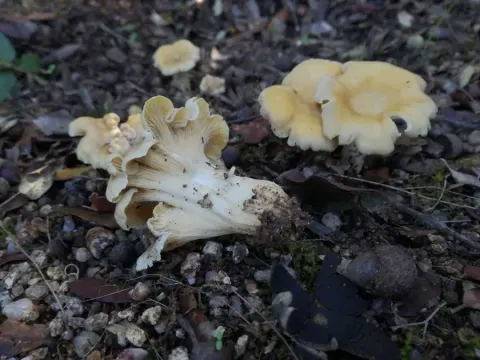
Dokumentasi Cantharellus tabernensis menurut asosiasi foto pada record takson iNaturalist. Kredit: Ron Pastorino (Ronpast). Identitas mengikuti sumber; bukan penentuan spesimen independen.
- Jenis
- Fotografi
- Kredit
- (c) Ron Pastorino (Ronpast), some rights reserved (CC BY-SA)
- Lisensi
- CC BY-SA 4.0
- Sumber media
- Buka entri sumber
Dokumentasi tambahan
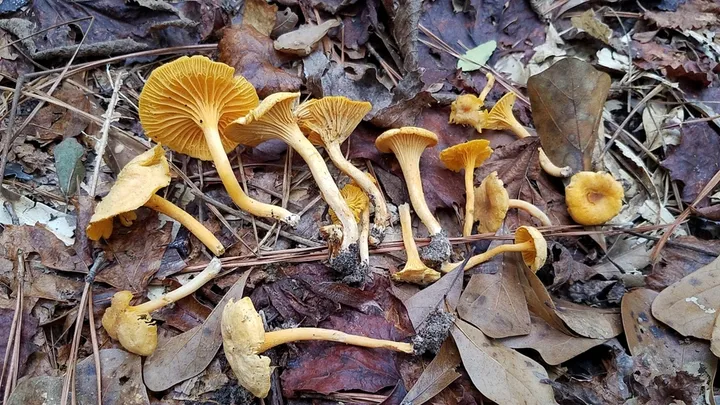
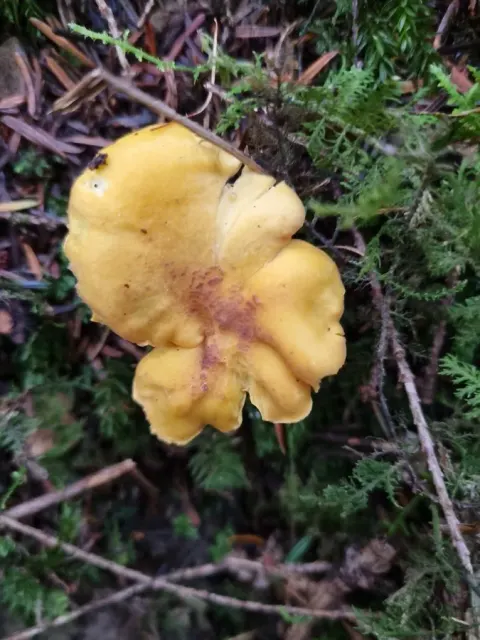
Foto yang diasosiasikan dengan Cantharellus tabernensis pada iNaturalist. Identifikasi mengikuti sumber; bukan penentuan spesimen independen.
Kredit dan penggunaan
(c) Alan Rockefeller, some rights reserved (CC BY), uploaded by Alan Rockefeller
Ukuran dan format gambar disesuaikan tanpa pemotongan, retus, atau penambahan skala. Lisensi sumber dipertahankan.
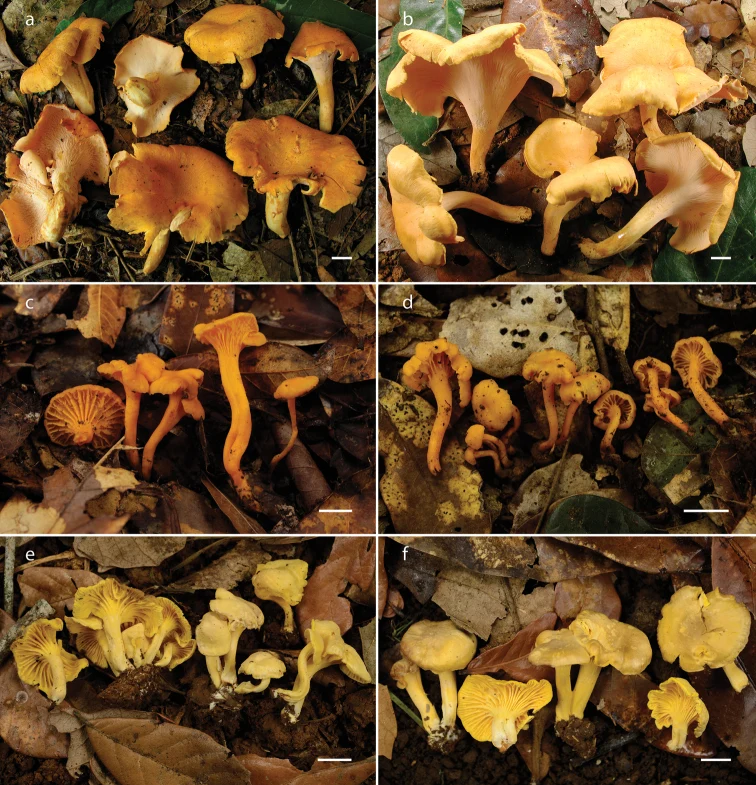
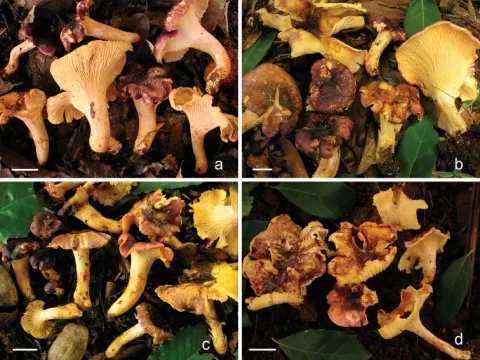
Basidiomes of Cantharellus species a, b C. veraecrucis (a Bandala 4505, holotype b Herrera 142) c, d C. parvoflavus (c Montoya 5423, holotype d Herrera 229) e, f C. tabernensis (e Herrera 120 f Herrera 131). Scale bars: 10 mm.
Kredit dan penggunaan
Leticia Montoya, Mariana Herrera, Victor M. Bandala, Antero Ramos
Ukuran dan format gambar disesuaikan tanpa pemotongan, retus, atau penambahan skala. Lisensi sumber dipertahankan.
Sumber profil
- [1] Two new species and a new record of yellow Cantharellus from tropical Quercus forests in eastern Mexico with the proposal of a new name for the replacement of Craterellus confluens — Cantharellus tabernensis
- [2] Catalogue of Life Base2026-09-11 — Cantharellus tabernensis
- [3] Dokumentasi visual — Cantharellus tabernensis
- [4] Dokumentasi visual — Cantharellus tabernensis
- [5] Dokumentasi visual — Cantharellus tabernensis
Rujukan halaman ini
Fungi. Cantharellus tabernensis. Rilis data fungi-2026-10-12-expansion-2. https://fungi-atlas.mgadib.chatgpt.site/jamur/cantharellus-tabernensis/.
Status: impor sumber; pemeriksaan editorial per profil belum selesai. Untuk klaim biologis, gunakan rujukan pada bagian terkait dan periksa konteks sumber aslinya.