Ciri dan struktur
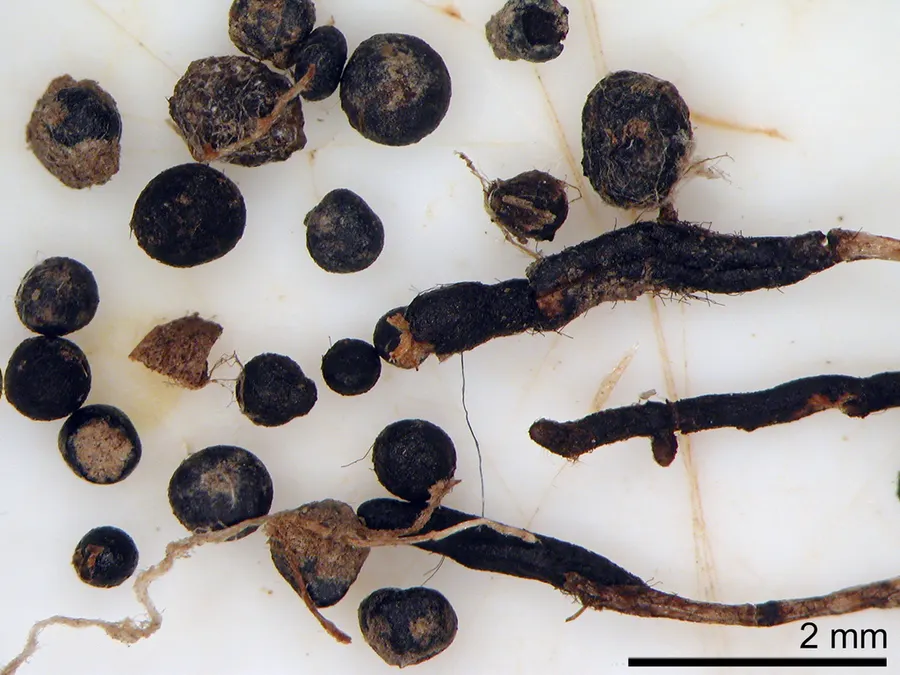
Cenococcum geophilum Fr., synonym Cenococcum graniforme (Sow.) Ferd. and Winge, is an Ascomycete fungal species and is the only member in the genus Cenococcum. It is one of the most common ectomycorrhizal fungal species encountered in forest ecosystems. The geographic distribution of the species is notably cosmopolitan; it is found in ecosystems with a wide range of environmental conditions, and in many cases in high relative frequency. Because of its wide distribution and abundance in forest soils, it is one of the most well-studied ectomycorrhizal fungal species. While the species has long been known to be sterile and not produce asexual or sexual spores, cryptic sexual stages may exist. The hyphae produced by C. geophilum are characterized by their thick (1.5-8 um), straight and jet black appearance with little branching. They usually form monopodial (unbranched) ectomycorrhizas. The mantles of C. geophilum ectomycorrhizas are usually thick with few to many emanating hyphae. It is not unusual to find Cenococcum geophilum mycelium and ectomycorrhizas in high relative frequency in soil where ectomycorrhizal tree hosts are present. Unlike many ectomycorrhizal fungi, Cenococcum geophilum readily colonizes the fine roots of most ectomycorrhizal hosts. It may be found in all forest successional stages. Unlike most ectomycorrhizal fungal species, Cenococcum geophilum appears to have no distinct vertical distribution in the organic horizons of soil though it appears to prefer organic horizons to mineral soil. Cenococcum geophilum also appears to have an even horizontal spatial distribution pattern at the microscale and site level.
Habitat dan peran ekologis
It is not unusual to find Cenococcum geophilum mycelium and ectomycorrhizas in high relative frequency in soil where ectomycorrhizal tree hosts are present. Unlike many ectomycorrhizal fungi, Cenococcum geophilum readily colonizes the fine roots of most ectomycorrhizal hosts. It may be found in all forest successional stages. Unlike most ectomycorrhizal fungal species, Cenococcum geophilum appears to have no distinct vertical distribution in the organic horizons of soil though it appears to prefer organic horizons to mineral soil. Cenococcum geophilum also appears to have an even horizontal spatial distribution pattern at the microscale and site level. This unusual distributional pattern may be the result of wide niche breadth of Cenococcum geophilum and/or genetic variation within the species. salinity, and heavy metal stressors, but is probably best known for its ability to tolerate water stress. Hasselquist et al. (2005) found evidence that suggests that increased colonization of fine roots of Douglas fir seedlings by C. geophilum may alleviate water stress of the host plant during periods of low water availability. Melanin biosynthesis, which is quite high in C. geophilum, gives its hyphae the “jet-black” appearance, and has been linked with stress tolerance in fungi.
- Habitat atau konteks temuan
- Informasi belum tersedia pada sumber rilis ini.
- Substrat
- Informasi belum tersedia pada sumber rilis ini.
- Peran atau konteks
- Mitra tumbuhan
Reproduksi
Cenococcum geophilum Fr., synonym Cenococcum graniforme (Sow.) Ferd. and Winge, is an Ascomycete fungal species and is the only member in the genus Cenococcum. It is one of the most common ectomycorrhizal fungal species encountered in forest ecosystems. The geographic distribution of the species is notably cosmopolitan; it is found in ecosystems with a wide range of environmental conditions, and in many cases in high relative frequency. Because of its wide distribution and abundance in forest soils, it is one of the most well-studied ectomycorrhizal fungal species. While the species has long been known to be sterile and not produce asexual or sexual spores, cryptic sexual stages may exist. The hyphae produced by C. geophilum are characterized by their thick (1.5-8 um), straight and jet black appearance with little branching.
Catatan identitas dan cakupan
- Nama diterima mengikuti Catalogue of Life Base2026-09-11; uraian mempertahankan konsep dan nama sumber aslinya.
- Original geographic, specimen and life-cycle scope retained; source import awaits individual editorial review.
- Impor dan terjemahan otomatis belum diperiksa editorial per profil. Struktur reproduktif yang disebutkan tidak membuktikan seluruh siklus hidup diketahui.
- Pengukuran pada uraian mengikuti spesimen, kultur, dan metode sumber; angka tidak diperluas ke semua populasi.
Catatan distribusi dalam narasi mengikuti sumbernya. Dokumentasi spesimen atau foto mengikuti catatan sumber. Bukti wilayah Indonesia dan penilaian konservasi tidak disimpulkan dari gambar.
Melihat dengan konteks
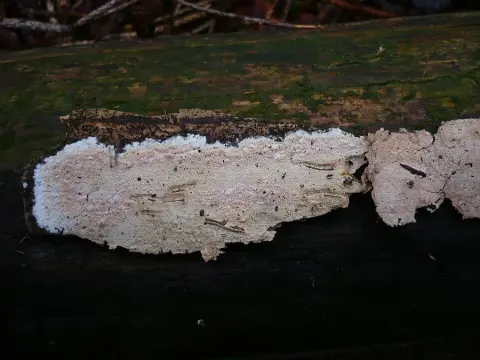
Dokumentasi Cenococcum geophilum menurut asosiasi foto pada record takson iNaturalist. Kredit: Jerry Cooper. Identitas mengikuti sumber; bukan penentuan spesimen independen.
- Jenis
- Fotografi
- Kredit
- (c) Jerry Cooper, some rights reserved (CC BY), uploaded by Jerry Cooper
- Lisensi
- CC BY 4.0
- Sumber media
- Buka entri sumber
Dokumentasi tambahan
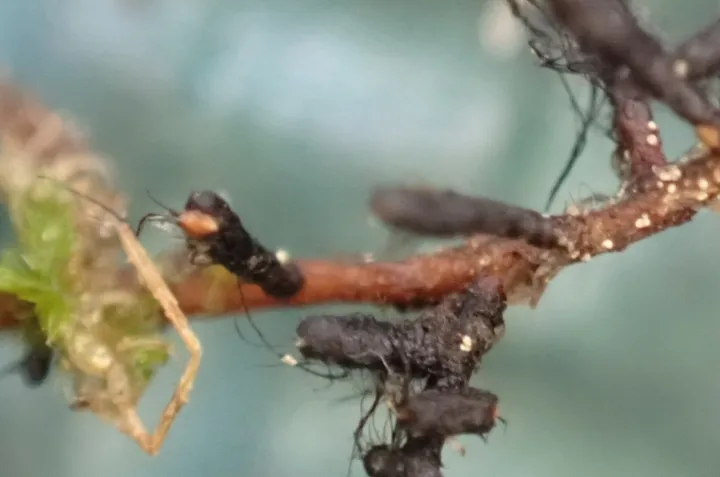
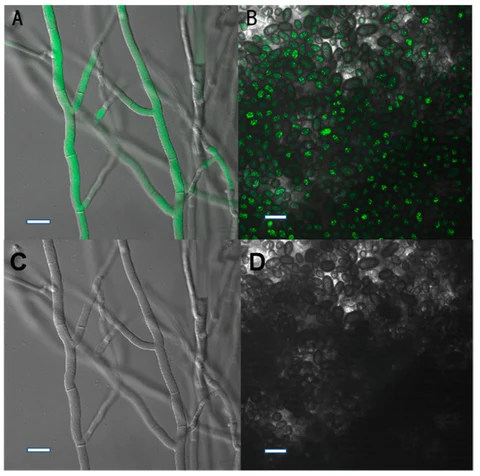
Foto yang diasosiasikan dengan Cenococcum geophilum pada iNaturalist. Identifikasi mengikuti sumber; bukan penentuan spesimen independen.
Kredit dan penggunaan
(c) Andreas Schneider, some rights reserved (CC BY), uploaded by Andreas Schneider
Ukuran dan format gambar disesuaikan tanpa pemotongan, retus, atau penambahan skala. Lisensi sumber dipertahankan.
Sumber profil
- [1] Cenococcum geophilum — Wikipedia (en)
- [2] Catalogue of Life Base2026-09-11 — Cenococcum geophilum
- [3] Dokumentasi visual — Cenococcum geophilum
- [4] Dokumentasi visual — Cenococcum geophilum
Rujukan halaman ini
Fungi. Cenococcum geophilum. Rilis data fungi-2026-10-12-expansion-2. https://fungi-atlas.mgadib.chatgpt.site/jamur/cenococcum-geophilum/.
Status: impor sumber; pemeriksaan editorial per profil belum selesai. Untuk klaim biologis, gunakan rujukan pada bagian terkait dan periksa konteks sumber aslinya.