Ciri dan struktur
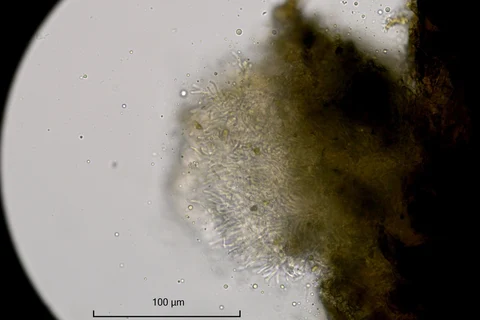
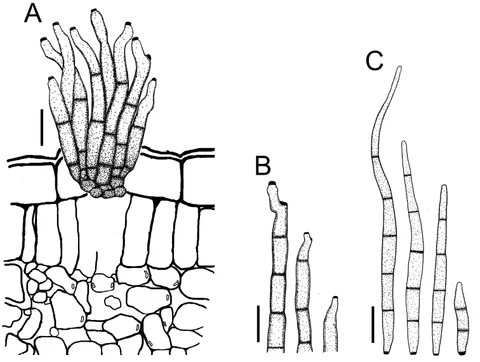
Conidia is the primary and secondary inoculum of the plant. This asexual structure is produced from conidiophores on infected plant residue (Lin and Kelly, 2018). The conidia can also be moved over short distances by wind currents (Mian et al., 2008). The most suitable conditions for infection are warm and wet weather between 25 and 30 °C with greater than 90% humidity (2018). The fungus has more of a damaging impact when infection occurs before or at flowering (Lin and Kelly, 2018). Fungal infection occurs with direct contact from an already infected soybean pod but the fungus can also spread from seed to seed during plant growth. If infection does occur, external plant damage can be seen one to two weeks after contact with the pathogen. Cercospora sojina is a fungal pathogen that varies in colony color, growth rate, and spore formation in culture. The main infection structure of the pathogen is the conidia which is produced from light or dark conidiophores and rests on the tip of the structure. The conidia appear translucent and form cylindrical to round tapering shapes. The size varies between 6 micrometers to 40-70 micrometers and depends on how much area is available for growth (Lin and Kelly, 2018). More specifically, when comparing nonresistant and resistance strains of the pathogen from China, researchers observed 5 candidate genes that are linked to virulence. The gene's function was related to metabolic mechanisms and the production of metabolites that can cause reduction in host resistant soybean plants (Gu et al., 2020). Cercosporin is one non-specific colored mycotoxin produced in some Cercospora species.
Habitat dan peran ekologis
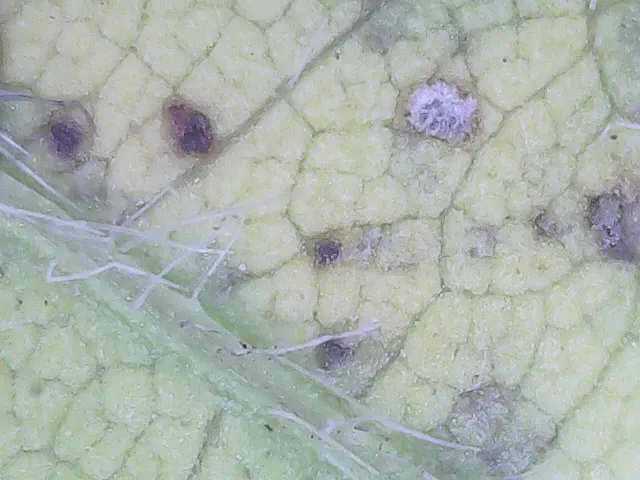
Kacang kedelai adalah tuan rumah utama patogen ini. When the patogen terjadi pada kedelai, itu menyebabkan lesi daun kecil. Lesi ini, sebagian besar ditemukan di permukaan daun atas, tidak teratur bulat dan terdiri dari batas berwarna merah-kecoklatan hingga ungu. Bagian dalam luka seringkali berwarna abu-abu sampai coklat. When the lesi matang, mereka kertas tipis dan daun yang terinfeksi tampak pecah dan lama. Penyakit ini dapat menyebabkan pelepasan rambut dini. Tanda Frogeye leaf juga bisa terbentuk pada batang dan batang dari spesies yang sangat rentan. Oval and lesi lingkaran yang terbentuk pada batang dan batang memiliki margin berwarna gelap dan warna abu-abu terang hingga coklat merah di bagian dalam. If the pod terinfeksi, benih juga bisa terinfeksi tapi mungkin tidak memiliki gejala. If they menunjukkan gejala, bintik-bintik abu-abu terbentuk pada benih dan lapisan benih retak sering terjadi. Tumbuhan ini paling rentan terhadap infeksi ketika daunnya muda dan berkembang atau jika daunnya tua dan tua. With this rentang rentan, penyakit dapat terjadi beberapa kali di seluruh kanopi tanaman jika lingkungan ideal untuk patogen pada setiap lapisan daun muncul. Hal ini menyebabkan bagian penyakit berlapis pada satu tanaman.
- Habitat atau konteks temuan
- Informasi belum tersedia pada sumber rilis ini.
- Substrat
- Informasi belum tersedia pada sumber rilis ini.
- Peran atau konteks
- Belum dikategorikan pada rilis ini.
Reproduksi
Conidia is the primary and secondary inoculum of the plant. This asexual structure is produced from conidiophores on infected plant residue (Lin and Kelly, 2018). The conidia can also be moved over short distances by wind currents (Mian et al., 2008). The most suitable conditions for infection are warm and wet weather between 25 and 30 °C with greater than 90% humidity (2018). The fungus has more of a damaging impact when infection occurs before or at flowering (Lin and Kelly, 2018). Fungal infection occurs with direct contact from an already infected soybean pod but the fungus can also spread from seed to seed during plant growth. If infection does occur, external plant damage can be seen one to two weeks after contact with the pathogen.
Catatan identitas dan cakupan
- Nama diterima mengikuti Catalogue of Life Base2026-09-11; uraian mempertahankan konsep dan nama sumber aslinya.
- Original geographic, specimen and life-cycle scope retained; source import awaits individual editorial review.
- Impor dan terjemahan otomatis belum diperiksa editorial per profil. Struktur reproduktif yang disebutkan tidak membuktikan seluruh siklus hidup diketahui.
- Pengukuran pada uraian mengikuti spesimen, kultur, dan metode sumber; angka tidak diperluas ke semua populasi.
Catatan distribusi dalam narasi mengikuti sumbernya. Dokumentasi spesimen atau foto mengikuti catatan sumber. Bukti wilayah Indonesia dan penilaian konservasi tidak disimpulkan dari gambar.
Melihat dengan konteks
Dokumentasi Cercospora sojina menurut asosiasi foto pada record takson iNaturalist. Kredit: Garrett Taylor. Identitas mengikuti sumber; bukan penentuan spesimen independen.
- Jenis
- Fotografi
- Kredit
- no rights reserved, uploaded by Garrett Taylor
- Lisensi
- CC0 1.0
- Sumber media
- Buka entri sumber
Sumber profil
- [1] Cercospora sojina — Wikipedia (en)
- [2] Catalogue of Life Base2026-09-11 — Cercospora sojina
- [3] Dokumentasi visual — Cercospora sojina
Rujukan halaman ini
Fungi. Cercospora sojina. Rilis data fungi-2026-10-12-expansion-2. https://fungi-atlas.mgadib.chatgpt.site/jamur/cercospora-sojina/.
Status: impor sumber; pemeriksaan editorial per profil belum selesai. Untuk klaim biologis, gunakan rujukan pada bagian terkait dan periksa konteks sumber aslinya.