01 / Morfologi

Ciri dan struktur

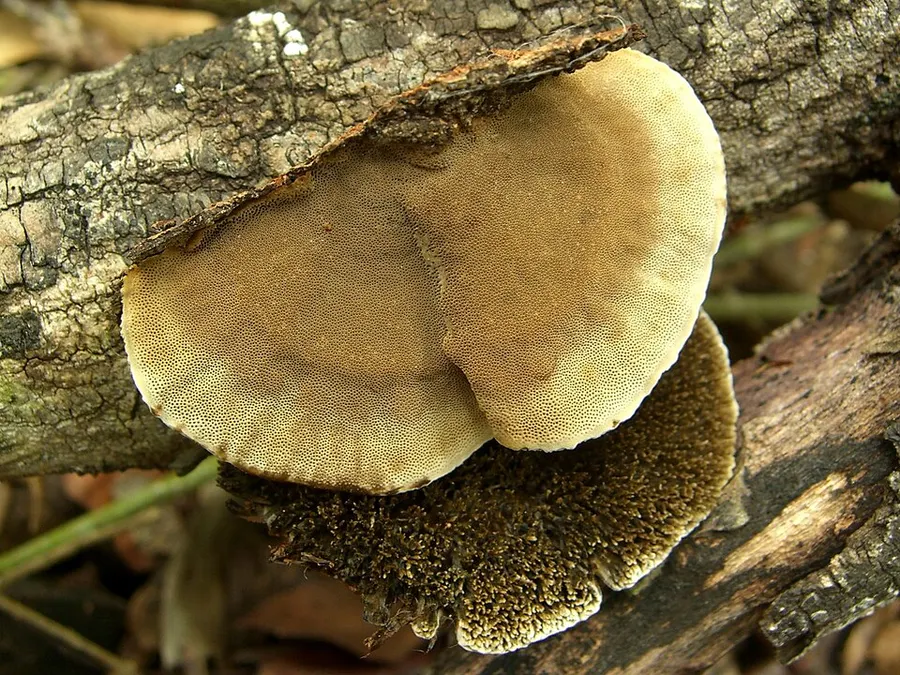
Hexagonia hydnoides forms annual semicircular fruiting bodies, with a sessile, or stalkless, attachment to dead wood, such as that of a fallen oak. The pileus, or cap, is convex or nearly flat and has been reported to be anywhere from 1 to 12 cm across, and can be up to 1.8 cm thick at the base. The upper surface is zonate – having concentric striping patterns that can be faint to bright in coloration, and is otherwise brown or dark brown. The cap is distinctively covered in fine, dark brown to black bristles that dry and harden with age. The hymenium is brown to dark brown, and is composed of many thin, angular or hexagonal pores – 0.1 to 0.2 mm in diameter and running 2 to 6 mm deep. The hymenium darkens when rubbed. The flesh is tough and orangish-brown. The microscopic morphology of this species includes spores that are 11–14 by 3.5–5 microns, which are cylindrical, smooth, hyaline/colorless, and inamyloid under Melzer's reagent. The hyphal system is trimitic, meaning that it contains generative, skeletal, and binding hyphae, and in addition has clamp connections present on the binding hyphae.

Sebagian uraian ditampilkan dalam bahasa sumber; terjemahannya belum tersedia atau belum lolos pemeriksaan.

Rujukan: [1]

Pengukuran mengikuti objek, spesimen atau kultur, dan metode yang disebutkan sumber. Baca uraian asli untuk konteks lengkap.

02 / Kehidupan

Habitat dan peran ekologis

Jamur ini sebagian besar dapat ditemukan pada kayu keras mati di hutan tropis dan subtropis, terutama di Amerika Utara. Geographic data dari iNaturalist menunjukkan bahwa telah terlihat di Amerika Serikat timur, Meksiko, Karibia, Brasil, Spanyol, India, Selatan Africa along dengan sebagian besar Central and Selatan America and beberapa Southern and Timur African countries. Hexagonia hydnoides adalah saprobik, yang paling umum membusuk pohon kayu keras yang jatuh. Ini adalah jamur yang putih, yang berarti bahwa ia memisahkan enzim yang dapat memecah komponen kayu termasuk selulosa, hemicellulose, dan lignin, yang terakhir tidak dapat dicerna oleh beberapa jamur kayu-decay. Jamur ini juga dikenal sebagai patogen tumbuhan, membusuk kayu hidup, meskipun ini belum diteliti secara mendalam.

Rujukan: [1]

Habitat atau konteks temuan
hutan
Substrat
Informasi belum tersedia pada sumber rilis ini.
Peran atau konteks
Pengurai
Temukan hubungan serupa
03 / Siklus hidup

Reproduksi

The microscopic morphology of this species includes spores that are 11–14 by 3.5–5 microns, which are cylindrical, smooth, hyaline/colorless, and inamyloid under Melzer's reagent. The hyphal system is trimitic, meaning that it contains generative, skeletal, and binding hyphae, and in addition has clamp connections present on the binding hyphae.

Sebagian uraian ditampilkan dalam bahasa sumber; terjemahannya belum tersedia atau belum lolos pemeriksaan.

Rujukan: [1]

Sinonim menurut acuan taksonomi rilis: Boletus fibrosus; Boletus ursinus; Hexagonia hydnoides; Microporus ursinus; Pogonomyces hydnoides; Polyporus fibrosus; Polyporus hydnoides; Polyporus verrucosohirtus; Polystictus hydnoides; Polystictus ursinus; Polystictus verrucosohirtus; Scenidium hydnoides; Trametes hydnoides; Trametes ocellata; Trametes ursina; Trametes verrucosohirtus
04 / Batas informasi

Catatan identitas dan cakupan

  • Nama diterima mengikuti Catalogue of Life Base2026-09-11; uraian mempertahankan konsep dan nama sumber aslinya.
  • Original geographic, specimen and life-cycle scope retained; source import awaits individual editorial review.
  • Impor dan terjemahan otomatis belum diperiksa editorial per profil. Struktur reproduktif yang disebutkan tidak membuktikan seluruh siklus hidup diketahui.
  • Pengukuran pada uraian mengikuti spesimen, kultur, dan metode sumber; angka tidak diperluas ke semua populasi.

Catatan distribusi dalam narasi mengikuti sumbernya. Dokumentasi spesimen atau foto mengikuti catatan sumber. Bukti wilayah Indonesia dan penilaian konservasi tidak disimpulkan dari gambar.

05 / Dokumentasi

Melihat dengan konteks

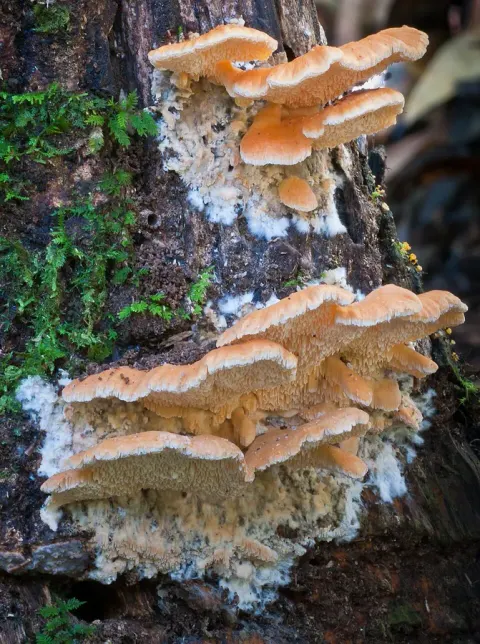
Dokumentasi Hexagonia hydnoides dari Wikimedia Commons. The bracket fungus Hexagonia hydnoides (Sw.) M. Fidalgo. Specimens photographed in Dove Creek Hammock, south Key Largo, Monroe Co., Florida, USA. Identifikasi mengikuti record berkas sumber.

Jenis
Fotografi
Kredit
This image was created by user Jason Hollinger (jason) at Mushroom Observer , a source for mycological images. You can contact this user here .
Sumber media
Buka entri sumber

Gambar menunjukkan objek menurut identifikasi sumber, bukan verifikasi independen spesimen oleh Fungi. Tidak ada skala baru yang ditambahkan.

06 / Rujukan

Sumber profil

  1. [1] Hexagonia hydnoides — Wikipedia (en)Bagian sumber: Frozen revision 1297007858
    Tanggal penghimpunan sumber: 2026-10-12
    Teks sumber: CC BY-SA4.0 · Wikipedia contributors
  2. [2] Catalogue of Life Base2026-09-11 — Cerrena hydnoidesBagian sumber: ColDP NameUsage.tsv ID T4ST; accepted species; source 2073
    Tanggal penghimpunan sumber: 2026-10-12
  3. [3] Dokumentasi visual — Hexagonia hydnoidesBagian sumber: Individual media record; identification follows the source, not independent determination
    Tanggal penghimpunan sumber: 2026-10-12
    Media sumber: CC BY-SA 3.0 · This image was created by user Jason Hollinger (jason) at Mushroom Observer , a source for mycological images. You can contact this user here .

Adaptasi teks: CC BY-SA 4.0. Wikipedia contributors — Hexagonia hydnoides — Wikipedia (en)

Uraian asli dan riwayat sumber

Riwayat atau halaman sumber

Ringkasan sumber

Hexagonia hydnoides, also known as the hairy hexagonia, is a widely distributed species of bracket fungus in the Polyporaceae family. It is known to grow in tropical regions across the globe and to grow on dead wood tissues, particularly that of hardwoods. It is a plant pathogen and is largely saprophytic, decaying dead wood tissues.

Revisi sumber

Morfologi sumber

Hexagonia hydnoides forms annual semicircular fruiting bodies, with a sessile, or stalkless, attachment to dead wood, such as that of a fallen oak. The pileus, or cap, is convex or nearly flat and has been reported to be anywhere from 1 to 12 cm across, and can be up to 1.8 cm thick at the base. The upper surface is zonate – having concentric striping patterns that can be faint to bright in coloration, and is otherwise brown or dark brown. The cap is distinctively covered in fine, dark brown to black bristles that dry and harden with age. The hymenium is brown to dark brown, and is composed of many thin, angular or hexagonal pores – 0.1 to 0.2 mm in diameter and running 2 to 6 mm deep. The hymenium darkens when rubbed. The flesh is tough and orangish-brown. The microscopic morphology of this species includes spores that are 11–14 by 3.5–5 microns, which are cylindrical, smooth, hyaline/colorless, and inamyloid under Melzer's reagent. The hyphal system is trimitic, meaning that it contains generative, skeletal, and binding hyphae, and in addition has clamp connections present on the binding hyphae.

Revisi sumber

Ekologi sumber

The fungus can largely be found on dead hardwood in tropical and subtropical forests, especially those in North America. Geographic data from iNaturalist shows that it has been sighted in the eastern United States, Mexico, Caribbean, Brazil, Spain, India, South Africa along with much of Central and South America and some Southern and East African countries. Hexagonia hydnoides is saprobic, most commonly decaying fallen hardwood trees. It is a white rot fungus, meaning that it secretes enzymes that can break down components of the wood including cellulose, hemicellulose, and lignin, the latter of which is not digestible by some wood-decay fungi. This fungus is also known to be a plant pathogen, decaying living wood, although this has not been researched in depth.

Revisi sumber

Struktur reproduksi sumber

The microscopic morphology of this species includes spores that are 11–14 by 3.5–5 microns, which are cylindrical, smooth, hyaline/colorless, and inamyloid under Melzer's reagent. The hyphal system is trimitic, meaning that it contains generative, skeletal, and binding hyphae, and in addition has clamp connections present on the binding hyphae.

Revisi sumber

Rujukan halaman ini

Fungi. Cerrena hydnoides. Rilis data fungi-2026-10-12-expansion-2. https://fungi-atlas.mgadib.chatgpt.site/jamur/cerrena-hydnoides/.

Status: impor sumber; pemeriksaan editorial per profil belum selesai. Untuk klaim biologis, gunakan rujukan pada bagian terkait dan periksa konteks sumber aslinya.