01 / Morfologi

Ciri dan struktur

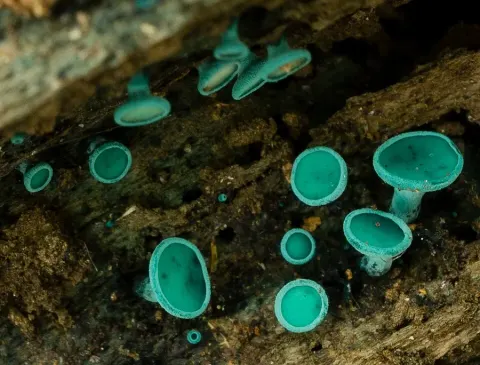
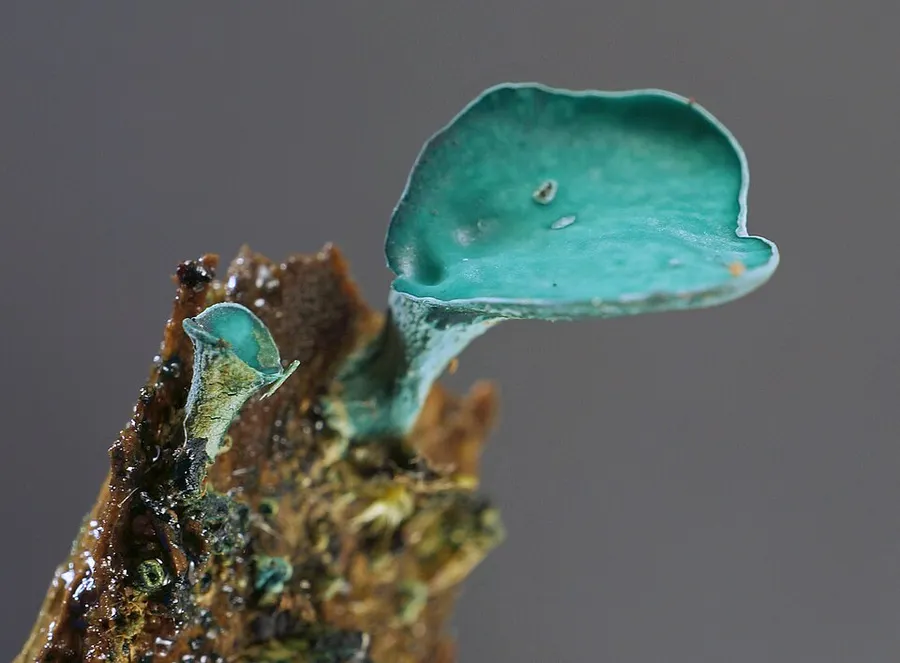
This species has apothecia (cup-shaped ascocarps) that are usually attached laterally, often less than 0.5 cm in diameter, collapsing laterally and becoming rolled inwards when dry. The outer tissue layer of the apothecium, known as the ectal excipulum, has a delicate tomentose surface composed of hair-like, straight or sometimes coiled, smooth hyphae. The stipe is typically less than 3 mm long, with a central or eccentric attachment to the apothecia. The spores are roughly spindle-shaped (fusiform), smooth, and 5–8 by 0.7–2.8 μm. Apothecia grow on bark-free wood, especially oak, part of which at least is stained greenish by the mycelium. The abundant paraphyses, which may be entwined, are 55–95 by 1.5–2 μm, filiform, and septate with an unswollen, unbent apex that often extends beyond the level of the asci tips.

Sebagian uraian ditampilkan dalam bahasa sumber; terjemahannya belum tersedia atau belum lolos pemeriksaan.

Rujukan: [1]

Pengukuran mengikuti objek, spesimen atau kultur, dan metode yang disebutkan sumber. Baca uraian asli untuk konteks lengkap.

02 / Kehidupan

Habitat dan peran ekologis

Chlorociboria aeruginascens is a saprobic species of mushroom, commonly known as the blue stain, green elfcup or the green wood cup because of its characteristic small, green, saucer-shaped fruit bodies. The actual fruit bodies are infrequently seen, with the fungus usually observed through the green staining of wood it causes. This species has apothecia (cup-shaped ascocarps) that are usually attached laterally, often less than 0.5 cm in diameter, collapsing laterally and becoming rolled inwards when dry. The outer tissue layer of the apothecium, known as the ectal excipulum, has a delicate tomentose surface composed of hair-like, straight or sometimes coiled, smooth hyphae. The stipe is typically less than 3 mm long, with a central or eccentric attachment to the apothecia. The spores are roughly spindle-shaped (fusiform), smooth, and 5–8 by 0.7–2.8 μm. Apothecia grow on bark-free wood, especially oak, part of which at least is stained greenish by the mycelium. The abundant paraphyses, which may be entwined, are 55–95 by 1.5–2 μm, filiform, and septate with an unswollen, unbent apex that often extends beyond the level of the asci tips.

Sebagian uraian ditampilkan dalam bahasa sumber; terjemahannya belum tersedia atau belum lolos pemeriksaan.

Rujukan: [1]

Habitat atau konteks temuan
Informasi belum tersedia pada sumber rilis ini.
Substrat
kulit kayu
Peran atau konteks
Pengurai
Temukan hubungan serupa
03 / Siklus hidup

Reproduksi

This species has apothecia (cup-shaped ascocarps) that are usually attached laterally, often less than 0.5 cm in diameter, collapsing laterally and becoming rolled inwards when dry. The outer tissue layer of the apothecium, known as the ectal excipulum, has a delicate tomentose surface composed of hair-like, straight or sometimes coiled, smooth hyphae. The stipe is typically less than 3 mm long, with a central or eccentric attachment to the apothecia. The spores are roughly spindle-shaped (fusiform), smooth, and 5–8 by 0.7–2.8 μm. Apothecia grow on bark-free wood, especially oak, part of which at least is stained greenish by the mycelium. The abundant paraphyses, which may be entwined, are 55–95 by 1.5–2 μm, filiform, and septate with an unswollen, unbent apex that often extends beyond the level of the asci tips.

Sebagian uraian ditampilkan dalam bahasa sumber; terjemahannya belum tersedia atau belum lolos pemeriksaan.

Rujukan: [1]

Sinonim menurut acuan taksonomi rilis: Chlorociboria aeruginascens subsp. australis; Chlorociboria aeruginascens subsp. brasiliensis; Chlorosplenium aeruginascens; Chlorosplenium aeruginosum var. aeruginascens; Chlorosplenium brasiliense; Helotium aeruginascens; Peziza aeruginascens
04 / Batas informasi

Catatan identitas dan cakupan

  • Nama diterima mengikuti Catalogue of Life Base2026-09-11; uraian mempertahankan konsep dan nama sumber aslinya.
  • Original geographic, specimen and life-cycle scope retained; source import awaits individual editorial review.
  • Impor dan terjemahan otomatis belum diperiksa editorial per profil. Struktur reproduktif yang disebutkan tidak membuktikan seluruh siklus hidup diketahui.
  • Pengukuran pada uraian mengikuti spesimen, kultur, dan metode sumber; angka tidak diperluas ke semua populasi.

Catatan distribusi dalam narasi mengikuti sumbernya. Dokumentasi spesimen atau foto mengikuti catatan sumber. Bukti wilayah Indonesia dan penilaian konservasi tidak disimpulkan dari gambar.

05 / Dokumentasi

Melihat dengan konteks

Dokumentasi Chlorociboria aeruginascens dari Wikimedia Commons. Chlorociboria aeruginascens, Wilson River Highway, Oregon, USA Identifikasi mengikuti record berkas sumber.

Jenis
Fotografi
Kredit
This image was created by user Sava Krstic (sava) at Mushroom Observer , a source for mycological images. You can contact this user here .
Sumber media
Buka entri sumber

Gambar menunjukkan objek menurut identifikasi sumber, bukan verifikasi independen spesimen oleh Fungi. Tidak ada skala baru yang ditambahkan.

06 / Rujukan

Sumber profil

  1. [1] Chlorociboria aeruginascens — Wikipedia (en)Bagian sumber: Frozen revision 1324478451
    Tanggal penghimpunan sumber: 2026-10-12
    Teks sumber: CC BY-SA4.0 · Wikipedia contributors
  2. [2] Catalogue of Life Base2026-09-11 — Chlorociboria aeruginascensBagian sumber: ColDP NameUsage.tsv ID 9Z3NF; accepted species; source 2073
    Tanggal penghimpunan sumber: 2026-10-12
  3. [3] Dokumentasi visual — Chlorociboria aeruginascensBagian sumber: Individual media record; identification follows the source, not independent determination
    Tanggal penghimpunan sumber: 2026-10-12
    Media sumber: CC BY-SA 3.0 · This image was created by user Sava Krstic (sava) at Mushroom Observer , a source for mycological images. You can contact this user here .

Adaptasi teks: CC BY-SA 4.0. Wikipedia contributors — Chlorociboria aeruginascens — Wikipedia (en)

Uraian asli dan riwayat sumber

Riwayat atau halaman sumber

Ringkasan sumber

Chlorociboria aeruginascens is a saprobic species of mushroom, commonly known as the blue stain, green elfcup or the green wood cup because of its characteristic small, green, saucer-shaped fruit bodies. The actual fruit bodies are infrequently seen, with the fungus usually observed through the green staining of wood it causes.

Revisi sumber

Morfologi sumber

This species has apothecia (cup-shaped ascocarps) that are usually attached laterally, often less than 0.5 cm in diameter, collapsing laterally and becoming rolled inwards when dry. The outer tissue layer of the apothecium, known as the ectal excipulum, has a delicate tomentose surface composed of hair-like, straight or sometimes coiled, smooth hyphae. The stipe is typically less than 3 mm long, with a central or eccentric attachment to the apothecia. The spores are roughly spindle-shaped (fusiform), smooth, and 5–8 by 0.7–2.8 μm. Apothecia grow on bark-free wood, especially oak, part of which at least is stained greenish by the mycelium. The abundant paraphyses, which may be entwined, are 55–95 by 1.5–2 μm, filiform, and septate with an unswollen, unbent apex that often extends beyond the level of the asci tips.

Revisi sumber

Ekologi sumber

Chlorociboria aeruginascens is a saprobic species of mushroom, commonly known as the blue stain, green elfcup or the green wood cup because of its characteristic small, green, saucer-shaped fruit bodies. The actual fruit bodies are infrequently seen, with the fungus usually observed through the green staining of wood it causes. This species has apothecia (cup-shaped ascocarps) that are usually attached laterally, often less than 0.5 cm in diameter, collapsing laterally and becoming rolled inwards when dry. The outer tissue layer of the apothecium, known as the ectal excipulum, has a delicate tomentose surface composed of hair-like, straight or sometimes coiled, smooth hyphae. The stipe is typically less than 3 mm long, with a central or eccentric attachment to the apothecia. The spores are roughly spindle-shaped (fusiform), smooth, and 5–8 by 0.7–2.8 μm. Apothecia grow on bark-free wood, especially oak, part of which at least is stained greenish by the mycelium. The abundant paraphyses, which may be entwined, are 55–95 by 1.5–2 μm, filiform, and septate with an unswollen, unbent apex that often extends beyond the level of the asci tips.

Revisi sumber

Struktur reproduksi sumber

This species has apothecia (cup-shaped ascocarps) that are usually attached laterally, often less than 0.5 cm in diameter, collapsing laterally and becoming rolled inwards when dry. The outer tissue layer of the apothecium, known as the ectal excipulum, has a delicate tomentose surface composed of hair-like, straight or sometimes coiled, smooth hyphae. The stipe is typically less than 3 mm long, with a central or eccentric attachment to the apothecia. The spores are roughly spindle-shaped (fusiform), smooth, and 5–8 by 0.7–2.8 μm. Apothecia grow on bark-free wood, especially oak, part of which at least is stained greenish by the mycelium. The abundant paraphyses, which may be entwined, are 55–95 by 1.5–2 μm, filiform, and septate with an unswollen, unbent apex that often extends beyond the level of the asci tips.

Revisi sumber

Rujukan halaman ini

Fungi. Chlorociboria aeruginascens. Rilis data fungi-2026-10-12-expansion-2. https://fungi-atlas.mgadib.chatgpt.site/jamur/chlorociboria-aeruginascens/.

Status: impor sumber; pemeriksaan editorial per profil belum selesai. Untuk klaim biologis, gunakan rujukan pada bagian terkait dan periksa konteks sumber aslinya.