01 / Morfologi

Ciri dan struktur

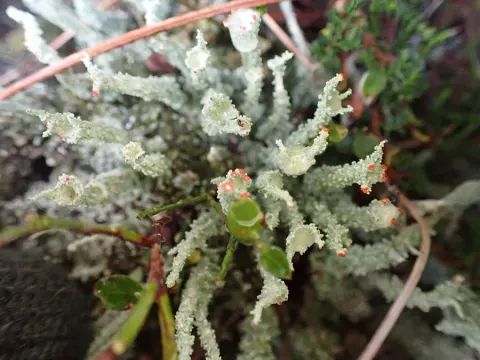
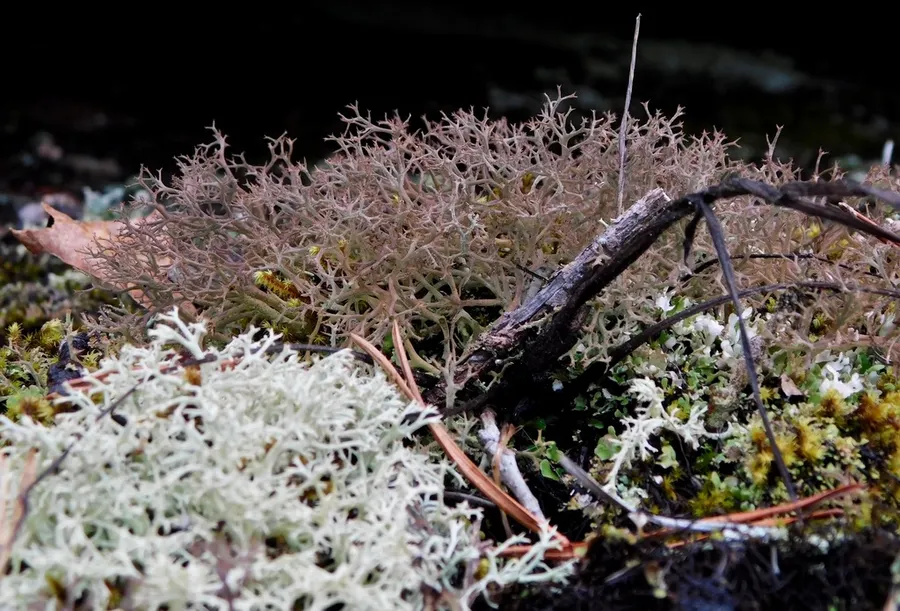
The of C. appalachensis was not observed in the type material. The reproductive structures, called podetia, grow upright but are often slightly bent and can form dense, intertwined clusters that create a mat-like appearance. These podetia are usually between 2 and 3 centimeters (cm) in height and are 0.4 to 0.8 millimeters (mm) thick. They branch in an irregular, forked pattern, and their growth is indeterminate, meaning they can continue growing under favorable conditions. The podetia are generally a whitish-grey color, though they can appear brownish from a distance, especially near their base, which darkens to brown or black in the lowest parts. The podetial surface has a dull appearance, with a weak (frosted) texture in the upper parts. It lacks soredia, which are common reproductive structures in many lichens. The surface is mostly covered by a patchy , with smooth sections in the upper parts and a warty, more distinct pattern in the lower portions. The walls of the podetia are about 0.1 mm thick, composed of tightly packed hyphae, with a narrow, smooth central cavity. The pycnidia, which are small, flask-like structures that produce asexual spores (conidia]), are brown and are found at the tips of the podetia, although mature pycnidia were not observed in the type material. Chemically, Cladonia appalachensis contains squamatic acid, and it shows a distinctive reaction to ultraviolet light, fluorescing blue-white under UV.

Sebagian uraian ditampilkan dalam bahasa sumber; terjemahannya belum tersedia atau belum lolos pemeriksaan.

Rujukan: [1]

Pengukuran mengikuti objek, spesimen atau kultur, dan metode yang disebutkan sumber. Baca uraian asli untuk konteks lengkap.

02 / Kehidupan

Habitat dan peran ekologis

Cladonia appalachensis is restricted to a small geographical area within the Great Smoky Mountains National Park, growing exclusively on Anakeesta rock, an iron-rich . The species occupies a very limited range, with an area of occupancy of just 6 km2. Only three populations have been documented, despite thorough surveys across potential habitats. Cladonia appalachensis is found at elevations ranging from 1,480 to 1,990 m, where it inhabits fragile cliffside ecosystems. It grows exclusively on Anakeesta rock outcrops, which are often located near well-traveled trails, making them susceptible to disturbance from foot traffic. This rock formation is characterized by the presence of iron sulfide-rich slate, shale, and sandstones with a distinctive reddish-brown color. The population of C. appalachensis is considered to be in decline. There are only three known subpopulations of C. appalachensis, all located within the Great Smoky Mountains National Park. Two populations documented in the 1970s have since disappeared, and ongoing declines have been observed in areas close to heavily visited tourist trails. Due to its limited distribution and shrinking population, C. appalachensis is classified as endangered on the IUCN Red List.

Sebagian uraian ditampilkan dalam bahasa sumber; terjemahannya belum tersedia atau belum lolos pemeriksaan.

Rujukan: [1]

Habitat atau konteks temuan
Informasi belum tersedia pada sumber rilis ini.
Substrat
Informasi belum tersedia pada sumber rilis ini.
Peran atau konteks
Pembentuk liken
Temukan hubungan serupa
03 / Siklus hidup

Reproduksi

The of C. appalachensis was not observed in the type material. The reproductive structures, called podetia, grow upright but are often slightly bent and can form dense, intertwined clusters that create a mat-like appearance. These podetia are usually between 2 and 3 centimeters (cm) in height and are 0.4 to 0.8 millimeters (mm) thick. They branch in an irregular, forked pattern, and their growth is indeterminate, meaning they can continue growing under favorable conditions. The podetia are generally a whitish-grey color, though they can appear brownish from a distance, especially near their base, which darkens to brown or black in the lowest parts. The podetial surface has a dull appearance, with a weak (frosted) texture in the upper parts.

Sebagian uraian ditampilkan dalam bahasa sumber; terjemahannya belum tersedia atau belum lolos pemeriksaan.

Rujukan: [1]

04 / Batas informasi

Catatan identitas dan cakupan

  • Nama diterima mengikuti Catalogue of Life Base2026-09-11; uraian mempertahankan konsep dan nama sumber aslinya.
  • Original geographic, specimen and life-cycle scope retained; source import awaits individual editorial review.
  • Impor dan terjemahan otomatis belum diperiksa editorial per profil. Struktur reproduktif yang disebutkan tidak membuktikan seluruh siklus hidup diketahui.
  • Pengukuran pada uraian mengikuti spesimen, kultur, dan metode sumber; angka tidak diperluas ke semua populasi.

Catatan distribusi dalam narasi mengikuti sumbernya. Dokumentasi spesimen atau foto mengikuti catatan sumber. Bukti wilayah Indonesia dan penilaian konservasi tidak disimpulkan dari gambar.

05 / Dokumentasi

Melihat dengan konteks

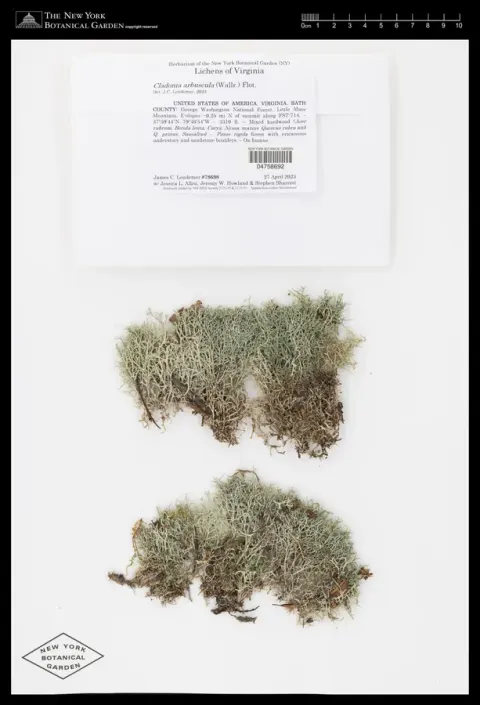
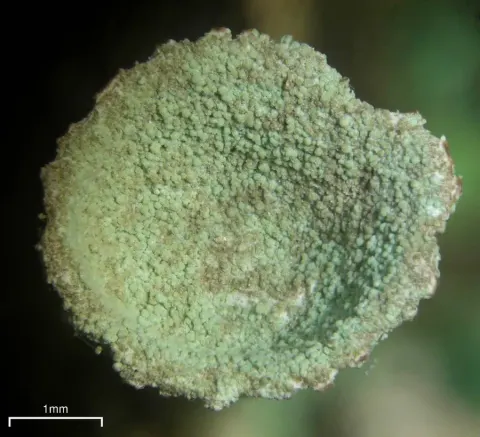
Dokumentasi Cladonia appalachensis menurut asosiasi foto pada record takson iNaturalist. Kredit: Michael J. Papay. Identitas mengikuti sumber; bukan penentuan spesimen independen.

Jenis
Fotografi
Kredit
(c) Michael J. Papay, some rights reserved (CC BY), uploaded by Michael J. Papay
Lisensi
CC BY 4.0
Sumber media
Buka entri sumber

Gambar menunjukkan objek menurut identifikasi sumber, bukan verifikasi independen spesimen oleh Fungi. Tidak ada skala baru yang ditambahkan.

06 / Rujukan

Sumber profil

  1. [1] Cladonia appalachensis — Wikipedia (en)Bagian sumber: Frozen revision 1331237784
    Tanggal penghimpunan sumber: 2026-10-12
    Teks sumber: CC BY-SA4.0 · Wikipedia contributors
  2. [2] Catalogue of Life Base2026-09-11 — Cladonia appalachensisBagian sumber: ColDP NameUsage.tsv ID VPCB; accepted species; source 2073
    Tanggal penghimpunan sumber: 2026-10-12
  3. [3] Dokumentasi visual — Cladonia appalachensisBagian sumber: Individual media record; identification follows the source, not independent determination
    Tanggal penghimpunan sumber: 2026-10-12
    Media sumber: CC BY 4.0 · (c) Michael J. Papay, some rights reserved (CC BY), uploaded by Michael J. Papay

Adaptasi teks: CC BY-SA 4.0. Wikipedia contributors — Cladonia appalachensis — Wikipedia (en)

Uraian asli dan riwayat sumber

Riwayat atau halaman sumber

Ringkasan sumber

Cladonia appalachensis is a species of lichen-forming fungus in the family Cladoniaceae, native to the southern Appalachians region in the United States. Described as a new species in 2013, its distribution is limited to the Great Smoky Mountains National Park, where it grows exclusively on Anakeesta rock outcrops along the ridge separating North Carolina and Tennessee. Due to its limited distribution and shrinking population, C. appalachensis is classified as endangered on the IUCN Red List.

Revisi sumber

Morfologi sumber

The of C. appalachensis was not observed in the type material. The reproductive structures, called podetia, grow upright but are often slightly bent and can form dense, intertwined clusters that create a mat-like appearance. These podetia are usually between 2 and 3 centimeters (cm) in height and are 0.4 to 0.8 millimeters (mm) thick. They branch in an irregular, forked pattern, and their growth is indeterminate, meaning they can continue growing under favorable conditions. The podetia are generally a whitish-grey color, though they can appear brownish from a distance, especially near their base, which darkens to brown or black in the lowest parts. The podetial surface has a dull appearance, with a weak (frosted) texture in the upper parts. It lacks soredia, which are common reproductive structures in many lichens. The surface is mostly covered by a patchy , with smooth sections in the upper parts and a warty, more distinct pattern in the lower portions. The walls of the podetia are about 0.1 mm thick, composed of tightly packed hyphae, with a narrow, smooth central cavity. The pycnidia, which are small, flask-like structures that produce asexual spores (conidia]), are brown and are found at the tips of the podetia, although mature pycnidia were not observed in the type material. Chemically, Cladonia appalachensis contains squamatic acid, and it shows a distinctive reaction to ultraviolet light, fluorescing blue-white under UV.

Revisi sumber

Ekologi sumber

Cladonia appalachensis is restricted to a small geographical area within the Great Smoky Mountains National Park, growing exclusively on Anakeesta rock, an iron-rich . The species occupies a very limited range, with an area of occupancy of just 6 km2. Only three populations have been documented, despite thorough surveys across potential habitats. Cladonia appalachensis is found at elevations ranging from 1,480 to 1,990 m, where it inhabits fragile cliffside ecosystems. It grows exclusively on Anakeesta rock outcrops, which are often located near well-traveled trails, making them susceptible to disturbance from foot traffic. This rock formation is characterized by the presence of iron sulfide-rich slate, shale, and sandstones with a distinctive reddish-brown color. The population of C. appalachensis is considered to be in decline. There are only three known subpopulations of C. appalachensis, all located within the Great Smoky Mountains National Park. Two populations documented in the 1970s have since disappeared, and ongoing declines have been observed in areas close to heavily visited tourist trails. Due to its limited distribution and shrinking population, C. appalachensis is classified as endangered on the IUCN Red List.

Revisi sumber

Struktur reproduksi sumber

The of C. appalachensis was not observed in the type material. The reproductive structures, called podetia, grow upright but are often slightly bent and can form dense, intertwined clusters that create a mat-like appearance. These podetia are usually between 2 and 3 centimeters (cm) in height and are 0.4 to 0.8 millimeters (mm) thick. They branch in an irregular, forked pattern, and their growth is indeterminate, meaning they can continue growing under favorable conditions. The podetia are generally a whitish-grey color, though they can appear brownish from a distance, especially near their base, which darkens to brown or black in the lowest parts. The podetial surface has a dull appearance, with a weak (frosted) texture in the upper parts.

Revisi sumber

Rujukan halaman ini

Fungi. Cladonia appalachensis. Rilis data fungi-2026-10-12-expansion-2. https://fungi-atlas.mgadib.chatgpt.site/jamur/cladonia-appalachensis/.

Status: impor sumber; pemeriksaan editorial per profil belum selesai. Untuk klaim biologis, gunakan rujukan pada bagian terkait dan periksa konteks sumber aslinya.