Ciri dan struktur
Fruit bodies up to 70 x 3.5 mm, simple clubs, scattered to cespitose in small groups (up to 4), narrowly fusiform to narrowly cylindrical. Stipe arising from a small, white mycelial pad, terete, appearing silky-striate, off-white, ivory ("pale cinnamon-pink") or very pale yellow-olive ("cream-buff", "cartridge-buff", "olive-buff", "ivory-yellow"). Club terete to slightly sulcate, appearing waxy, off-white to cream, ivory or pale yellow-olive ("pale olive-buff", "olive-buff", "deep olive-buff"); apex sometimes slightly darker ("Isabella color"), rounded. Taste and odour very mildly to strongly of garlic. Tramal hyphae of two types: (i) generative, inflated, thin-walled, clampless, strictly parallel, free, tightly packed; secondary septa common; and (ii) gloeoplerous hyphae, uninflated, refringent, occasional. Subhymenium well-developed, pseudoparenchymatous. Hymenium thickening; basidia 45-55 x 10 µm, clavate, clamped; contents densely multiguttulate at maturity, the guttules highly refringent; sterigmata 4, up to 9 µm long, stout, straight. Spores 7.6-10.8 x 6.1-7.2 µm (E = 1.17-1.67; E m = 1.32; L m = 8.42 µm), subglobose to broadly ellipsoid or broadly ovate, thin-walled, smooth through much of their development, finally grossly spiny; contents uniguttulate at maturity; hilar appendix prominent, papillate; ornamentation of narrowly conical spines up to 4 µm long, distributed over all of the spore surface.
Habitat dan peran ekologis
On soil and humus under Weinmannia, Dacrydium, and Beilschmiedia. Some may question why this epithet has been used to represent a spiny-spored taxon, but I have examined the type specimen (K - Dutch N.W. New Guinea, i. 1914, coil. L.S. Gibbs, no. 6174) and have found such ornamented spores. A description of the type specimen follows. Fruit bodies up to 34 x 2 mm (all incomplete), simple clubs, cylindrical, some cespitose in a cluster. Stipe now dull deep orange, cartilaginous, covered below with a fine pruina. Club now clearly distinct from stipe, opaque, covered with a fine "bloom." Tramal hyphae of club up to 19 µm diam., inflated, thin-walled, hyaline, without clamp connections, parallel, adherent. Subhymenium rudimentary, crushed; hyphae up to 8 µm diam. Basidia 40-45 x 7-8 µm, clavate, clamped. Spores 10.4-12.2 x 6.8-8.3 µm (E = 1.32-1.48; E m = 1.40; L m = 10.73 µm), ellipsoid to broadly ellipsoid, thin-walled, hyaline; contents opalescent; hilar appendix papillate, broad; ornamentation of slender, awl-shaped spines up to 1.5 µm long, developed late in spore ontogeny. I have not been able to read Ramsbottom's original description, but Corner (1950; p. 241) repeated Ramsbottom's report: spores 7-11 x 4.6 µm, basidia 2-sterigmate.
- Habitat atau konteks temuan
- Informasi belum tersedia pada sumber rilis ini.
- Substrat
- tanah
- Peran atau konteks
- Belum dikategorikan pada rilis ini.
Reproduksi
Fruit bodies up to 70 x 3.5 mm, simple clubs, scattered to cespitose in small groups (up to 4), narrowly fusiform to narrowly cylindrical. Stipe arising from a small, white mycelial pad, terete, appearing silky-striate, off-white, ivory ("pale cinnamon-pink") or very pale yellow-olive ("cream-buff", "cartridge-buff", "olive-buff", "ivory-yellow"). Club terete to slightly sulcate, appearing waxy, off-white to cream, ivory or pale yellow-olive ("pale olive-buff", "olive-buff", "deep olive-buff"); apex sometimes slightly darker ("Isabella color"), rounded. Taste and odour very mildly to strongly of garlic. Tramal hyphae of two types: (i) generative, inflated, thin-walled, clampless, strictly parallel, free, tightly packed; secondary septa common; and (ii) gloeoplerous hyphae, uninflated, refringent, occasional.
Catatan identitas dan cakupan
- Nama diterima mengikuti Catalogue of Life Base2026-09-11; uraian mempertahankan konsep dan nama sumber aslinya.
- Historical description as cited by BiotaNZ. Preserve explicit New Zealand/locality, host and specimen qualifiers. Distribution is the cited source scope, not a current global range.
- Impor dan terjemahan otomatis belum diperiksa editorial per profil. Struktur reproduktif yang disebutkan tidak membuktikan seluruh siklus hidup diketahui.
- Pengukuran pada uraian mengikuti spesimen, kultur, dan metode sumber; angka tidak diperluas ke semua populasi.
Catatan distribusi dalam narasi mengikuti sumbernya. Dokumentasi spesimen atau foto mengikuti catatan sumber. Bukti wilayah Indonesia dan penilaian konservasi tidak disimpulkan dari gambar.
Melihat dengan konteks
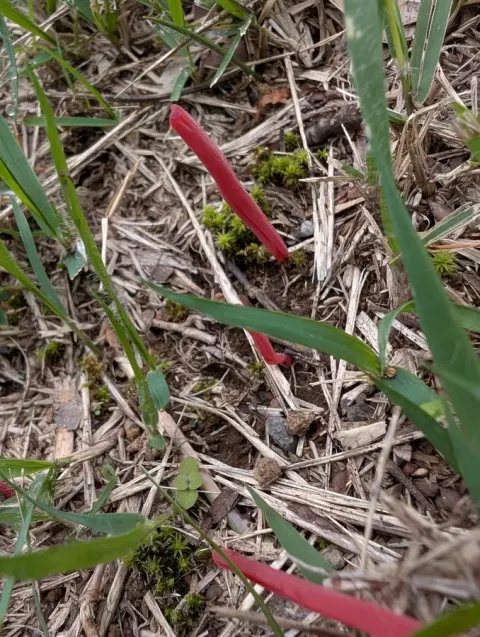
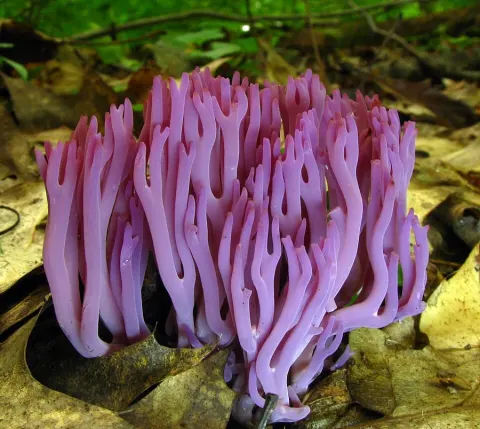
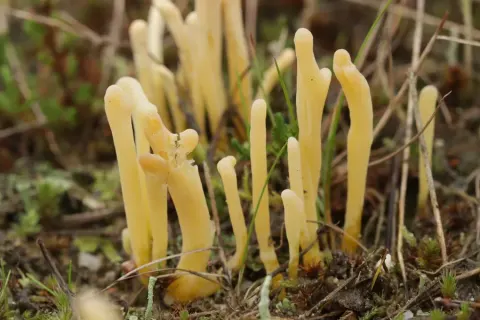
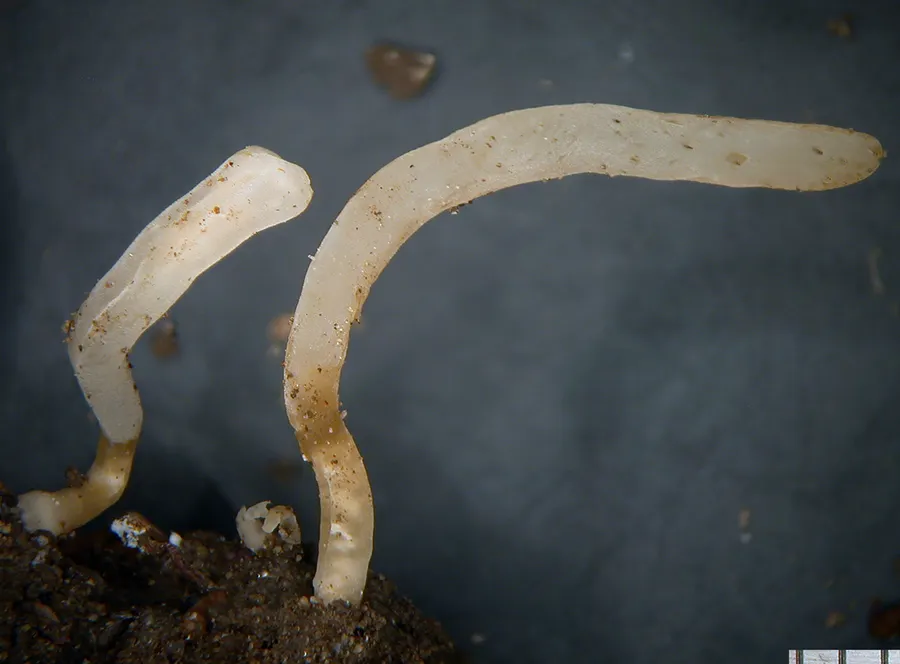
Dokumentasi Clavaria gibbsiae menurut asosiasi foto pada record takson iNaturalist. Kredit: Jerry Cooper. Identitas mengikuti sumber; bukan penentuan spesimen independen.
- Jenis
- Fotografi
- Kredit
- (c) Jerry Cooper, some rights reserved (CC BY), uploaded by Jerry Cooper
- Lisensi
- CC BY 4.0
- Sumber media
- Buka entri sumber
Sumber profil
- [1] Petersen, R.H. 1988: The clavarioid fungi of New Zealand. New Zealand Department of Scientific and Industrial Research, Bulletin. 236. — Clavaria gibbsiae
- [2] Catalogue of Life Base2026-09-11 — Clavaria gibbsiae
- [3] Dokumentasi visual — Clavaria gibbsiae
Rujukan halaman ini
Fungi. Clavaria gibbsiae. Rilis data fungi-2026-10-12-expansion-2. https://fungi-atlas.mgadib.chatgpt.site/jamur/clavaria-gibbsiae/.
Status: impor sumber; pemeriksaan editorial per profil belum selesai. Untuk klaim biologis, gunakan rujukan pada bagian terkait dan periksa konteks sumber aslinya.