01 / Morfologi

Ciri dan struktur

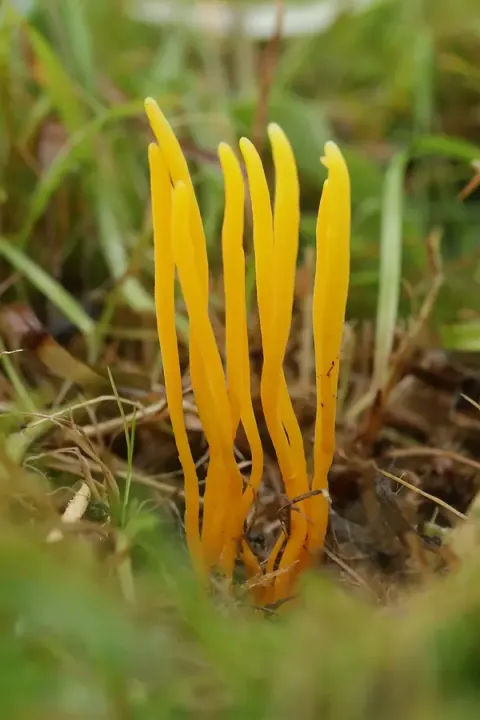
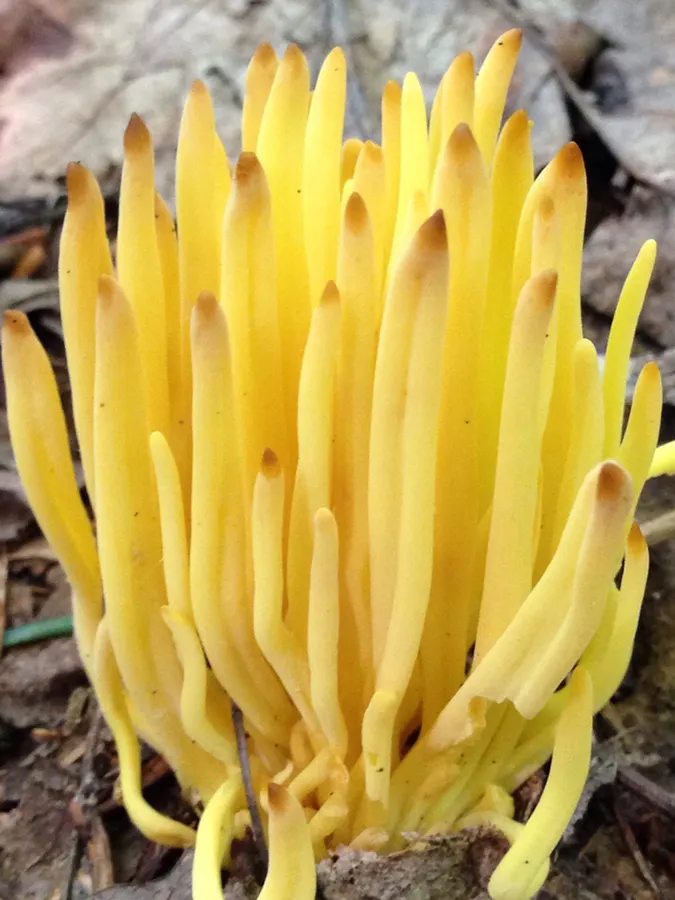
The fruit bodies are cylindrical, bright yellow, growing up to 11 cm tall in fasciculate (densely crowded) clusters of unbranched 'fingers' under 1 cm thick. Microscopically, the hyphae are hyaline, up to 12 μm in diameter, with clamp connections. The basidiospores are hyaline, smooth, globose to subglobose, 4.5 to 7.5 μm, with a large apiculus.

Sebagian uraian ditampilkan dalam bahasa sumber; terjemahannya belum tersedia atau belum lolos pemeriksaan.

Rujukan: [1]

Pengukuran mengikuti objek, spesimen atau kultur, dan metode yang disebutkan sumber. Baca uraian asli untuk konteks lengkap.

02 / Kehidupan

Habitat dan peran ekologis

The species was initially described from England and is common throughout Europe. Its distribution outside Europe is uncertain because of confusion with similar, closely related species in the complex. Clavulinopsis fusiformis sensu lato has been reported from North America, Central and South America, and Asia, including Iran, China, Nepal, and Japan. The species typically occurs in large, dense clusters on the ground and is presumed to be saprotrophic. In Europe it generally occurs in agriculturally unimproved, short-sward grassland (pastures and lawns). Such waxcap grasslands are a declining and threatened habitat, but C. fusiformis is one of the commoner species and is not currently considered of conservation concern. Elsewhere, C. fusiformis sensu lato occurs in woodland. In China it is one of the dominant macrofungal species found in Fargesia spathacea-dominated community forest at an elevation of 2600-3500 m.

Sebagian uraian ditampilkan dalam bahasa sumber; terjemahannya belum tersedia atau belum lolos pemeriksaan.

Rujukan: [1]

Habitat atau konteks temuan
hutan; padang rumput
Substrat
tanah
Peran atau konteks
Pengurai
Temukan hubungan serupa
03 / Siklus hidup

Reproduksi

The fruit bodies are cylindrical, bright yellow, growing up to 11 cm tall in fasciculate (densely crowded) clusters of unbranched 'fingers' under 1 cm thick. Microscopically, the hyphae are hyaline, up to 12 μm in diameter, with clamp connections. The basidiospores are hyaline, smooth, globose to subglobose, 4.5 to 7.5 μm, with a large apiculus.

Sebagian uraian ditampilkan dalam bahasa sumber; terjemahannya belum tersedia atau belum lolos pemeriksaan.

Rujukan: [1]

Sinonim menurut acuan taksonomi rilis: Clavaria ceranoides; Clavaria fusiformis; Clavaria fusiformis f. aurantiaca; Clavaria fusiformis var. ceranoides; Clavaria fusiformis var. congoensis; Clavaria inaequalis var. fusiformis; Clavaria platyclada; Clavulinopsis fusiformis var. bispora; Ramaria ceranoides; Ramariopsis fusiformis
04 / Batas informasi

Catatan identitas dan cakupan

  • Nama diterima mengikuti Catalogue of Life Base2026-09-11; uraian mempertahankan konsep dan nama sumber aslinya.
  • Original geographic, specimen and life-cycle scope retained; source import awaits individual editorial review.
  • Impor dan terjemahan otomatis belum diperiksa editorial per profil. Struktur reproduktif yang disebutkan tidak membuktikan seluruh siklus hidup diketahui.
  • Pengukuran pada uraian mengikuti spesimen, kultur, dan metode sumber; angka tidak diperluas ke semua populasi.

Catatan distribusi dalam narasi mengikuti sumbernya. Dokumentasi spesimen atau foto mengikuti catatan sumber. Bukti wilayah Indonesia dan penilaian konservasi tidak disimpulkan dari gambar.

05 / Dokumentasi

Melihat dengan konteks

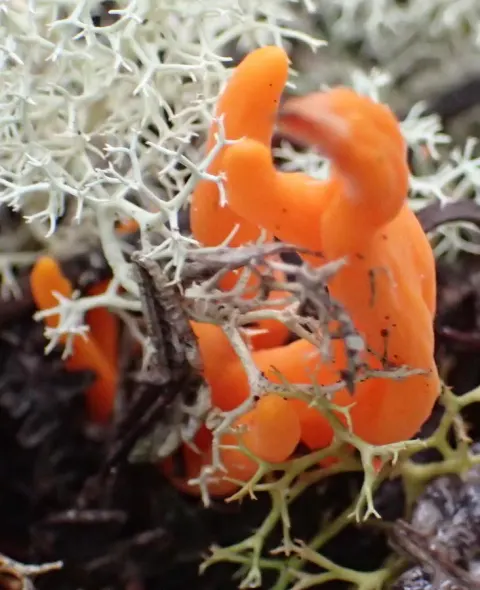
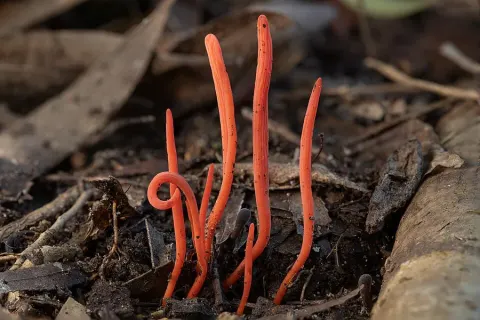
Dokumentasi Clavulinopsis fusiformis menurut asosiasi foto pada record takson iNaturalist. Kredit: naturalist charlie. Identitas mengikuti sumber; bukan penentuan spesimen independen.

Jenis
Fotografi
Kredit
(c) naturalist charlie, some rights reserved (CC BY), uploaded by naturalist charlie
Lisensi
CC BY 4.0
Sumber media
Buka entri sumber

Gambar menunjukkan objek menurut identifikasi sumber, bukan verifikasi independen spesimen oleh Fungi. Tidak ada skala baru yang ditambahkan.

06 / Rujukan

Sumber profil

  1. [1] Clavulinopsis fusiformis — Wikipedia (en)Bagian sumber: Frozen revision 1309855111
    Tanggal penghimpunan sumber: 2026-10-12
    Teks sumber: CC BY-SA4.0 · Wikipedia contributors
  2. [2] Catalogue of Life Base2026-09-11 — Clavulinopsis fusiformisBagian sumber: ColDP NameUsage.tsv ID VWB7; accepted species; source 2073
    Tanggal penghimpunan sumber: 2026-10-12
  3. [3] Dokumentasi visual — Clavulinopsis fusiformisBagian sumber: Individual media record; identification follows the source, not independent determination
    Tanggal penghimpunan sumber: 2026-10-12
    Media sumber: CC BY 4.0 · (c) naturalist charlie, some rights reserved (CC BY), uploaded by naturalist charlie

Adaptasi teks: CC BY-SA 4.0. Wikipedia contributors — Clavulinopsis fusiformis — Wikipedia (en)

Uraian asli dan riwayat sumber

Riwayat atau halaman sumber

Ringkasan sumber

Clavulinopsis fusiformis is a clavarioid fungus in the family Clavariaceae. In the UK, it has been given the recommended English name of golden spindles. In North America it has also been called spindle-shaped yellow coral or golden fairy spindle. It was originally described from England and is part of an unresolved species complex. Clavulinopsis fusiformis forms cylindrical, bright yellow fruit bodies that grow in dense clusters on the ground in agriculturally unimproved grassland or in woodland litter.

Revisi sumber

Morfologi sumber

The fruit bodies are cylindrical, bright yellow, growing up to 11 cm tall in fasciculate (densely crowded) clusters of unbranched 'fingers' under 1 cm thick. Microscopically, the hyphae are hyaline, up to 12 μm in diameter, with clamp connections. The basidiospores are hyaline, smooth, globose to subglobose, 4.5 to 7.5 μm, with a large apiculus.

Revisi sumber

Ekologi sumber

The species was initially described from England and is common throughout Europe. Its distribution outside Europe is uncertain because of confusion with similar, closely related species in the complex. Clavulinopsis fusiformis sensu lato has been reported from North America, Central and South America, and Asia, including Iran, China, Nepal, and Japan. The species typically occurs in large, dense clusters on the ground and is presumed to be saprotrophic. In Europe it generally occurs in agriculturally unimproved, short-sward grassland (pastures and lawns). Such waxcap grasslands are a declining and threatened habitat, but C. fusiformis is one of the commoner species and is not currently considered of conservation concern. Elsewhere, C. fusiformis sensu lato occurs in woodland. In China it is one of the dominant macrofungal species found in Fargesia spathacea-dominated community forest at an elevation of 2600-3500 m.

Revisi sumber

Struktur reproduksi sumber

The fruit bodies are cylindrical, bright yellow, growing up to 11 cm tall in fasciculate (densely crowded) clusters of unbranched 'fingers' under 1 cm thick. Microscopically, the hyphae are hyaline, up to 12 μm in diameter, with clamp connections. The basidiospores are hyaline, smooth, globose to subglobose, 4.5 to 7.5 μm, with a large apiculus.

Revisi sumber

Rujukan halaman ini

Fungi. Clavulinopsis fusiformis. Rilis data fungi-2026-10-12-expansion-2. https://fungi-atlas.mgadib.chatgpt.site/jamur/clavulinopsis-fusiformis/.

Status: impor sumber; pemeriksaan editorial per profil belum selesai. Untuk klaim biologis, gunakan rujukan pada bagian terkait dan periksa konteks sumber aslinya.