Ciri dan struktur
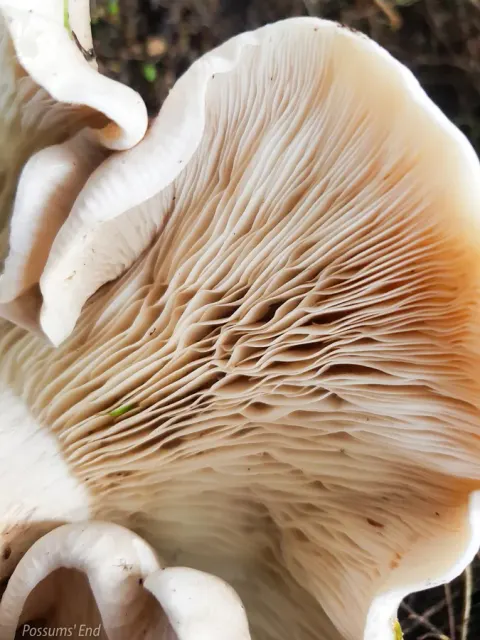
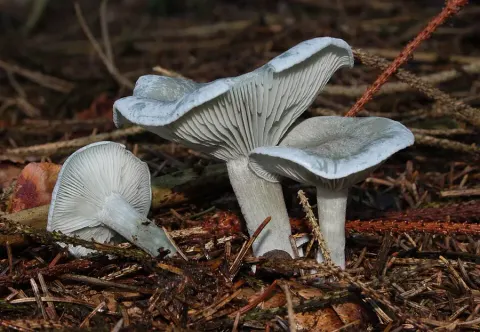
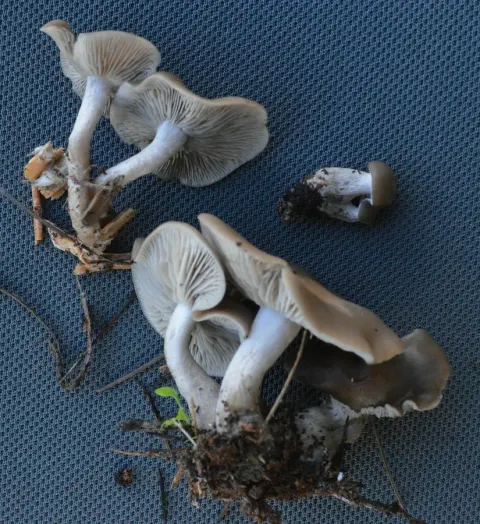
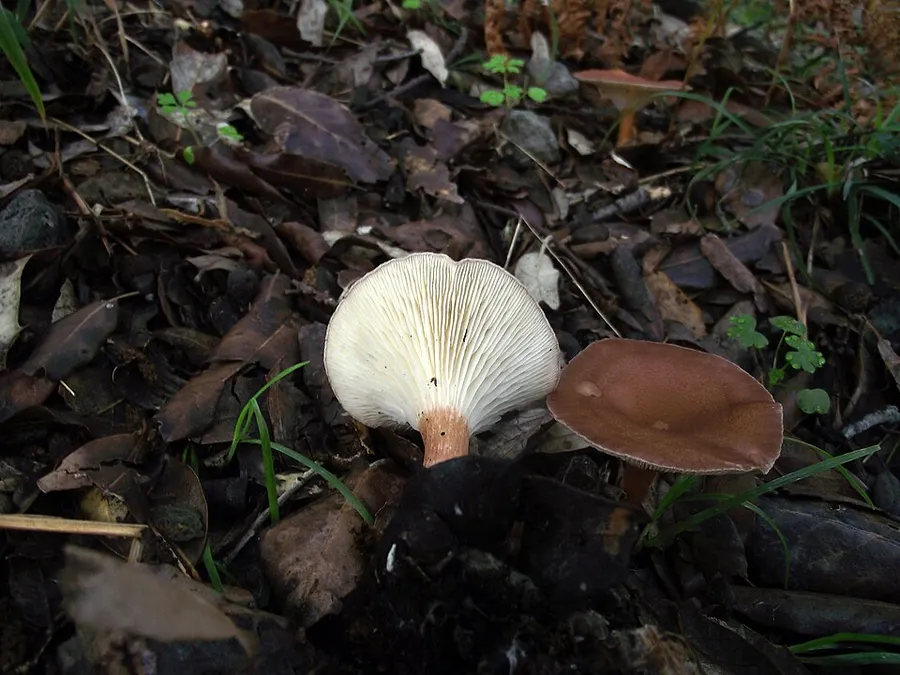
The fruit body of I. mediterranea has a funnel‑shaped cap (pileus) 1–8 cm broad. Initially the cap surface is flat with a shallow central depression and a small umbo, becoming deeply infundibuliform (funnel‑shaped) with maturity; it is dry, lightly fibrillose to almost smooth, and varies from dark chestnut to paler brown tones as it ages. The gills (lamellae) are crowded, run down the stipe (decurrent) and are white. The stipe measures 1.5–5 cm long and 0.3–0.5 cm thick, is cylindrical or slightly swollen at the base, pruinose when fresh and the same colour as (or slightly paler than) the cap. Initially stuffed, it becomes hollow with age, often retaining a tomentose base with adhering debris. The flesh is thin, elastic and white, showing no colour change on exposure. The odour and taste are mild and non‑distinctive; the species is reported as edible. The spore print is white. Microscopically, spores are tear‑shaped (lacrymoid), hyaline, smooth, 4.5–6 by 3–4 micrometres (μm), inamyloid, and contain several oil droplets. Basidia (spore-bearing cells) are club‑shaped, four‑spored, 20–25 by 6–7.5 μm, often with a slight ventral constriction. No cystidia are present. The cap cuticle (pileipellis) is a xerocutis composed of loosely interwoven, protruding hyphae encrusted with brown pigment, 3–16 μm wide. Clamp connections occur at most septa.
Habitat dan peran ekologis
Infundibulicybe mediterranea grows scattered or in groups (gregariously), frequently in arc formations or in small tufts on leaf litter and humus beneath broadleaf trees, especially Quercus suber and Quercus ilex (holm oak). Fruit bodies have been recorded from February through December. Apart from its core distribution in Sardinia, it has also been reported from southern France, Corsica, and Morocco. In Cyprus, it has been recorded from high-elevation forests of Pinus nigra subsp. pallasiana and in meso- and supra-Mediterranean P. brutia forests.
- Habitat atau konteks temuan
- hutan
- Substrat
- Informasi belum tersedia pada sumber rilis ini.
- Peran atau konteks
- Belum dikategorikan pada rilis ini.
Reproduksi
The stipe measures 1.5–5 cm long and 0.3–0.5 cm thick, is cylindrical or slightly swollen at the base, pruinose when fresh and the same colour as (or slightly paler than) the cap. Initially stuffed, it becomes hollow with age, often retaining a tomentose base with adhering debris. The flesh is thin, elastic and white, showing no colour change on exposure. The odour and taste are mild and non‑distinctive; the species is reported as edible. The spore print is white. Microscopically, spores are tear‑shaped (lacrymoid), hyaline, smooth, 4.5–6 by 3–4 micrometres (μm), inamyloid, and contain several oil droplets. Basidia (spore-bearing cells) are club‑shaped, four‑spored, 20–25 by 6–7.5 μm, often with a slight ventral constriction.
Catatan identitas dan cakupan
- Nama diterima mengikuti Catalogue of Life Base2026-09-11; uraian mempertahankan konsep dan nama sumber aslinya.
- Original geographic, specimen and life-cycle scope retained; source import awaits individual editorial review.
- Impor dan terjemahan otomatis belum diperiksa editorial per profil. Struktur reproduktif yang disebutkan tidak membuktikan seluruh siklus hidup diketahui.
- Pengukuran pada uraian mengikuti spesimen, kultur, dan metode sumber; angka tidak diperluas ke semua populasi.
Catatan distribusi dalam narasi mengikuti sumbernya. Dokumentasi spesimen atau foto mengikuti catatan sumber. Bukti wilayah Indonesia dan penilaian konservasi tidak disimpulkan dari gambar.
Melihat dengan konteks
Dokumentasi Infundibulicybe mediterranea dari Wikimedia Commons. Fruit bodies of the agaric fungus Infundibulicybe mediterranea Vizzini, Contu & Musumeci. Photographed in Sibiri, Gonnosfanadigas, Sardinia, Italy. Identifikasi mengikuti record berkas sumber.
- Jenis
- Fotografi
- Kredit
- Davide Puddu
- Lisensi
- CC BY-SA 3.0
- Sumber media
- Buka entri sumber
Sumber profil
- [1] Infundibulicybe mediterranea — Wikipedia (en)
- [2] Catalogue of Life Base2026-09-11 — Clitocybe mediterranea
- [3] Dokumentasi visual — Infundibulicybe mediterranea
Rujukan halaman ini
Fungi. Clitocybe mediterranea. Rilis data fungi-2026-10-12-expansion-2. https://fungi-atlas.mgadib.chatgpt.site/jamur/clitocybe-mediterranea/.
Status: impor sumber; pemeriksaan editorial per profil belum selesai. Untuk klaim biologis, gunakan rujukan pada bagian terkait dan periksa konteks sumber aslinya.