01 / Morfologi

Ciri dan struktur

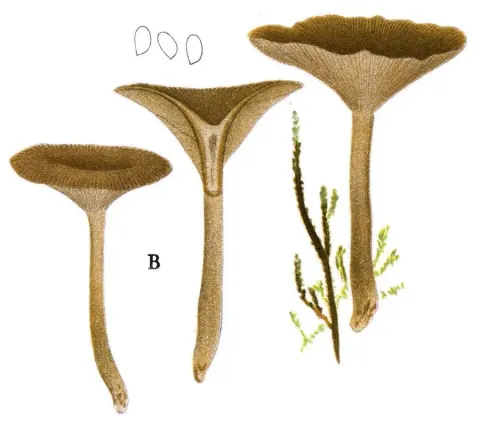
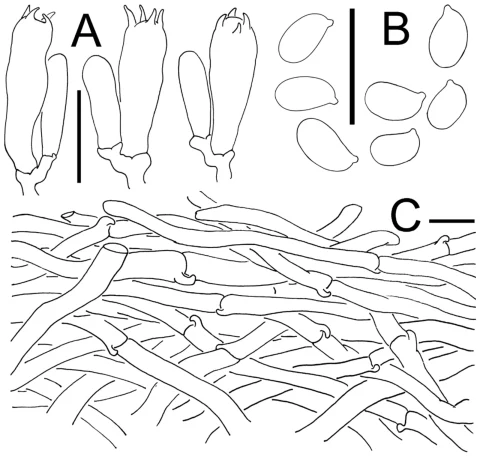
The cap (pileus) is 2.5–6.5 cm broad, hygrophanous (changing colour as it dries) and non‑pruinose, with weak translucent striations at the margin. When fresh it is chestnut to greyish‑brown, the disc sometimes darker; in dried specimens it browns to a pale yellowish‑brown. The cap is convex to plane, often becoming umbilicate (with a small central depression), and the surface dries smooth and matt, showing faint concentric wrinkles in dried herbarium specimens (Latin: specimina exsiccata). The stem measures 3–11 cm by 3–15 mm, concolorous with or slightly paler than the cap. It is equal or barely tapered at the base, solid at first then hollowing out, cylindrical (terete) to somewhat compressed, and bears a very thin pale fibrillose (hair‑like) coating—especially at the apex—and occasional scant tomentum or rhizoid‑like hyphae at the base. The gills are very short‑decurrent to narrowly adnate, attaching at angles of 10–60°. They occur in three to four tiers, with 25–35 reaching the stipe, and are 4–6 mm broad at mid‑length—about three times broader than the underlying context. When moist they are pale brown‑grey; in older specimens they turn grey‑brown to hoary. The odour of the mushroom is faintly fungoid and the taste is mild. Microscopically, the spores measure 5.4–10.2 by 3.4–5.2 micrometres (μm), broadly ellipsoid with obtuse bases, often with a slight asymmetrical constriction and containing guttules (oil droplets); the apiculus is 0.8–1.0 by 0.7–0.9 μm. Spores are mostly single, seldom in pairs, and yield an abundant, pale yellow spore print with a faint greyish tint.

Sebagian uraian ditampilkan dalam bahasa sumber; terjemahannya belum tersedia atau belum lolos pemeriksaan.

Rujukan: [1]

Pengukuran mengikuti objek, spesimen atau kultur, dan metode yang disebutkan sumber. Baca uraian asli untuk konteks lengkap.

02 / Kehidupan

Habitat dan peran ekologis

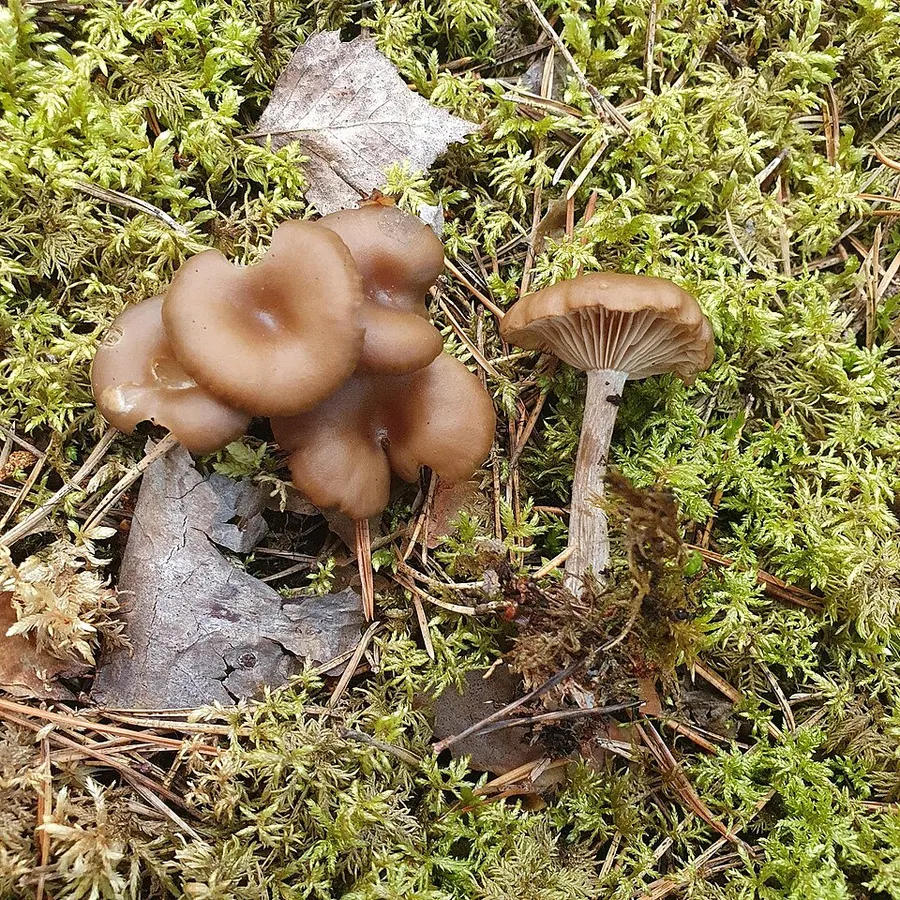
Clitocybe strigosa is saprotrophic, occurring solitary, in groups, rows or arcs in coniferous and deciduous grass–herb to mesic heath forests, often in deep moss carpets under Picea or Fagus and occasionally on calcareous heaths above the tree line. Fruiting bodies appear from early August to mid‑October. In Fennoscandia the species shows two disjunct distribution areas: an alpine, calcareous zone and a southern boreal lowland zone where it is less dependent on high lime concentrations in the soil. Populations in the alpine zone likely overwintered through the last glaciation, whereas lowland populations arrived later from the east and southeast.

Sebagian uraian ditampilkan dalam bahasa sumber; terjemahannya belum tersedia atau belum lolos pemeriksaan.

Rujukan: [1]

Habitat atau konteks temuan
hutan
Substrat
Informasi belum tersedia pada sumber rilis ini.
Peran atau konteks
Pengurai
Temukan hubungan serupa
03 / Siklus hidup

Reproduksi

Microscopically, the spores measure 5.4–10.2 by 3.4–5.2 micrometres (μm), broadly ellipsoid with obtuse bases, often with a slight asymmetrical constriction and containing guttules (oil droplets); the apiculus is 0.8–1.0 by 0.7–0.9 μm. Spores are mostly single, seldom in pairs, and yield an abundant, pale yellow spore print with a faint greyish tint. The spores of C. strigosa are cyanophilic, meaning they readily absorb blue dyes such as lactophenol cotton blue, due to a mucilaginous outer layer (myxosporium) of the spore wall that is absent in non-cyanophilic species.

Sebagian uraian ditampilkan dalam bahasa sumber; terjemahannya belum tersedia atau belum lolos pemeriksaan.

Rujukan: [1]

04 / Batas informasi

Catatan identitas dan cakupan

  • Nama diterima mengikuti Catalogue of Life Base2026-09-11; uraian mempertahankan konsep dan nama sumber aslinya.
  • Original geographic, specimen and life-cycle scope retained; source import awaits individual editorial review.
  • Impor dan terjemahan otomatis belum diperiksa editorial per profil. Struktur reproduktif yang disebutkan tidak membuktikan seluruh siklus hidup diketahui.
  • Pengukuran pada uraian mengikuti spesimen, kultur, dan metode sumber; angka tidak diperluas ke semua populasi.

Catatan distribusi dalam narasi mengikuti sumbernya. Dokumentasi spesimen atau foto mengikuti catatan sumber. Bukti wilayah Indonesia dan penilaian konservasi tidak disimpulkan dari gambar.

05 / Dokumentasi

Melihat dengan konteks

Dokumentasi Clitocybe strigosa dari Wikimedia Commons. Clitocybe strigosa Harmaja 4401635689 Identifikasi mengikuti record berkas sumber.

Jenis
Fotografi
Kredit
The Norwegian Biodiversity Information Centre (NBIC) (Reidun Braathen, Even W. Hanssen)
Lisensi
CC BY 4.0
Sumber media
Buka entri sumber

Gambar menunjukkan objek menurut identifikasi sumber, bukan verifikasi independen spesimen oleh Fungi. Tidak ada skala baru yang ditambahkan.

06 / Rujukan

Sumber profil

  1. [1] Clitocybe strigosa — Wikipedia (en)Bagian sumber: Frozen revision 1366942821
    Tanggal penghimpunan sumber: 2026-10-12
    Teks sumber: CC BY-SA4.0 · Wikipedia contributors
  2. [2] Catalogue of Life Base2026-09-11 — Clitocybe strigosaBagian sumber: ColDP NameUsage.tsv ID W8Z2; accepted species; source 2073
    Tanggal penghimpunan sumber: 2026-10-12
  3. [3] Dokumentasi visual — Clitocybe strigosaBagian sumber: Individual media record; identification follows the source, not independent determination
    Tanggal penghimpunan sumber: 2026-10-12
    Media sumber: CC BY 4.0 · The Norwegian Biodiversity Information Centre (NBIC) (Reidun Braathen, Even W. Hanssen)

Adaptasi teks: CC BY-SA 4.0. Wikipedia contributors — Clitocybe strigosa — Wikipedia (en)

Uraian asli dan riwayat sumber

Riwayat atau halaman sumber

Ringkasan sumber

Clitocybe strigosa is a species of mushroom-forming fungus first described by the Finnish mycologist Harri Harmaja in 1969. It is characterized by its chestnut to greyish-brown, hygrophanous cap, pale yellow spore print with a faint greyish tint, and cyanophilic spores that readily absorb blue dyes due to their mucilaginous outer layer. This saprotrophic fungus grows in coniferous and deciduous forests, often in deep moss carpets under spruce or beech, and occasionally on calcareous heaths above the tree line.

Revisi sumber

Morfologi sumber

The cap (pileus) is 2.5–6.5 cm broad, hygrophanous (changing colour as it dries) and non‑pruinose, with weak translucent striations at the margin. When fresh it is chestnut to greyish‑brown, the disc sometimes darker; in dried specimens it browns to a pale yellowish‑brown. The cap is convex to plane, often becoming umbilicate (with a small central depression), and the surface dries smooth and matt, showing faint concentric wrinkles in dried herbarium specimens (Latin: specimina exsiccata). The stem measures 3–11 cm by 3–15 mm, concolorous with or slightly paler than the cap. It is equal or barely tapered at the base, solid at first then hollowing out, cylindrical (terete) to somewhat compressed, and bears a very thin pale fibrillose (hair‑like) coating—especially at the apex—and occasional scant tomentum or rhizoid‑like hyphae at the base. The gills are very short‑decurrent to narrowly adnate, attaching at angles of 10–60°. They occur in three to four tiers, with 25–35 reaching the stipe, and are 4–6 mm broad at mid‑length—about three times broader than the underlying context. When moist they are pale brown‑grey; in older specimens they turn grey‑brown to hoary. The odour of the mushroom is faintly fungoid and the taste is mild. Microscopically, the spores measure 5.4–10.2 by 3.4–5.2 micrometres (μm), broadly ellipsoid with obtuse bases, often with a slight asymmetrical constriction and containing guttules (oil droplets); the apiculus is 0.8–1.0 by 0.7–0.9 μm. Spores are mostly single, seldom in pairs, and yield an abundant, pale yellow spore print with a faint greyish tint.

Revisi sumber

Ekologi sumber

Clitocybe strigosa is saprotrophic, occurring solitary, in groups, rows or arcs in coniferous and deciduous grass–herb to mesic heath forests, often in deep moss carpets under Picea or Fagus and occasionally on calcareous heaths above the tree line. Fruiting bodies appear from early August to mid‑October. In Fennoscandia the species shows two disjunct distribution areas: an alpine, calcareous zone and a southern boreal lowland zone where it is less dependent on high lime concentrations in the soil. Populations in the alpine zone likely overwintered through the last glaciation, whereas lowland populations arrived later from the east and southeast.

Revisi sumber

Struktur reproduksi sumber

Microscopically, the spores measure 5.4–10.2 by 3.4–5.2 micrometres (μm), broadly ellipsoid with obtuse bases, often with a slight asymmetrical constriction and containing guttules (oil droplets); the apiculus is 0.8–1.0 by 0.7–0.9 μm. Spores are mostly single, seldom in pairs, and yield an abundant, pale yellow spore print with a faint greyish tint. The spores of C. strigosa are cyanophilic, meaning they readily absorb blue dyes such as lactophenol cotton blue, due to a mucilaginous outer layer (myxosporium) of the spore wall that is absent in non-cyanophilic species.

Revisi sumber

Rujukan halaman ini

Fungi. Clitocybe strigosa. Rilis data fungi-2026-10-12-expansion-2. https://fungi-atlas.mgadib.chatgpt.site/jamur/clitocybe-strigosa/.

Status: impor sumber; pemeriksaan editorial per profil belum selesai. Untuk klaim biologis, gunakan rujukan pada bagian terkait dan periksa konteks sumber aslinya.