01 / Morfologi

Ciri dan struktur

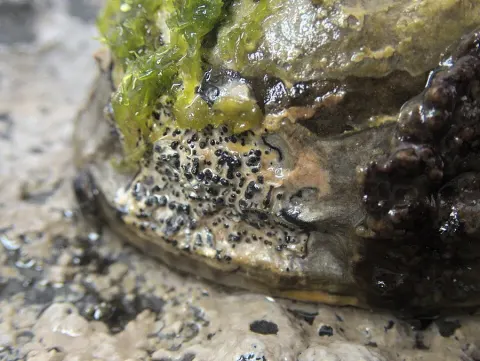
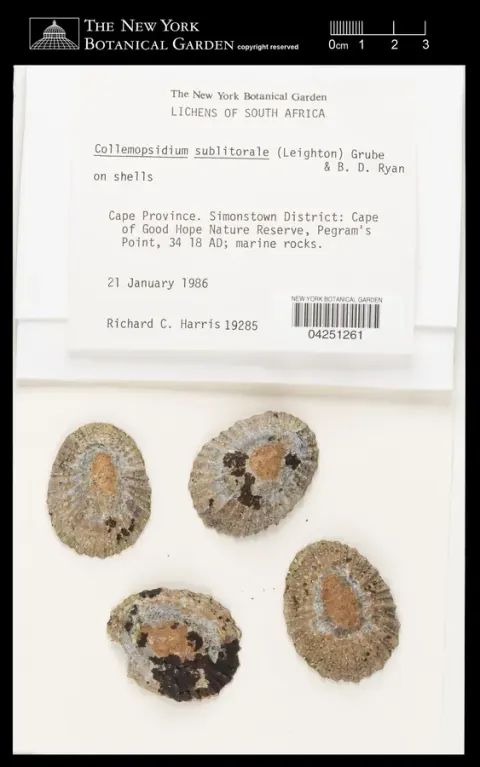
Collemopsidium foveolatum is a marine lichen that grows entirely embedded within its substrate. Its main body (thallus) is so deeply immersed that it is not visible on the surface. The species produces small reproductive structures called perithecia, which measure 0.10–0.24 mm in diameter and are also typically embedded in small pits within the substrate. Each perithecium is covered by a black, protective cap () that appears "lid-like" and lies either flat or slightly convex against the surface, with minimal lateral spread. The lichen reproduces through spores () that measure 14–21 by 5–9 micrometres. It also commonly produces asexual reproductive structures called pycnidia, which appear as small black spots embedded in the substrate. Sometimes specimens may lack the characteristic black protective covering over their perithecia, representing a natural variation within the species. Collemopsidium foveolatum can be distinguished from similar species, particularly C. sublitorale, by its consistently smaller perithecia that remain deeply embedded in the substrate rather than protruding. While C. sublitorale often shows variation in perithecial size within a single specimen, C. foveolatum typically maintains consistent perithecial sizes throughout each individual. The lichen contains a photosynthetic partner () that appears in scattered groups within the thallus, though in some specimens it may be absent. No secondary metabolites (lichen products) have been identified in this species.

Sebagian uraian ditampilkan dalam bahasa sumber; terjemahannya belum tersedia atau belum lolos pemeriksaan.

Rujukan: [1]

Pengukuran mengikuti objek, spesimen atau kultur, dan metode yang disebutkan sumber. Baca uraian asli untuk konteks lengkap.

02 / Kehidupan

Habitat dan peran ekologis

Collemopsidium foveolatum is a marine lichen that grows in the intertidal zone, specifically in the eulittoral zone (the area between high and low tides) and the littoral fringe (the area just above high tide). It shows a strong preference for calcareous substrates, growing primarily on limestone rocks and the shells of marine organisms. Research has confirmed the distinctive zonation patterns of marine lichens like C. foveolatum in the eulittoral zone, demonstrating that these species possess specific traits adapted to regular seawater immersion, including higher proportions of cyanobacterial photobionts and perithecioid fruiting bodies. The species has been documented along the coasts of western Europe, with confirmed populations in Ireland, Norway, and the United Kingdom. Environmental studies suggest it tends to be more common on shores with northerly aspects, though this observation may be influenced by sampling bias. Compared to other marine Collemopsidium species, C. foveolatum appears better adapted to drier conditions and can be found higher up on the shore than some of its relatives. When growing on limestone shores, C. foveolatum maintains its ability to grow by keeping pace with natural erosion of the substrate through its characteristic embedded growth pattern.

Sebagian uraian ditampilkan dalam bahasa sumber; terjemahannya belum tersedia atau belum lolos pemeriksaan.

Rujukan: [1]

Habitat atau konteks temuan
Informasi belum tersedia pada sumber rilis ini.
Substrat
Informasi belum tersedia pada sumber rilis ini.
Peran atau konteks
Pembentuk liken
Temukan hubungan serupa
03 / Siklus hidup

Reproduksi

Collemopsidium foveolatum is a marine lichen that grows entirely embedded within its substrate. Its main body (thallus) is so deeply immersed that it is not visible on the surface. The species produces small reproductive structures called perithecia, which measure 0.10–0.24 mm in diameter and are also typically embedded in small pits within the substrate. Each perithecium is covered by a black, protective cap () that appears "lid-like" and lies either flat or slightly convex against the surface, with minimal lateral spread. The lichen reproduces through spores () that measure 14–21 by 5–9 micrometres. It also commonly produces asexual reproductive structures called pycnidia, which appear as small black spots embedded in the substrate.

Sebagian uraian ditampilkan dalam bahasa sumber; terjemahannya belum tersedia atau belum lolos pemeriksaan.

Rujukan: [1]

Sinonim menurut acuan taksonomi rilis: Arthopyrenia foveolata; Arthopyrenia sublitoralis f. foveolata; Thelidium litorale f. foveolatum
04 / Batas informasi

Catatan identitas dan cakupan

  • Nama diterima mengikuti Catalogue of Life Base2026-09-11; uraian mempertahankan konsep dan nama sumber aslinya.
  • Original geographic, specimen and life-cycle scope retained; source import awaits individual editorial review.
  • Impor dan terjemahan otomatis belum diperiksa editorial per profil. Struktur reproduktif yang disebutkan tidak membuktikan seluruh siklus hidup diketahui.
  • Pengukuran pada uraian mengikuti spesimen, kultur, dan metode sumber; angka tidak diperluas ke semua populasi.

Catatan distribusi dalam narasi mengikuti sumbernya. Dokumentasi spesimen atau foto mengikuti catatan sumber. Bukti wilayah Indonesia dan penilaian konservasi tidak disimpulkan dari gambar.

05 / Dokumentasi

Melihat dengan konteks

Dokumentasi Collemopsidium foveolatum dari Wikimedia Commons. For more information about this, see the observation page at Mushroom Observer. Identifikasi mengikuti record berkas sumber.

Jenis
Fotografi
Kredit
This image was created by user zaca at Mushroom Observer , a source for mycological images. You can contact this user here .
Sumber media
Buka entri sumber

Gambar menunjukkan objek menurut identifikasi sumber, bukan verifikasi independen spesimen oleh Fungi. Tidak ada skala baru yang ditambahkan.

06 / Rujukan

Sumber profil

  1. [1] Collemopsidium foveolatum — Wikipedia (en)Bagian sumber: Frozen revision 1313973329
    Tanggal penghimpunan sumber: 2026-10-12
    Teks sumber: CC BY-SA4.0 · Wikipedia contributors
  2. [2] Catalogue of Life Base2026-09-11 — Collemopsidium foveolatumBagian sumber: ColDP NameUsage.tsv ID X35Y; accepted species; source 2073
    Tanggal penghimpunan sumber: 2026-10-12
  3. [3] Dokumentasi visual — Collemopsidium foveolatumBagian sumber: Individual media record; identification follows the source, not independent determination
    Tanggal penghimpunan sumber: 2026-10-12
    Media sumber: CC BY-SA 3.0 · This image was created by user zaca at Mushroom Observer , a source for mycological images. You can contact this user here .

Adaptasi teks: CC BY-SA 4.0. Wikipedia contributors — Collemopsidium foveolatum — Wikipedia (en)

Uraian asli dan riwayat sumber

Riwayat atau halaman sumber

Ringkasan sumber

Collemopsidium foveolatum is a species of lichen in the family Xanthopyreniaceae. It is a marine lichen that grows entirely embedded within calcareous substrates in the intertidal zone, particularly on limestone rocks and marine shells. The species is characterised by its minute, black, sunken reproductive structures () that measure 0.10–0.24 mm in diameter and create small pits in the substrate. First described in 1911 from specimens collected in England, it has since been documented along coastlines in western Europe, North America and North Africa.

Revisi sumber

Morfologi sumber

Collemopsidium foveolatum is a marine lichen that grows entirely embedded within its substrate. Its main body (thallus) is so deeply immersed that it is not visible on the surface. The species produces small reproductive structures called perithecia, which measure 0.10–0.24 mm in diameter and are also typically embedded in small pits within the substrate. Each perithecium is covered by a black, protective cap () that appears "lid-like" and lies either flat or slightly convex against the surface, with minimal lateral spread. The lichen reproduces through spores () that measure 14–21 by 5–9 micrometres. It also commonly produces asexual reproductive structures called pycnidia, which appear as small black spots embedded in the substrate. Sometimes specimens may lack the characteristic black protective covering over their perithecia, representing a natural variation within the species. Collemopsidium foveolatum can be distinguished from similar species, particularly C. sublitorale, by its consistently smaller perithecia that remain deeply embedded in the substrate rather than protruding. While C. sublitorale often shows variation in perithecial size within a single specimen, C. foveolatum typically maintains consistent perithecial sizes throughout each individual. The lichen contains a photosynthetic partner () that appears in scattered groups within the thallus, though in some specimens it may be absent. No secondary metabolites (lichen products) have been identified in this species.

Revisi sumber

Ekologi sumber

Collemopsidium foveolatum is a marine lichen that grows in the intertidal zone, specifically in the eulittoral zone (the area between high and low tides) and the littoral fringe (the area just above high tide). It shows a strong preference for calcareous substrates, growing primarily on limestone rocks and the shells of marine organisms. Research has confirmed the distinctive zonation patterns of marine lichens like C. foveolatum in the eulittoral zone, demonstrating that these species possess specific traits adapted to regular seawater immersion, including higher proportions of cyanobacterial photobionts and perithecioid fruiting bodies. The species has been documented along the coasts of western Europe, with confirmed populations in Ireland, Norway, and the United Kingdom. Environmental studies suggest it tends to be more common on shores with northerly aspects, though this observation may be influenced by sampling bias. Compared to other marine Collemopsidium species, C. foveolatum appears better adapted to drier conditions and can be found higher up on the shore than some of its relatives. When growing on limestone shores, C. foveolatum maintains its ability to grow by keeping pace with natural erosion of the substrate through its characteristic embedded growth pattern.

Revisi sumber

Struktur reproduksi sumber

Collemopsidium foveolatum is a marine lichen that grows entirely embedded within its substrate. Its main body (thallus) is so deeply immersed that it is not visible on the surface. The species produces small reproductive structures called perithecia, which measure 0.10–0.24 mm in diameter and are also typically embedded in small pits within the substrate. Each perithecium is covered by a black, protective cap () that appears "lid-like" and lies either flat or slightly convex against the surface, with minimal lateral spread. The lichen reproduces through spores () that measure 14–21 by 5–9 micrometres. It also commonly produces asexual reproductive structures called pycnidia, which appear as small black spots embedded in the substrate.

Revisi sumber

Rujukan halaman ini

Fungi. Collemopsidium foveolatum. Rilis data fungi-2026-10-12-expansion-2. https://fungi-atlas.mgadib.chatgpt.site/jamur/collemopsidium-foveolatum/.

Status: impor sumber; pemeriksaan editorial per profil belum selesai. Untuk klaim biologis, gunakan rujukan pada bagian terkait dan periksa konteks sumber aslinya.