01 / Morfologi

Ciri dan struktur

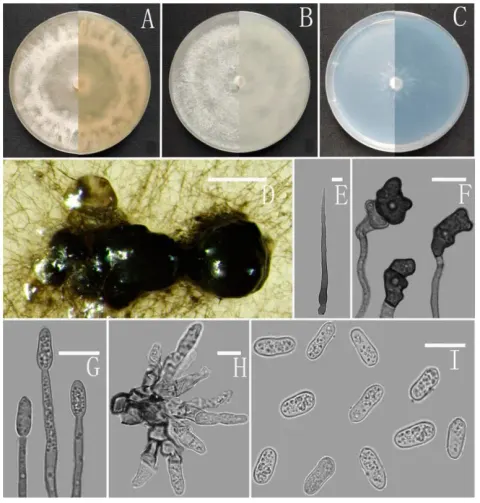
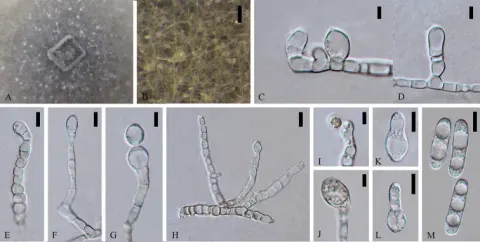
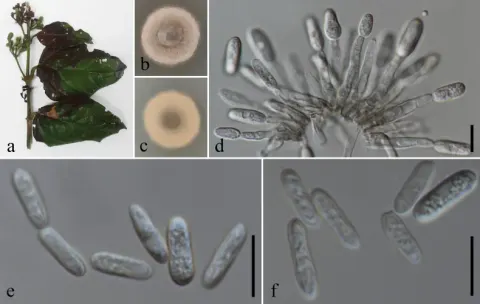
Colonies grown from single conidia on Difco PDA 70–85 mm diam after 10 d, several isolates with restricted growth, 50–55 mm diam with an irregularly scalloped margin. Aerial mycelium cottony to dense cottony, tufted near centre, grey to dark grey, scattered, small, dark-based acervuli and large, globose, stromatic structures partially embedded in agar, these sometimes splitting apart and forming conidia. In reverse typically with pinkish-orange pigments, variable in intensity, in some isolates this colour partially hidden by more or less concentric bands of dark grey pigment. Conidia variable in shape, simple to broadly lobed, sometimes in groups, sometimes intercalary, about 7–17 × 4–9.5 μm. Perithecia not seen in culture.

Sebagian uraian ditampilkan dalam bahasa sumber; terjemahannya belum tersedia atau belum lolos pemeriksaan.

Rujukan: [1]

Pengukuran mengikuti objek, spesimen atau kultur, dan metode yang disebutkan sumber. Baca uraian asli untuk konteks lengkap.

02 / Kehidupan

Habitat dan peran ekologis

Geographic distribution and host range: Confirmed only from New Zealand, but GenBank records suggest C. aotearoa also occurs in China (see below). In New Zealand this species is common on a taxonomically diverse set of native plants, as both a fruit rot and a leaf endophyte, and has also been isolated from leaves of several species of naturalised weeds.

Sebagian uraian ditampilkan dalam bahasa sumber; terjemahannya belum tersedia atau belum lolos pemeriksaan.

Rujukan: [1]

Habitat atau konteks temuan
Informasi belum tersedia pada sumber rilis ini.
Substrat
Informasi belum tersedia pada sumber rilis ini.
Peran atau konteks
Belum dikategorikan pada rilis ini.
Temukan hubungan serupa
03 / Siklus hidup

Reproduksi

Colonies grown from single conidia on Difco PDA 70–85 mm diam after 10 d, several isolates with restricted growth, 50–55 mm diam with an irregularly scalloped margin. Aerial mycelium cottony to dense cottony, tufted near centre, grey to dark grey, scattered, small, dark-based acervuli and large, globose, stromatic structures partially embedded in agar, these sometimes splitting apart and forming conidia. In reverse typically with pinkish-orange pigments, variable in intensity, in some isolates this colour partially hidden by more or less concentric bands of dark grey pigment. Conidia variable in shape, simple to broadly lobed, sometimes in groups, sometimes intercalary, about 7–17 × 4–9.5 μm.

Sebagian uraian ditampilkan dalam bahasa sumber; terjemahannya belum tersedia atau belum lolos pemeriksaan.

Rujukan: [1]

04 / Batas informasi

Catatan identitas dan cakupan

  • Nama diterima mengikuti Catalogue of Life Base2026-09-11; uraian mempertahankan konsep dan nama sumber aslinya.
  • Historical description as cited by BiotaNZ. Preserve explicit New Zealand/locality, host and specimen qualifiers. Distribution is the cited source scope, not a current global range.
  • Impor dan terjemahan otomatis belum diperiksa editorial per profil. Struktur reproduktif yang disebutkan tidak membuktikan seluruh siklus hidup diketahui.
  • Pengukuran pada uraian mengikuti spesimen, kultur, dan metode sumber; angka tidak diperluas ke semua populasi.

Catatan distribusi dalam narasi mengikuti sumbernya. Dokumentasi spesimen atau foto mengikuti catatan sumber. Bukti wilayah Indonesia dan penilaian konservasi tidak disimpulkan dari gambar.

05 / Dokumentasi

Melihat dengan konteks

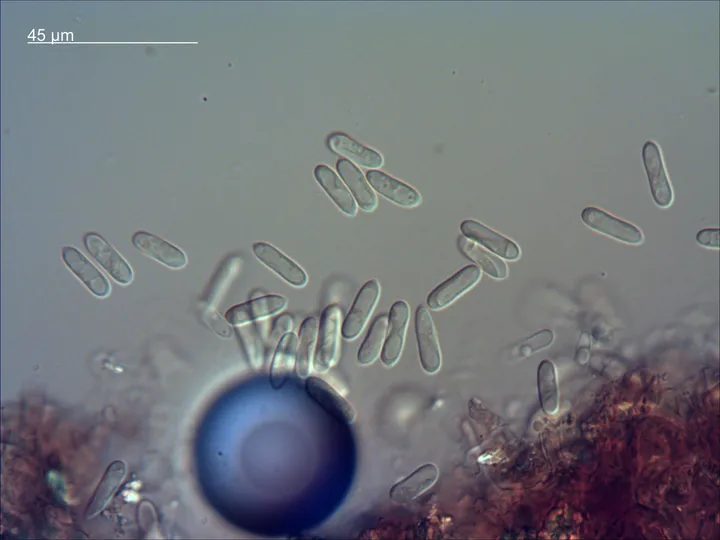
Foto yang diasosiasikan dengan Colletotrichum aotearoa pada iNaturalist. Identifikasi mengikuti sumber; bukan penentuan spesimen independen.

Jenis
Fotografi
Kredit
(c) Jerry Cooper, some rights reserved (CC BY), uploaded by Jerry Cooper
Lisensi
CC BY 4.0
Sumber media
Buka entri sumber

Gambar menunjukkan objek menurut identifikasi sumber, bukan verifikasi independen spesimen oleh Fungi. Tidak ada skala baru yang ditambahkan.

06 / Rujukan

Sumber profil

  1. [1] Weir, B.S.; Johnston P.R.; Damm, U. 2012: The Colletotrichum gloeosporioides species complex. Studies in Mycology 73: 115-180. — Colletotrichum aotearoaBagian sumber: biota:497e7c6f-f66c-451a-8524-f83ff18743ab:61ede309-2762-4c70-9f69-db0f06f0180f
    Tanggal penghimpunan sumber: 2026-10-12
    Teks sumber: CC BY 4.0 · Weir, B.S.; Johnston P.R.; Damm, U. 2012: The Colletotrichum gloeosporioides species complex. Studies in Mycology 73: 115-180.
  2. [2] Catalogue of Life Base2026-09-11 — Colletotrichum aotearoaBagian sumber: ColDP NameUsage.tsv ID X3S7; accepted species; source 2073
    Tanggal penghimpunan sumber: 2026-10-12
  3. [3] Dokumentasi visual — Colletotrichum aotearoaBagian sumber: Identitas mengikuti sumber dokumentasi; bukan penentuan spesimen independen.
    Tanggal penghimpunan sumber: 2026-10-17
    Media sumber: CC BY 4.0 · (c) Jerry Cooper, some rights reserved (CC BY), uploaded by Jerry Cooper

Adaptasi teks: CC BY 4.0. Weir, B.S.; Johnston P.R.; Damm, U. 2012: The Colletotrichum gloeosporioides species complex. Studies in Mycology 73: 115-180. — Weir, B.S.; Johnston P.R.; Damm, U. 2012: The Colletotrichum gloeosporioides species complex. Studies in Mycology 73: 115-180. — Colletotrichum aotearoa

Uraian asli dan riwayat sumber

Riwayat atau halaman sumber

Ringkasan sumber

Colonies grown from single conidia on Difco PDA 70–85 mm diam after 10 d, several isolates with restricted growth, 50–55 mm diam with an irregularly scalloped margin. Aerial mycelium cottony to dense cottony, tufted near centre, grey to dark grey, scattered, small, dark-based acervuli and large, globose, stromatic structures partially embedded in agar, these sometimes splitting apart and forming conidia. In reverse typically with pinkish-orange pigments, variable in intensity, in some isolates this colour partially hidden by more or less concentric bands of dark grey pigment.

Revisi sumber

Morfologi sumber

Colonies grown from single conidia on Difco PDA 70–85 mm diam after 10 d, several isolates with restricted growth, 50–55 mm diam with an irregularly scalloped margin. Aerial mycelium cottony to dense cottony, tufted near centre, grey to dark grey, scattered, small, dark-based acervuli and large, globose, stromatic structures partially embedded in agar, these sometimes splitting apart and forming conidia. In reverse typically with pinkish-orange pigments, variable in intensity, in some isolates this colour partially hidden by more or less concentric bands of dark grey pigment. Conidia variable in shape, simple to broadly lobed, sometimes in groups, sometimes intercalary, about 7–17 × 4–9.5 μm. Perithecia not seen in culture.

Revisi sumber

Ekologi sumber

Geographic distribution and host range: Confirmed only from New Zealand, but GenBank records suggest C. aotearoa also occurs in China (see below). In New Zealand this species is common on a taxonomically diverse set of native plants, as both a fruit rot and a leaf endophyte, and has also been isolated from leaves of several species of naturalised weeds.

Revisi sumber

Struktur reproduksi sumber

Colonies grown from single conidia on Difco PDA 70–85 mm diam after 10 d, several isolates with restricted growth, 50–55 mm diam with an irregularly scalloped margin. Aerial mycelium cottony to dense cottony, tufted near centre, grey to dark grey, scattered, small, dark-based acervuli and large, globose, stromatic structures partially embedded in agar, these sometimes splitting apart and forming conidia. In reverse typically with pinkish-orange pigments, variable in intensity, in some isolates this colour partially hidden by more or less concentric bands of dark grey pigment. Conidia variable in shape, simple to broadly lobed, sometimes in groups, sometimes intercalary, about 7–17 × 4–9.5 μm.

Revisi sumber

Rujukan halaman ini

Fungi. Colletotrichum aotearoa. Rilis data fungi-2026-10-12-expansion-2. https://fungi-atlas.mgadib.chatgpt.site/jamur/colletotrichum-aotearoa/.

Status: impor sumber; pemeriksaan editorial per profil belum selesai. Untuk klaim biologis, gunakan rujukan pada bagian terkait dan periksa konteks sumber aslinya.