01 / Morfologi

Ciri dan struktur

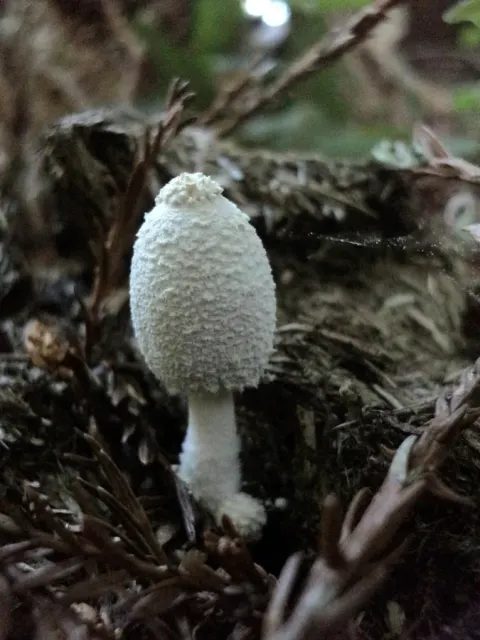
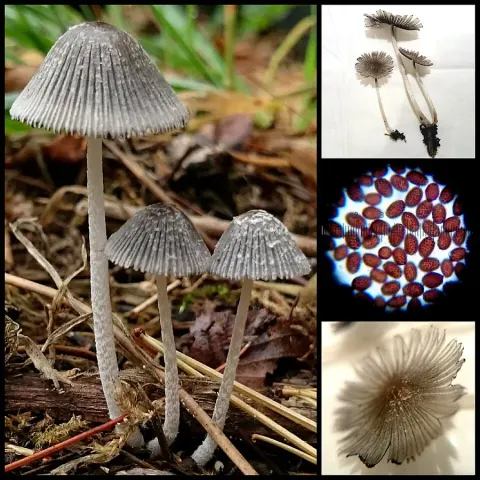
The fruit body size of Coprinopsis lagopus can vary tremendously. This fungus gives rise to very small fruit bodies (known as dwarf fruit-bodies), some of which are less than one-hundredth the size of the larger ones. In a series of experiments, Arthur Henry Reginald Buller grew spores on horse dung and noted a large range of size variation: the smallest specimen having a stem length of 1 mm and cap diameter of 0.75 mm, while the largest specimen had a stem length of 18.4 cm and cap diameter of 2 cm. Buller noted that the dwarf fruit-bodies are fully functional, producing and liberating spores in a manner identical with normal ones. The great variation in size has led some authors to erroneously name the dwarf fruit-bodies as new species. For example, George Edward Massee considered the dwarfs to be a new species, Coprinus radiatus. In general, dwarf fruit-bodies have stem lengths from 1–10 mm tall and cap of 0.75–3 mm in diameter, while large specimens have stems that are 5-18.5 cm tall and 2–5 mm wide, with cap diameters of 2–5 cm. The thickness of the stem in the larger specimens is typically 4–6 mm thick, up to 0.8 mm thick at the club-shaped or bulbous base. The color of the cap surface is pale to very dark-brown at center beneath the whitish to silvery grey veil but becomes paler towards the margin. As the mushroom matures, the shape of the cap becomes more conical or convex, and finally flattens out, with edges curved upward. The veil is initially whitish, then turns to a silvery grey or grey-brown; it eventually splits up, becoming hairy (fibrillose). The gills are freely attached to the stem, very thin and crowded closely together.

Sebagian uraian ditampilkan dalam bahasa sumber; terjemahannya belum tersedia atau belum lolos pemeriksaan.

Rujukan: [1]

Pengukuran mengikuti objek, spesimen atau kultur, dan metode yang disebutkan sumber. Baca uraian asli untuk konteks lengkap.

02 / Kehidupan

Habitat dan peran ekologis

Coprinopsis lagopus tumbuh sendiri atau dalam kelompok di tanah serta di atas kayu, tumpukan kompost, sampah sayuran, kotoran kuda, atau kotoran sapi dari musim gugur sampai pertengahan musim dingin. Ia tersebar luas di seluruh dunia.

Rujukan: [1]

Habitat atau konteks temuan
Informasi belum tersedia pada sumber rilis ini.
Substrat
kayu; tanah
Peran atau konteks
Belum dikategorikan pada rilis ini.
Temukan hubungan serupa
03 / Siklus hidup

Reproduksi

The fruit body size of Coprinopsis lagopus can vary tremendously. This fungus gives rise to very small fruit bodies (known as dwarf fruit-bodies), some of which are less than one-hundredth the size of the larger ones. In a series of experiments, Arthur Henry Reginald Buller grew spores on horse dung and noted a large range of size variation: the smallest specimen having a stem length of 1 mm and cap diameter of 0.75 mm, while the largest specimen had a stem length of 18.4 cm and cap diameter of 2 cm. Buller noted that the dwarf fruit-bodies are fully functional, producing and liberating spores in a manner identical with normal ones. The great variation in size has led some authors to erroneously name the dwarf fruit-bodies as new species.

Sebagian uraian ditampilkan dalam bahasa sumber; terjemahannya belum tersedia atau belum lolos pemeriksaan.

Rujukan: [1]

Sinonim menurut acuan taksonomi rilis: Agaricus lagopus; Coprinopsis lagopus var. vacillans; Coprinus lagopus; Coprinus lagopus f. macrospermus; Coprinus lagopus var. vacillans
04 / Batas informasi

Catatan identitas dan cakupan

  • Nama diterima mengikuti Catalogue of Life Base2026-09-11; uraian mempertahankan konsep dan nama sumber aslinya.
  • Original geographic, specimen and life-cycle scope retained; source import awaits individual editorial review.
  • Impor dan terjemahan otomatis belum diperiksa editorial per profil. Struktur reproduktif yang disebutkan tidak membuktikan seluruh siklus hidup diketahui.
  • Pengukuran pada uraian mengikuti spesimen, kultur, dan metode sumber; angka tidak diperluas ke semua populasi.

Catatan distribusi dalam narasi mengikuti sumbernya. Dokumentasi spesimen atau foto mengikuti catatan sumber. Bukti wilayah Indonesia dan penilaian konservasi tidak disimpulkan dari gambar.

05 / Dokumentasi

Melihat dengan konteks

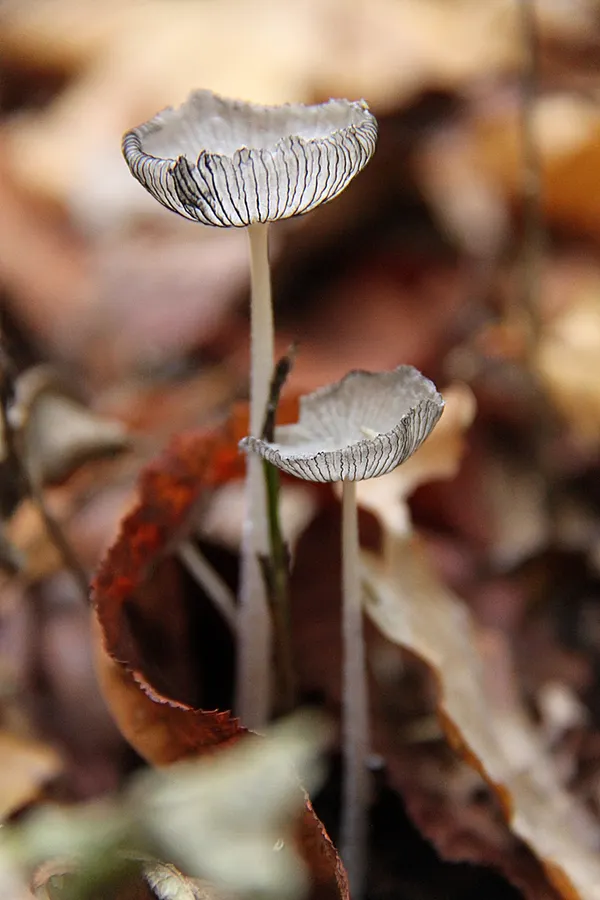
Dokumentasi Coprinopsis lagopus menurut asosiasi foto pada record takson iNaturalist. Kredit: Dwergenpaartje. Identitas mengikuti sumber; bukan penentuan spesimen independen.

Jenis
Fotografi
Kredit
(c) Dwergenpaartje, some rights reserved (CC BY-SA)
Sumber media
Buka entri sumber

Gambar menunjukkan objek menurut identifikasi sumber, bukan verifikasi independen spesimen oleh Fungi. Tidak ada skala baru yang ditambahkan.

06 / Rujukan

Sumber profil

  1. [1] Coprinopsis lagopus — Wikipedia (en)Bagian sumber: Frozen revision 1323167265
    Tanggal penghimpunan sumber: 2026-10-12
    Teks sumber: CC BY-SA4.0 · Wikipedia contributors
  2. [2] Catalogue of Life Base2026-09-11 — Coprinopsis lagopusBagian sumber: ColDP NameUsage.tsv ID Y58K; accepted species; source 2073
    Tanggal penghimpunan sumber: 2026-10-12
  3. [3] Dokumentasi visual — Coprinopsis lagopusBagian sumber: Individual media record; identification follows the source, not independent determination
    Tanggal penghimpunan sumber: 2026-10-12
    Media sumber: CC BY-SA 4.0 · (c) Dwergenpaartje, some rights reserved (CC BY-SA)

Adaptasi teks: CC BY-SA 4.0. Wikipedia contributors — Coprinopsis lagopus — Wikipedia (en)

Uraian asli dan riwayat sumber

Riwayat atau halaman sumber

Ringkasan sumber

Coprinopsis lagopus, commonly known as the hare's foot inkcap, harefoot mushroom, or rabbit's foot inky cap, is a species of fungus in the family Psathyrellaceae. It is commonly known as the harefoot mushroom due to the vague resemblance of the young fruit body to the paw of a white rabbit. It is a delicate and short-lived fungus, the fruit bodies lasting only a few hours before dissolving into a black ink – a process called deliquescence.

Revisi sumber

Morfologi sumber

The fruit body size of Coprinopsis lagopus can vary tremendously. This fungus gives rise to very small fruit bodies (known as dwarf fruit-bodies), some of which are less than one-hundredth the size of the larger ones. In a series of experiments, Arthur Henry Reginald Buller grew spores on horse dung and noted a large range of size variation: the smallest specimen having a stem length of 1 mm and cap diameter of 0.75 mm, while the largest specimen had a stem length of 18.4 cm and cap diameter of 2 cm. Buller noted that the dwarf fruit-bodies are fully functional, producing and liberating spores in a manner identical with normal ones. The great variation in size has led some authors to erroneously name the dwarf fruit-bodies as new species. For example, George Edward Massee considered the dwarfs to be a new species, Coprinus radiatus. In general, dwarf fruit-bodies have stem lengths from 1–10 mm tall and cap of 0.75–3 mm in diameter, while large specimens have stems that are 5-18.5 cm tall and 2–5 mm wide, with cap diameters of 2–5 cm. The thickness of the stem in the larger specimens is typically 4–6 mm thick, up to 0.8 mm thick at the club-shaped or bulbous base. The color of the cap surface is pale to very dark-brown at center beneath the whitish to silvery grey veil but becomes paler towards the margin. As the mushroom matures, the shape of the cap becomes more conical or convex, and finally flattens out, with edges curved upward. The veil is initially whitish, then turns to a silvery grey or grey-brown; it eventually splits up, becoming hairy (fibrillose). The gills are freely attached to the stem, very thin and crowded closely together.

Revisi sumber

Ekologi sumber

Coprinopsis lagopus grows solitarily or in groups in soil as well as on wood chips, compost heaps, vegetable refuse, horse dung, or cattle dung from autumn to mid-winter. It has a widespread distribution throughout the world.

Revisi sumber

Struktur reproduksi sumber

The fruit body size of Coprinopsis lagopus can vary tremendously. This fungus gives rise to very small fruit bodies (known as dwarf fruit-bodies), some of which are less than one-hundredth the size of the larger ones. In a series of experiments, Arthur Henry Reginald Buller grew spores on horse dung and noted a large range of size variation: the smallest specimen having a stem length of 1 mm and cap diameter of 0.75 mm, while the largest specimen had a stem length of 18.4 cm and cap diameter of 2 cm. Buller noted that the dwarf fruit-bodies are fully functional, producing and liberating spores in a manner identical with normal ones. The great variation in size has led some authors to erroneously name the dwarf fruit-bodies as new species.

Revisi sumber

Rujukan halaman ini

Fungi. Coprinopsis lagopus. Rilis data fungi-2026-10-12-expansion-2. https://fungi-atlas.mgadib.chatgpt.site/jamur/coprinopsis-lagopus/.

Status: impor sumber; pemeriksaan editorial per profil belum selesai. Untuk klaim biologis, gunakan rujukan pada bagian terkait dan periksa konteks sumber aslinya.