Ciri dan struktur
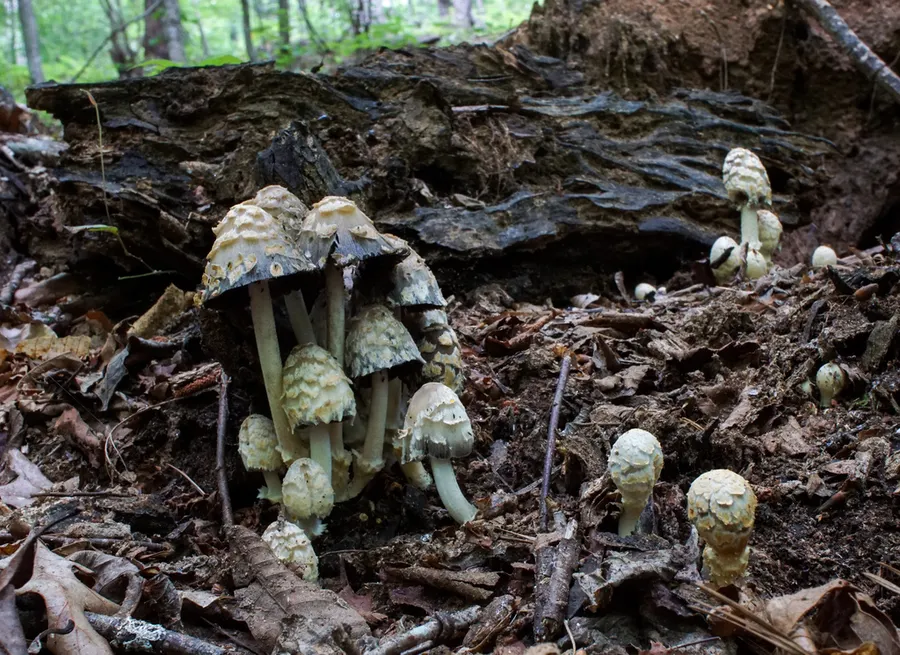
The cap of C. variegata is thin, initially oval-shaped then bell-shaped, and then flattened with the margin turned upward; it reaches diameters of up to 12 in. When young, the surface of the cap is covered with a woolly whitish or yellowish veil that breaks up into short-lived flakes or scales; this process reveals the radially striate (grooved) gray to grayish-brown cap surface. The gills are broad, thin, crowded closely together, and free from attachment to the stem. They are initially white but turn to dark purplish-brown as the spores mature. The stem is 4 to 12 in and up to 1 cm thick, hollow, and whitish. It is roughly the same width throughout the length of the stem, and may have a wispy, cotton-like ring present near the base. Clusters of fruit bodies have a mass of rhizomorphs at the base called an ozonium. In deposit, the spores are dark brown. A light microscope may be used to reveal more features of the spores, including smooth surfaces, a dark brown color, an ellipsoid shape in face view and an egg shape in side view, and dimensions of 7.5–9.5 by 4–4.5 μm. The apex of the spore appears truncated because of the presence of a germ pore. The basidia (spore-bearing cells) are hyaline (translucent), with dimensions of 14–16 by 6.5–7.5 μm. The paraphyses are 9–11 by 8–10 μm, hyaline, and collapse readily. The pleurocystidia (cystidia present on the gill face) are abundant, roughly cylindrical, hyaline, and measure 100–150 by 20–35 μm. Cheilocystidia (cystidia on the edge of an gill) are present in young specimens, and are roughly ellipsoid, measuring 50–80 by 15–25 μm.
Habitat dan peran ekologis
Spesies ini saprobik ⁇ mendapat nutrisi dengan membusuk dan mencerna materi organik ⁇ dan tumbuh dalam kelompok atau kelompok di atas daun yang membusuk atau kayu yang membusuk. Biasanya buahnya dalam jendela sempit dari June to Juli; musim semi dan awal musim panas ini membedakan buahnya dari yang lebih umum Coprinus comatus dan Coprinopsis atramentaria, yang menghasilkan tubuh buah di akhir musim gugur. Hal ini ditemukan di Amerika Serikat, di daerah timur Dataran Tinggi. Coprinopsis variegata dapat menyerang bakteri tanah, seperti spesies Agrobacterium Pseudomonas and, dan menggunakannya sebagai sumber nutrisi. Jamur ini mencapai hal ini dengan tumbuh khusus hifa ke arah bakteri, merasakannya dengan mekanisme kemotraktif yang belum sepenuhnya dipahami. The fungus then secretes compounds to digest the bacteria while growing assimilative hyphae to absorb the nutrients. Prosesnya relatif cepat, dan koloni bakteri dapat disesuaikan dengan waktu kurang dari 24 hours.
- Habitat atau konteks temuan
- Informasi belum tersedia pada sumber rilis ini.
- Substrat
- Informasi belum tersedia pada sumber rilis ini.
- Peran atau konteks
- Pengurai
Reproduksi
The cap of C. variegata is thin, initially oval-shaped then bell-shaped, and then flattened with the margin turned upward; it reaches diameters of up to 12 in. When young, the surface of the cap is covered with a woolly whitish or yellowish veil that breaks up into short-lived flakes or scales; this process reveals the radially striate (grooved) gray to grayish-brown cap surface. The gills are broad, thin, crowded closely together, and free from attachment to the stem. They are initially white but turn to dark purplish-brown as the spores mature. The stem is 4 to 12 in and up to 1 cm thick, hollow, and whitish. It is roughly the same width throughout the length of the stem, and may have a wispy, cotton-like ring present near the base.
Catatan identitas dan cakupan
- Nama diterima mengikuti Catalogue of Life Base2026-09-11; uraian mempertahankan konsep dan nama sumber aslinya.
- Original geographic, specimen and life-cycle scope retained; source import awaits individual editorial review.
- Impor dan terjemahan otomatis belum diperiksa editorial per profil. Struktur reproduktif yang disebutkan tidak membuktikan seluruh siklus hidup diketahui.
- Pengukuran pada uraian mengikuti spesimen, kultur, dan metode sumber; angka tidak diperluas ke semua populasi.
Catatan distribusi dalam narasi mengikuti sumbernya. Dokumentasi spesimen atau foto mengikuti catatan sumber. Bukti wilayah Indonesia dan penilaian konservasi tidak disimpulkan dari gambar.
Melihat dengan konteks
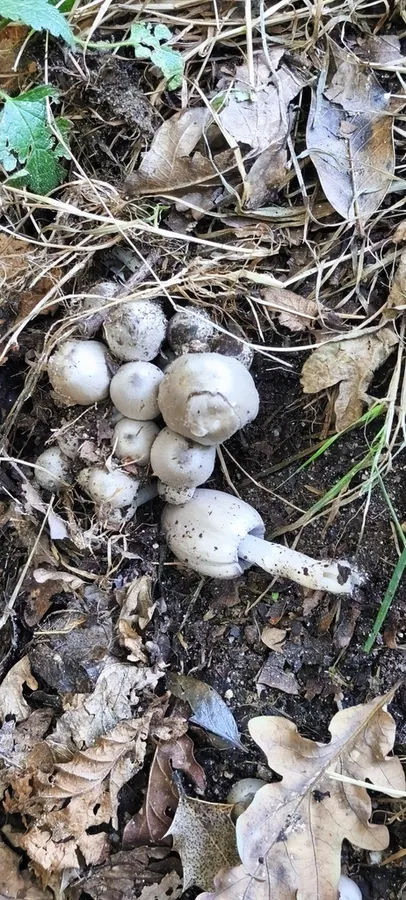
Dokumentasi Coprinopsis variegata menurut asosiasi foto pada record takson iNaturalist. Kredit: Bill Sheehan. Identitas mengikuti sumber; bukan penentuan spesimen independen.
- Jenis
- Fotografi
- Kredit
- (c) Bill Sheehan, some rights reserved (CC BY-SA), uploaded by Bill Sheehan
- Lisensi
- CC BY-SA 4.0
- Sumber media
- Buka entri sumber
Dokumentasi tambahan
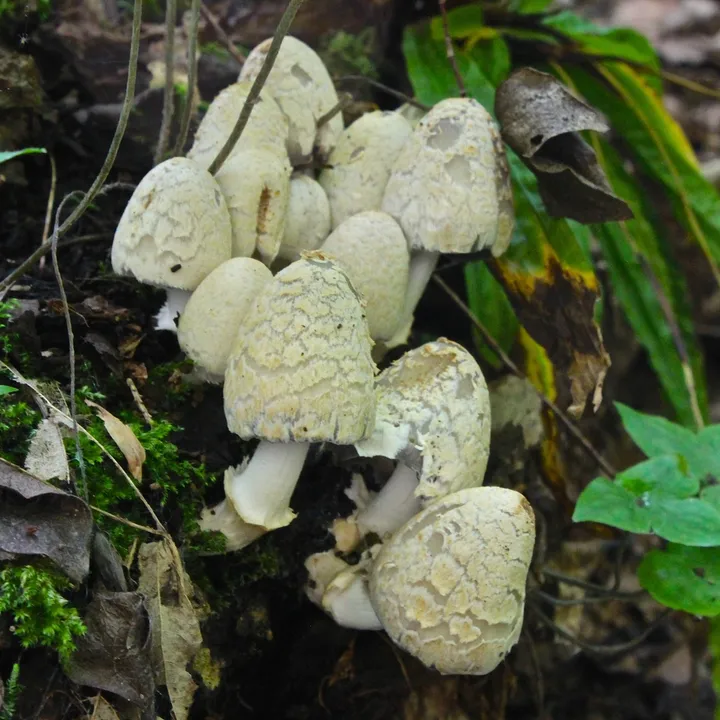
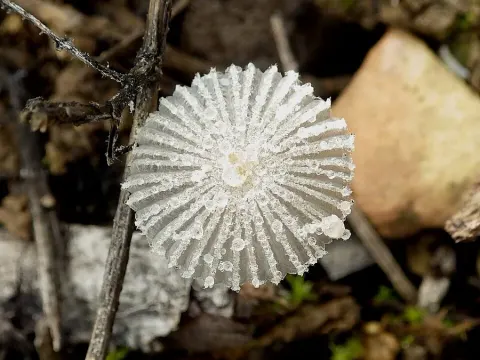
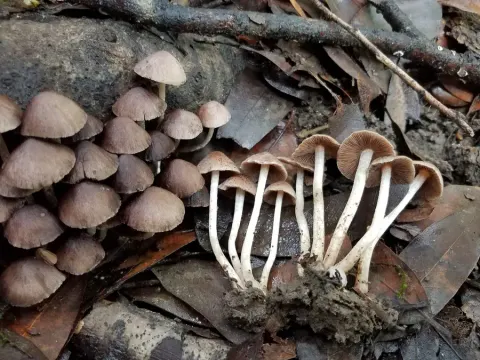
Foto yang diasosiasikan dengan Coprinopsis variegata pada iNaturalist. Identifikasi mengikuti sumber; bukan penentuan spesimen independen.
Kredit dan penggunaan
(c) Fluff Berger, some rights reserved (CC BY-SA), uploaded by Fluff Berger
Ukuran dan format gambar disesuaikan tanpa pemotongan, retus, atau penambahan skala. Lisensi sumber dipertahankan.
Sumber profil
- [1] Coprinopsis variegata — Wikipedia (en)
- [2] Catalogue of Life Base2026-09-11 — Coprinopsis variegata
- [3] Dokumentasi visual — Coprinopsis variegata
- [4] Dokumentasi visual — Coprinopsis variegata
Rujukan halaman ini
Fungi. Coprinopsis variegata. Rilis data fungi-2026-10-12-expansion-2. https://fungi-atlas.mgadib.chatgpt.site/jamur/coprinopsis-variegata/.
Status: impor sumber; pemeriksaan editorial per profil belum selesai. Untuk klaim biologis, gunakan rujukan pada bagian terkait dan periksa konteks sumber aslinya.