Ciri dan struktur
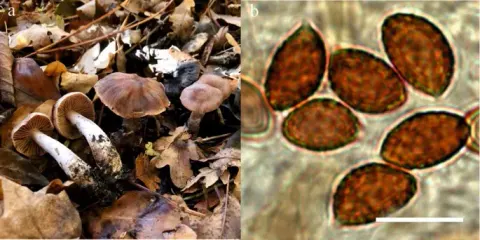
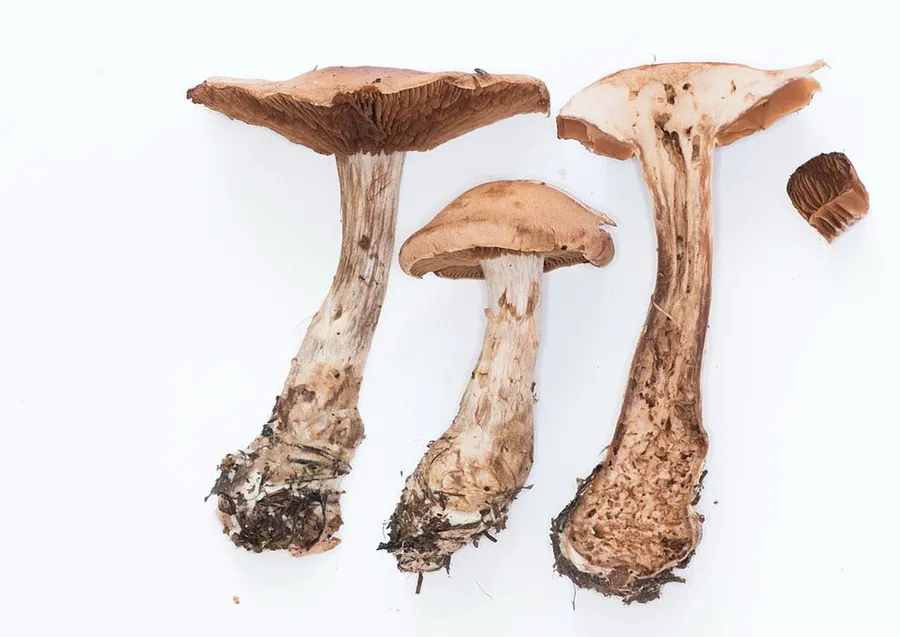
The cap (pileus) of C. fuscobovinus measures 5–10 cm in diameter. When young it is hemispherical with the margin turned inward; as it matures it flattens to a low dome, occasionally bearing a small central bump (umbo). The surface is innately fibrillose (covered in fine fibres) and ranges from greyish‑yellow‑brown to dark brown, sometimes showing blackish patches; in drying, it becomes streaked with paler, yellowish‑brown zones (hygrophanous). Beneath, the gills are moderately spaced and notched where they meet the stipe (emarginate); they shift from pale brown to chocolate brown, with edges remaining slightly paler. The stipe stands 4–11 cm tall, initially clothed in whitish fibrils that soon brown, and may bear a faint girdle or sheath from the universal veil. The flesh is uniformly brown, deepening to nearly black at the stipe base in older specimens, and emits only a faint radish‑like odour (raphanoid). Microscopically, the almond‑ to ovoid‑shaped spores measure 9.1–11.1 by 6.1–7.0 μm (average 9.4–10.8 by 6.3–6.7 μm) and are densely ornamented with fine warts (verrucose); they stain reddish‑brown in Melzer's reagent (a dextrinoid reaction), reflecting a specific chemical property of the spore wall. The gill tissue (trama) comprises smooth, pale olivaceous hyphae, while the gill edge bears moderately large, mostly globe‑shaped cells (marginal cells). The cap cuticle (pileipellis) is an epicutis of thin‑walled, mostly smooth hyphae, underlain by a distinct hypoderm layer; clamp connections (hook‑like bridges between hyphal cells) occur throughout the tissues.
Habitat dan peran ekologis
Cortinarius fuscobovinus fruits from mid‑August to mid‑September in mature, mesic coniferous forests dominated by spruce (Picea abies) often with pine (Pinus sylvestris), on base‑rich, calcareous soils. It appears most frequently in well‑preserved natural woodlands—many records come from protected reserves—and is confined to the boreal vegetation zone of northern Europe, where it remains uncommon. In the 2019 Finnish red list, C. fuscobovinus is considered a near-threatened species, unchanged from its previous (2010) classification.
- Habitat atau konteks temuan
- hutan
- Substrat
- Informasi belum tersedia pada sumber rilis ini.
- Peran atau konteks
- Belum dikategorikan pada rilis ini.
Reproduksi
The flesh is uniformly brown, deepening to nearly black at the stipe base in older specimens, and emits only a faint radish‑like odour (raphanoid). Microscopically, the almond‑ to ovoid‑shaped spores measure 9.1–11.1 by 6.1–7.0 μm (average 9.4–10.8 by 6.3–6.7 μm) and are densely ornamented with fine warts (verrucose); they stain reddish‑brown in Melzer's reagent (a dextrinoid reaction), reflecting a specific chemical property of the spore wall. The gill tissue (trama) comprises smooth, pale olivaceous hyphae, while the gill edge bears moderately large, mostly globe‑shaped cells (marginal cells). The cap cuticle (pileipellis) is an epicutis of thin‑walled, mostly smooth hyphae, underlain by a distinct hypoderm layer; clamp connections (hook‑like bridges between hyphal cells) occur throughout the tissues.
Catatan identitas dan cakupan
- Nama diterima mengikuti Catalogue of Life Base2026-09-11; uraian mempertahankan konsep dan nama sumber aslinya.
- Original geographic, specimen and life-cycle scope retained; source import awaits individual editorial review.
- Impor dan terjemahan otomatis belum diperiksa editorial per profil. Struktur reproduktif yang disebutkan tidak membuktikan seluruh siklus hidup diketahui.
- Pengukuran pada uraian mengikuti spesimen, kultur, dan metode sumber; angka tidak diperluas ke semua populasi.
Catatan distribusi dalam narasi mengikuti sumbernya. Dokumentasi spesimen atau foto mengikuti catatan sumber. Bukti wilayah Indonesia dan penilaian konservasi tidak disimpulkan dari gambar.
Melihat dengan konteks
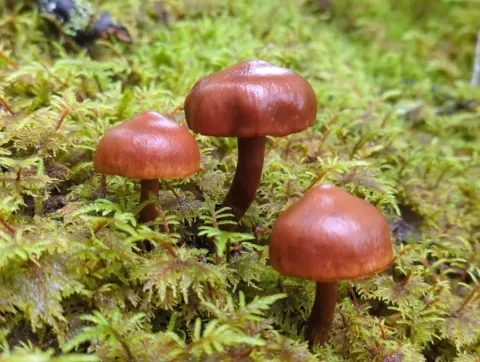
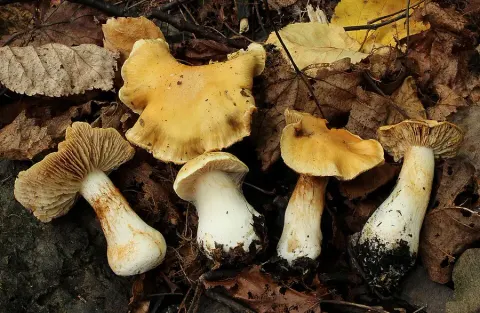
Dokumentasi Cortinarius fuscobovinus dari Wikimedia Commons. Cortinarius fuscobovinus Identifikasi mengikuti record berkas sumber.
- Jenis
- Fotografi
- Kredit
- Filippova N, Zvyagina E, Bulyonkova T, Rudykina E (2025). The Fungarium of Yugra State University. Version 1.231. Yugra State University Biological Collection (YSU BC). Occurrence dataset https://doi.org/10.15468/g4bk6h accessed via GBIF.org on 2025-12-02. https://www.gbif.org/occurrence/4172644358
- Lisensi
- CC BY 4.0
- Sumber media
- Buka entri sumber
Sumber profil
- [1] Cortinarius fuscobovinus — Wikipedia (en)
- [2] Catalogue of Life Base2026-09-11 — Cortinarius fuscobovinus
- [3] Dokumentasi visual — Cortinarius fuscobovinus
Rujukan halaman ini
Fungi. Cortinarius fuscobovinus. Rilis data fungi-2026-10-12-expansion-2. https://fungi-atlas.mgadib.chatgpt.site/jamur/cortinarius-fuscobovinus/.
Status: impor sumber; pemeriksaan editorial per profil belum selesai. Untuk klaim biologis, gunakan rujukan pada bagian terkait dan periksa konteks sumber aslinya.