Ciri dan struktur
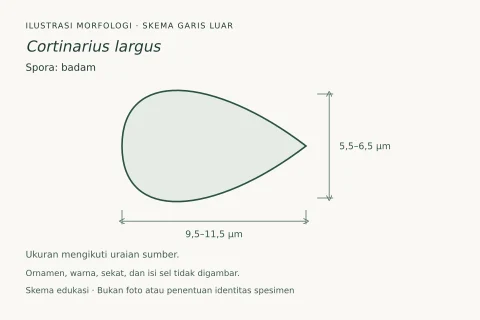
The fruit body has a 4.5 – 12 cm wide dark violet cap that is convex and becomes flattish with a low, wide boss as it matures. The cap surface is dry and covered with fine scales or hair. This layer on the cap is known as the pileipellis, which is classified as a trichoderm—having parallel hyphae running perpendicular to the surface and forming a layer 8–20 μm wide. The cap colour is lighter towards the cap margin, which is entire and can split or become wavy in older specimens. The flesh is dark purple to black. All mushroom parts stain red in potassium hydroxide. The thick wide dark blue gills are sinuate. The pale violet stipe is 10.5 – 16.5 cm high and 0.7 – 2.8 cm wide at the top and 0.9 – 3.1 cm wide at the base, which is bulbous. The stipe turns dark blue when handled or touched because of the violet universal veil. The mycelium is pale violet. The very warty oval spores are 10.5–14 μm long by 6.5–9 μm wide. The mushroom has no strong aroma. Geography and habitat differences allow it to be distinguished from similar species: the otherwise identical Cortinarius atroviolaceus is found in montane rainforest in Malaysia while Cortinarius atrolazulinus and Cortinarius carneipallidus occur with Nothofagaceae in New Zealand. Cortinarius jenolanensis has a smooth cap. Cortinarius austroviolaceus has less warty spores.
Habitat dan peran ekologis
The fruit bodies of Cortinarius kioloensis appear in autumn and winter (April to July) under Eucalyptus and Allocasuarina in southeastern Australia and Tasmania, and in association with Leptospermum in New Zealand. In New South Wales it has been collected from along Gore Creek in Lane Cove Bushland Park, Royal National Park (Couranga Track), Boronia Park, Bradleys Head, Scotland Island and Hazelbrook and Sassafras Gully near Springwood in the Blue Mountains.
- Habitat atau konteks temuan
- Informasi belum tersedia pada sumber rilis ini.
- Substrat
- Informasi belum tersedia pada sumber rilis ini.
- Peran atau konteks
- Belum dikategorikan pada rilis ini.
Reproduksi
The fruit body has a 4.5 – 12 cm wide dark violet cap that is convex and becomes flattish with a low, wide boss as it matures. The cap surface is dry and covered with fine scales or hair. This layer on the cap is known as the pileipellis, which is classified as a trichoderm—having parallel hyphae running perpendicular to the surface and forming a layer 8–20 μm wide. The cap colour is lighter towards the cap margin, which is entire and can split or become wavy in older specimens. The flesh is dark purple to black. All mushroom parts stain red in potassium hydroxide. The thick wide dark blue gills are sinuate. The pale violet stipe is 10.5 – 16.5 cm high and 0.7 – 2.8 cm wide at the top and 0.9 – 3.1 cm wide at the base, which is bulbous.
Catatan identitas dan cakupan
- Nama diterima mengikuti Catalogue of Life Base2026-09-11; uraian mempertahankan konsep dan nama sumber aslinya.
- Original geographic, specimen and life-cycle scope retained; source import awaits individual editorial review.
- Impor dan terjemahan otomatis belum diperiksa editorial per profil. Struktur reproduktif yang disebutkan tidak membuktikan seluruh siklus hidup diketahui.
- Pengukuran pada uraian mengikuti spesimen, kultur, dan metode sumber; angka tidak diperluas ke semua populasi.
Catatan distribusi dalam narasi mengikuti sumbernya. Dokumentasi spesimen atau foto mengikuti catatan sumber. Bukti wilayah Indonesia dan penilaian konservasi tidak disimpulkan dari gambar.
Melihat dengan konteks
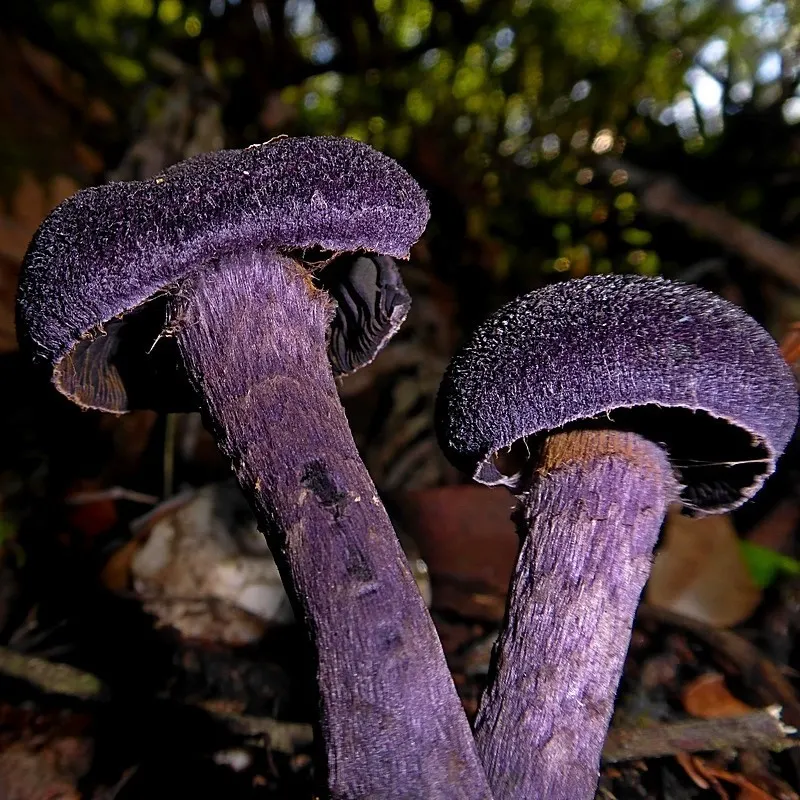
Dokumentasi Cortinarius kioloensis menurut asosiasi foto pada record takson iNaturalist. Kredit: Max Campbell. Identitas mengikuti sumber; bukan penentuan spesimen independen.
- Jenis
- Fotografi
- Kredit
- (c) Max Campbell, some rights reserved (CC BY), uploaded by Max Campbell
- Lisensi
- CC BY 4.0
- Sumber media
- Buka entri sumber
Dokumentasi tambahan
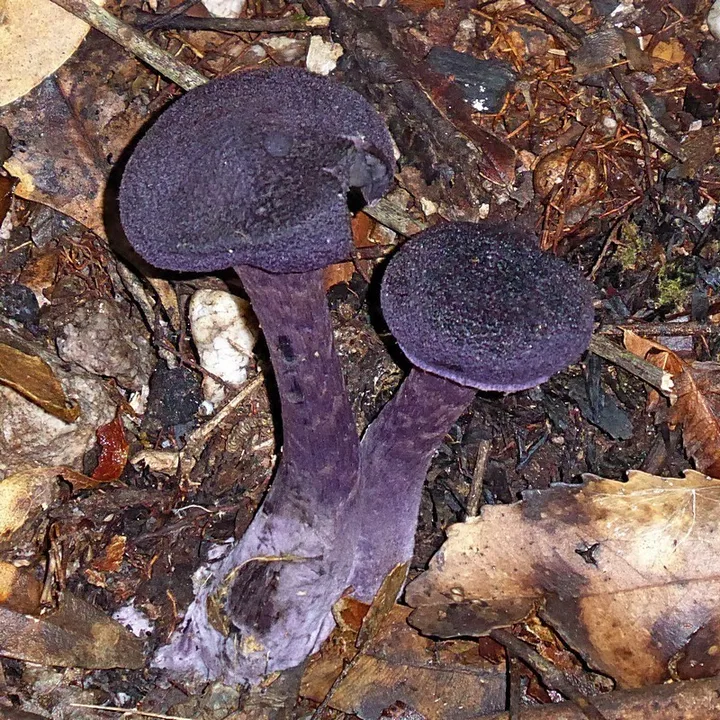
Foto yang diasosiasikan dengan Cortinarius kioloensis pada iNaturalist. Identifikasi mengikuti sumber; bukan penentuan spesimen independen.
Kredit dan penggunaan
(c) Max Campbell, some rights reserved (CC BY), uploaded by Max Campbell
Ukuran dan format gambar disesuaikan tanpa pemotongan, retus, atau penambahan skala. Lisensi sumber dipertahankan.
Sumber profil
- [1] Cortinarius kioloensis — Wikipedia (en)
- [2] Catalogue of Life Base2026-09-11 — Cortinarius kioloensis
- [3] Dokumentasi visual — Cortinarius kioloensis
- [4] Dokumentasi visual — Cortinarius kioloensis
Rujukan halaman ini
Fungi. Cortinarius kioloensis. Rilis data fungi-2026-10-12-expansion-2. https://fungi-atlas.mgadib.chatgpt.site/jamur/cortinarius-kioloensis/.
Status: impor sumber; pemeriksaan editorial per profil belum selesai. Untuk klaim biologis, gunakan rujukan pada bagian terkait dan periksa konteks sumber aslinya.