Ciri dan struktur
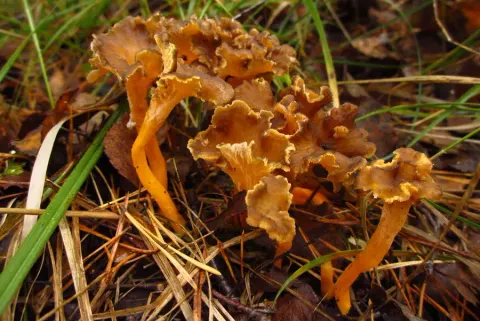
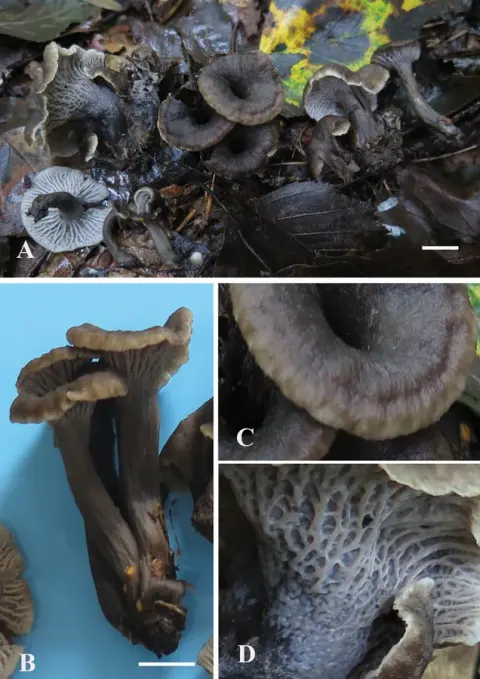
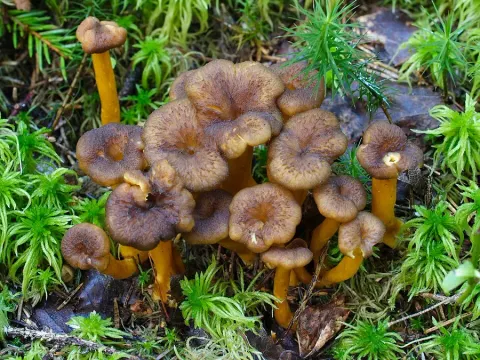
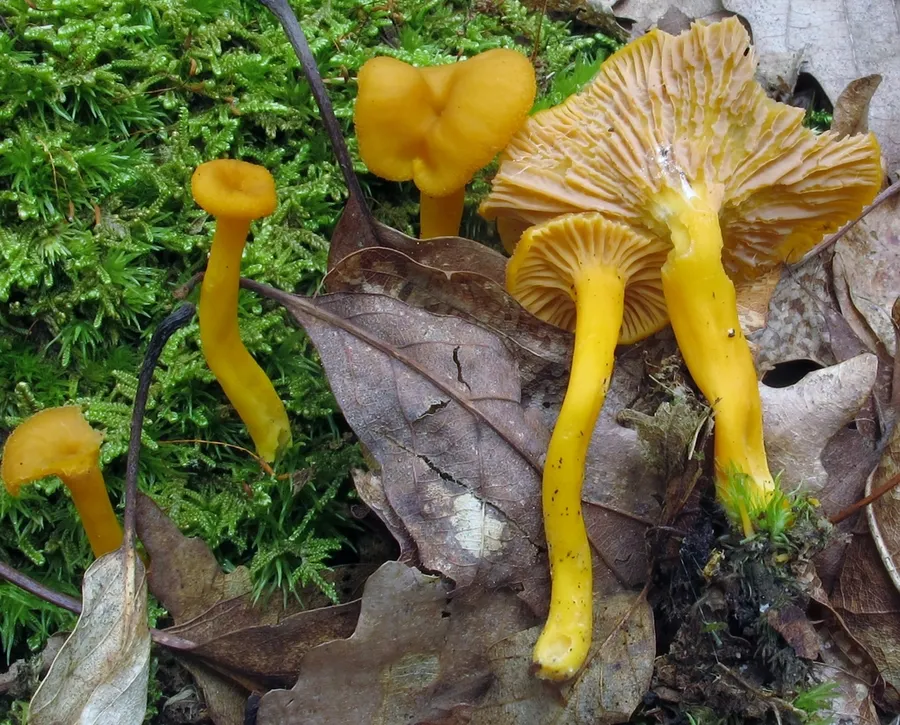
Craterellus ignicolor fruiting bodies commonly grow amongst moss in areas with significant shade, such as coniferous or hardwood forests, and tend to occur scattered and in groups or clusters during the summer-fall. They can be both mycorrhizal (symbiotic) with trees or saprotrophic (feeding off dead plant material). Pinkish or brownish-orange false gills, one of their most defining features, are visible on the underside of the cap. The center of these caps becomes perforated with age, where it develops a clear, vase-like appearance with a hollow stalk. The lower surface of the fungus is pale yellow to yellow-orange when young, then tends to develop pinkish or lavender hues with age; its spore print is pale pinkish-yellow. Its taste and odor are not known to be distinctive.
Habitat dan peran ekologis
Craterellus ignicolor fruiting bodies commonly grow amongst moss in areas with significant shade, such as coniferous or hardwood forests, and tend to occur scattered and in groups or clusters during the summer-fall. They can be both mycorrhizal (symbiotic) with trees or saprotrophic (feeding off dead plant material). Pinkish or brownish-orange false gills, one of their most defining features, are visible on the underside of the cap. The center of these caps becomes perforated with age, where it develops a clear, vase-like appearance with a hollow stalk. The lower surface of the fungus is pale yellow to yellow-orange when young, then tends to develop pinkish or lavender hues with age; its spore print is pale pinkish-yellow. Its taste and odor are not known to be distinctive.
- Habitat atau konteks temuan
- hutan
- Substrat
- Informasi belum tersedia pada sumber rilis ini.
- Peran atau konteks
- Pengurai; Mitra tumbuhan
Reproduksi
Craterellus ignicolor fruiting bodies commonly grow amongst moss in areas with significant shade, such as coniferous or hardwood forests, and tend to occur scattered and in groups or clusters during the summer-fall. They can be both mycorrhizal (symbiotic) with trees or saprotrophic (feeding off dead plant material). Pinkish or brownish-orange false gills, one of their most defining features, are visible on the underside of the cap. The center of these caps becomes perforated with age, where it develops a clear, vase-like appearance with a hollow stalk. The lower surface of the fungus is pale yellow to yellow-orange when young, then tends to develop pinkish or lavender hues with age; its spore print is pale pinkish-yellow.
Catatan identitas dan cakupan
- Nama diterima mengikuti Catalogue of Life Base2026-09-11; uraian mempertahankan konsep dan nama sumber aslinya.
- Original geographic, specimen and life-cycle scope retained; source import awaits individual editorial review.
- Impor dan terjemahan otomatis belum diperiksa editorial per profil. Struktur reproduktif yang disebutkan tidak membuktikan seluruh siklus hidup diketahui.
- Pengukuran pada uraian mengikuti spesimen, kultur, dan metode sumber; angka tidak diperluas ke semua populasi.
Catatan distribusi dalam narasi mengikuti sumbernya. Dokumentasi spesimen atau foto mengikuti catatan sumber. Bukti wilayah Indonesia dan penilaian konservasi tidak disimpulkan dari gambar.
Melihat dengan konteks
Dokumentasi Craterellus ignicolor menurut asosiasi foto pada record takson iNaturalist. Kredit: mycowalt. Identitas mengikuti sumber; bukan penentuan spesimen independen.
- Jenis
- Fotografi
- Kredit
- (c) mycowalt, some rights reserved (CC BY-SA), uploaded by mycowalt
- Lisensi
- CC BY-SA 4.0
- Sumber media
- Buka entri sumber
Sumber profil
- [1] Craterellus ignicolor — Wikipedia (en)
- [2] Catalogue of Life Base2026-09-11 — Craterellus ignicolor
- [3] Dokumentasi visual — Craterellus ignicolor
Rujukan halaman ini
Fungi. Craterellus ignicolor. Rilis data fungi-2026-10-12-expansion-2. https://fungi-atlas.mgadib.chatgpt.site/jamur/craterellus-ignicolor/.
Status: impor sumber; pemeriksaan editorial per profil belum selesai. Untuk klaim biologis, gunakan rujukan pada bagian terkait dan periksa konteks sumber aslinya.