Ciri dan struktur
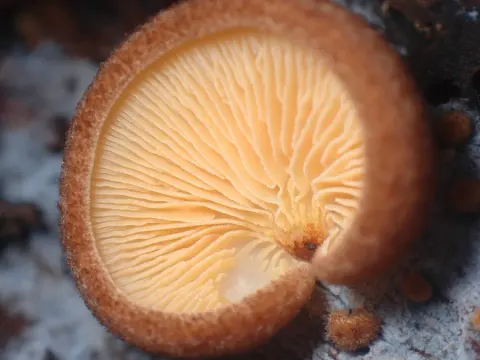
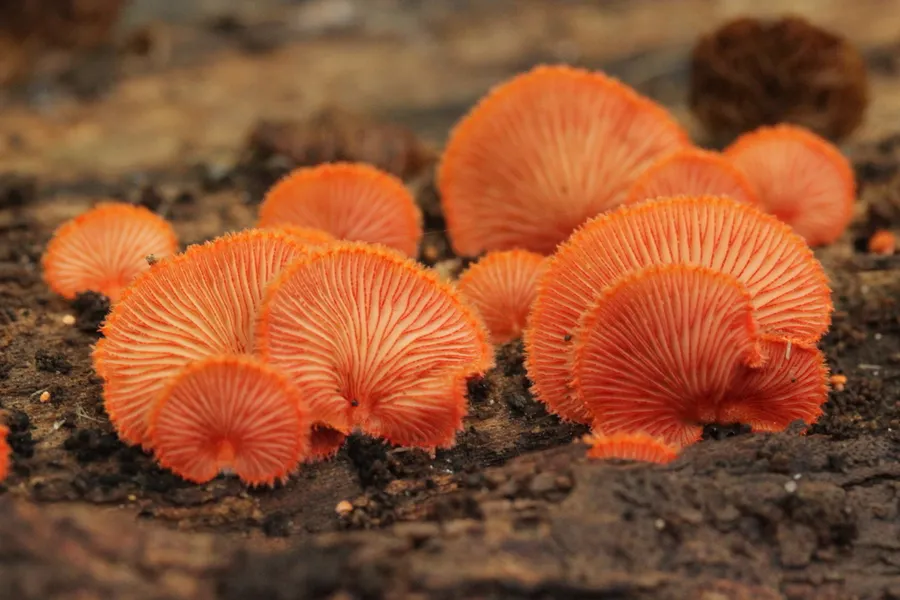
Cap: Bright orangish red, the cap (pileus) of C. cinnabarinus is generally about 2 to 18mm in diameter and is convex, shell or fan shaped with a finely down felted surface when fresh, especially at its base, becoming minutely pitted or more or less bald and dry. The margin is irregular to fibrous and initially inrolled. Stipe (stem): Absent, but a pale, lateral pseudostem is sometimes present. Gills: Coloured pale brown with a red-orange edge, are crowded and adnexed. Spores: The spore print is buff. Spore shape is broadly elliptical to subspherical with a finely spiny to warty surface, measuring 8-8.5–8.5 × 5.5–6/5 μm in size. Absent features- No annulus (ring).
Habitat dan peran ekologis
Crepidotus cinnabarinus is a species of saprophytic fungus in the family Crepidotaceae with a stipeless sessile cap distributed in North America and Europe. It is highly conspicuous and often found on fallen branches and rotting trunks of broad leafed trees. In England it appears from late summer to autumn.
- Habitat atau konteks temuan
- Informasi belum tersedia pada sumber rilis ini.
- Substrat
- kayu
- Peran atau konteks
- Belum dikategorikan pada rilis ini.
Reproduksi
Cap: Bright orangish red, the cap (pileus) of C. cinnabarinus is generally about 2 to 18mm in diameter and is convex, shell or fan shaped with a finely down felted surface when fresh, especially at its base, becoming minutely pitted or more or less bald and dry. The margin is irregular to fibrous and initially inrolled. Stipe (stem): Absent, but a pale, lateral pseudostem is sometimes present. Gills: Coloured pale brown with a red-orange edge, are crowded and adnexed. Spores: The spore print is buff. Spore shape is broadly elliptical to subspherical with a finely spiny to warty surface, measuring 8-8.5–8.5 × 5.5–6/5 μm in size.
Catatan identitas dan cakupan
- Nama diterima mengikuti Catalogue of Life Base2026-09-11; uraian mempertahankan konsep dan nama sumber aslinya.
- Original geographic, specimen and life-cycle scope retained; source import awaits individual editorial review.
- Impor dan terjemahan otomatis belum diperiksa editorial per profil. Struktur reproduktif yang disebutkan tidak membuktikan seluruh siklus hidup diketahui.
- Pengukuran pada uraian mengikuti spesimen, kultur, dan metode sumber; angka tidak diperluas ke semua populasi.
Catatan distribusi dalam narasi mengikuti sumbernya. Dokumentasi spesimen atau foto mengikuti catatan sumber. Bukti wilayah Indonesia dan penilaian konservasi tidak disimpulkan dari gambar.
Melihat dengan konteks
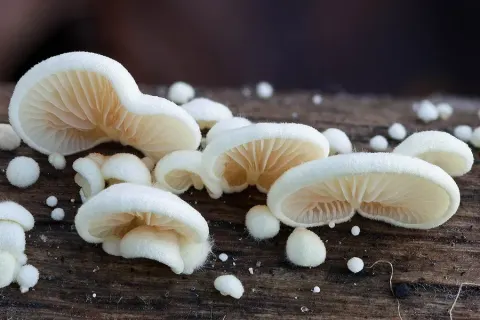
Dokumentasi Crepidotus cinnabarinus menurut asosiasi foto pada record takson iNaturalist. Kredit: Björn Sothmann. Identitas mengikuti sumber; bukan penentuan spesimen independen.
- Jenis
- Fotografi
- Kredit
- (c) Björn Sothmann, some rights reserved (CC BY-SA), uploaded by Björn Sothmann
- Lisensi
- CC BY-SA 4.0
- Sumber media
- Buka entri sumber
Dokumentasi tambahan
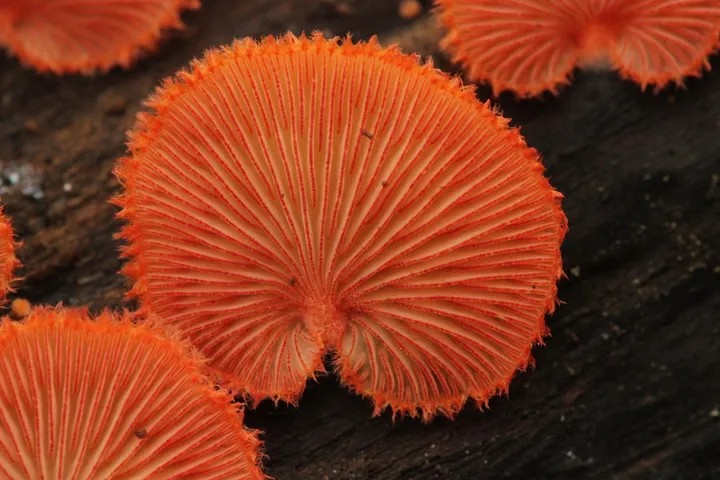
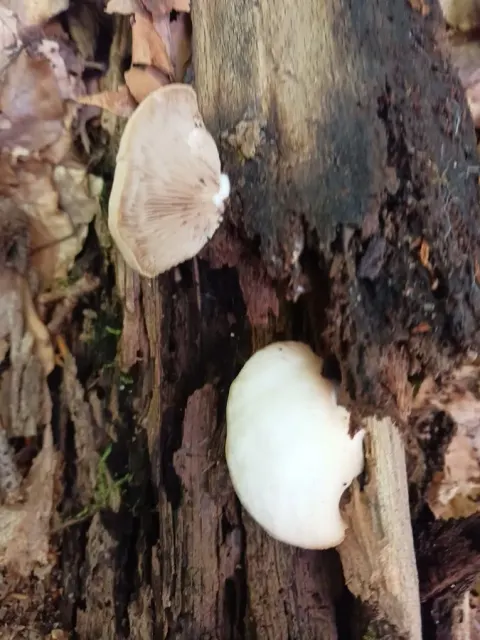
Foto yang diasosiasikan dengan Crepidotus cinnabarinus pada iNaturalist. Identifikasi mengikuti sumber; bukan penentuan spesimen independen.
Kredit dan penggunaan
(c) Björn Sothmann, some rights reserved (CC BY-SA), uploaded by Björn Sothmann
Ukuran dan format gambar disesuaikan tanpa pemotongan, retus, atau penambahan skala. Lisensi sumber dipertahankan.
Sumber profil
- [1] Crepidotus cinnabarinus — Wikipedia (en)
- [2] Catalogue of Life Base2026-09-11 — Crepidotus cinnabarinus
- [3] Dokumentasi visual — Crepidotus cinnabarinus
- [4] Dokumentasi visual — Crepidotus cinnabarinus
Rujukan halaman ini
Fungi. Crepidotus cinnabarinus. Rilis data fungi-2026-10-12-expansion-2. https://fungi-atlas.mgadib.chatgpt.site/jamur/crepidotus-cinnabarinus/.
Status: impor sumber; pemeriksaan editorial per profil belum selesai. Untuk klaim biologis, gunakan rujukan pada bagian terkait dan periksa konteks sumber aslinya.