Ciri dan struktur
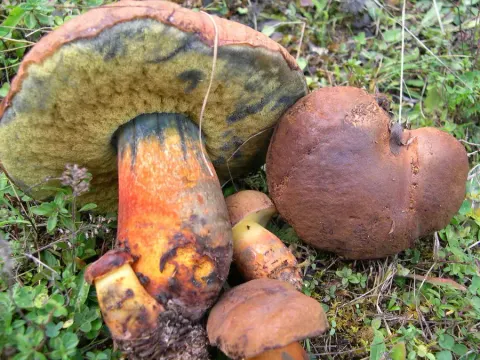
Description: Pileus 15–60 mm in diam., mostly convex, sometimes planoconvex with maturity, applanate with uplifted margin, reddish brown (8–9F6–8) when young to dark brown (8–9D8); surface viscid when moist, velvety, often with patches of appressed small squamules; margin entire to undulated, initially incurved then uplifted; turning greenish black (20F8) when bruised, brownish yellow (5C8) with NH 4 OH, and dark red (10C8) with KOH. Pore surface: yellowish brown (2A5), becoming blue-black (20D5) when bruised; pores: angular, pore stuffed when young; pore mouth: red (10C–D8), 0.7–0.9/mm. Tubes are adnate, 3–6 mm long, light yellow (2A5), becoming greyish blue (20D5) when bruised. Stipe 30–55 × 5–8 mm, more or less cylindrical, solid, yellow at apex, brownish black towards the base, white to buff colored at base; surface faintly pruinose. Context in pileus up to 10 mm thick, yellowish white, instantly turning bluish green (25B6) when exposed. Odour mild. Taste none. Spore print is olive brown.
Habitat dan peran ekologis
Habitat: Solitary to gregarious, in temperate coniferous forests of Cedrus deodara.
- Habitat atau konteks temuan
- hutan
- Substrat
- Informasi belum tersedia pada sumber rilis ini.
- Peran atau konteks
- Belum dikategorikan pada rilis ini.
Reproduksi
Description: Pileus 15–60 mm in diam., mostly convex, sometimes planoconvex with maturity, applanate with uplifted margin, reddish brown (8–9F6–8) when young to dark brown (8–9D8); surface viscid when moist, velvety, often with patches of appressed small squamules; margin entire to undulated, initially incurved then uplifted; turning greenish black (20F8) when bruised, brownish yellow (5C8) with NH 4 OH, and dark red (10C8) with KOH. Pore surface: yellowish brown (2A5), becoming blue-black (20D5) when bruised; pores: angular, pore stuffed when young; pore mouth: red (10C–D8), 0.7–0.9/mm. Tubes are adnate, 3–6 mm long, light yellow (2A5), becoming greyish blue (20D5) when bruised. Stipe 30–55 × 5–8 mm, more or less cylindrical, solid, yellow at apex, brownish black towards the base, white to buff colored at base; surface faintly pruinose.
Catatan identitas dan cakupan
- Nama diterima mengikuti Catalogue of Life Base2026-09-11; uraian mempertahankan konsep dan nama sumber aslinya.
- Preserve original treatment localities, hosts and substrate scope. Materials examined describe documented specimens, not the full global range.
- Impor dan terjemahan otomatis belum diperiksa editorial per profil. Struktur reproduktif yang disebutkan tidak membuktikan seluruh siklus hidup diketahui.
- Pengukuran pada uraian mengikuti spesimen, kultur, dan metode sumber; angka tidak diperluas ke semua populasi.
Catatan distribusi dalam narasi mengikuti sumbernya. Dokumentasi spesimen atau foto mengikuti catatan sumber. Bukti wilayah Indonesia dan penilaian konservasi tidak disimpulkan dari gambar.
Melihat dengan konteks
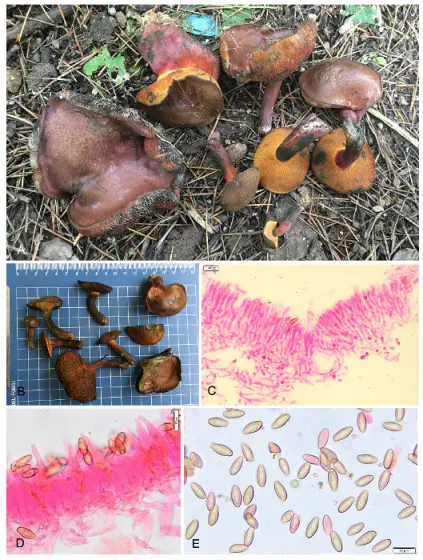
Photographic illustrations of Cyanoboletus macroporus (DC 21-02). (A, B) Fresh basidiomata in field and basecamp. (C) Elements of pileipellis. (D) Hymenial cystidia. (E) Basidiospores. Scale bars: C = 20 μm; (D, E) = 10 μm.
- Jenis
- Pelat ilmiah
- Kredit
- © 2023 by the authors.
- Lisensi
- CC BY 4.0
- Sumber media
- Buka entri sumber
Dokumentasi tambahan
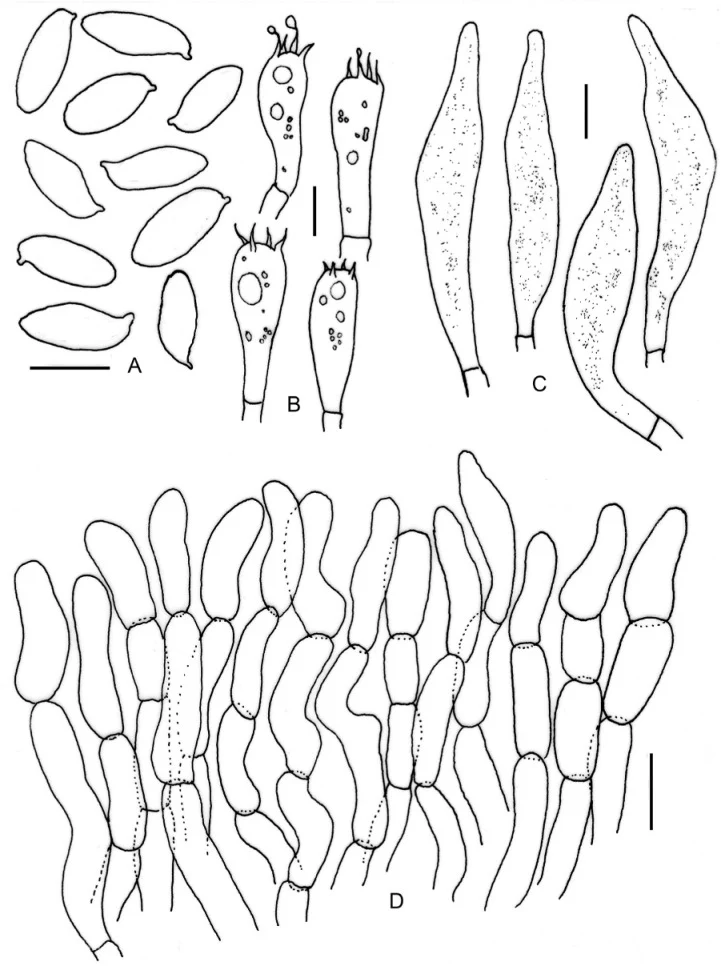
Micromorphological drawings of Cyanoboletus macroporus (DC 21-02). (A) Basidiospores. (B) Basidia. (C) Hymenial cystidia. (D) Elements of pileipellis. Scale bar: (A – D) = 10 μm.
Kredit dan penggunaan
© 2023 by the authors.
Ukuran dan format gambar disesuaikan tanpa pemotongan, retus, atau penambahan skala. Lisensi sumber dipertahankan.
Sumber profil
- [1] Four Novel Species and Two New Records of Boletes from India — Cyanoboletus macroporus
- [2] Catalogue of Life Base2026-09-11 — Cyanoboletus macroporus
- [3] Dokumentasi visual — Cyanoboletus macroporus
- [4] Dokumentasi visual — Cyanoboletus macroporus
Rujukan halaman ini
Fungi. Cyanoboletus macroporus. Rilis data fungi-2026-10-12-expansion-2. https://fungi-atlas.mgadib.chatgpt.site/jamur/cyanoboletus-macroporus/.
Status: impor sumber; pemeriksaan editorial per profil belum selesai. Untuk klaim biologis, gunakan rujukan pada bagian terkait dan periksa konteks sumber aslinya.