Ciri dan struktur
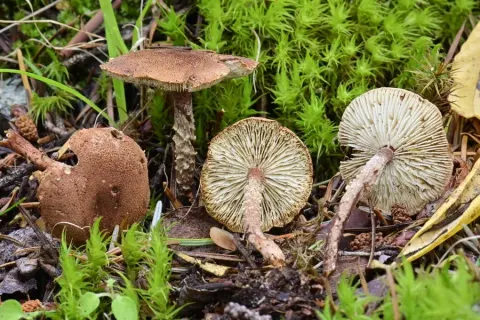
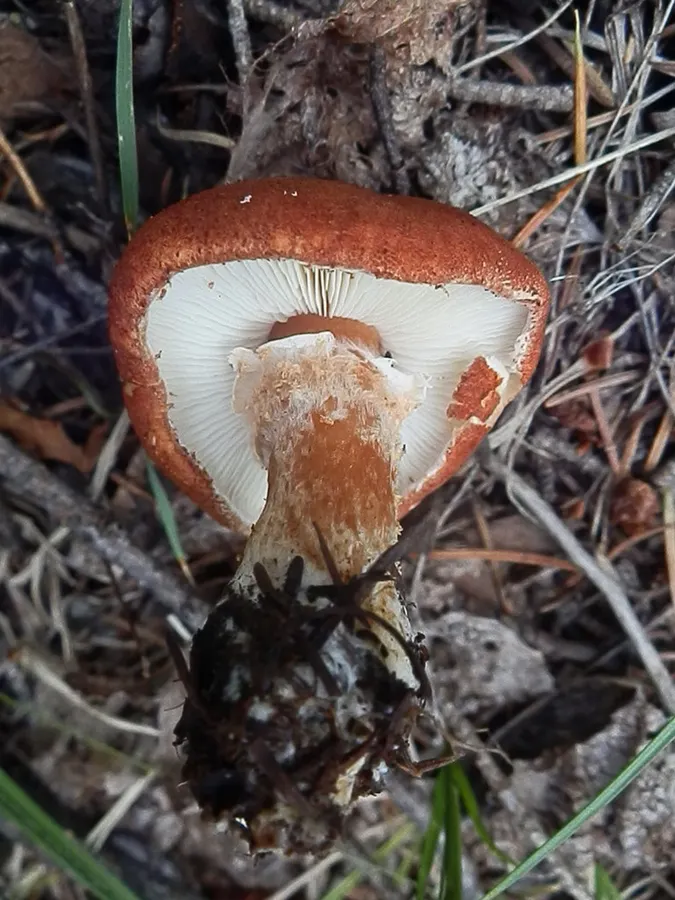
The cap is hemispherical in shape at first, becoming convex and finally flat with maturity, and up to 5.5 cm wide. The cap cuticle is cinnabar, brick-red or rusty orange and densely covered with fine granules. The flesh is white to pallid, with a mild to sweet taste and mild to mealy smell. The gills are white to cream, dense and emarginate or adnate. A finely cottony partial veil covers the gills in immature specimens, tearing away to leave behind a delicate ring. The stem is white above the ring, and scaly below, with dark orange squamules. The stem is up to 6 cm tall and 1.5 cm in diameter, sometimes bulbous in the base and hollow. The basidiospores are oval, hyaline, and non-amyloid, with dimensions of 3.5–5 by 2.5–3.5 μm. The spore print is white. The basidia (spore-producing cells) are club-shaped, and 17–24 by 4–5 μm. C. cinnabarina always has cells called cheilocystidia—cystidia that are present on the edges of gills, which in this species are spear-shaped. This microscopic feature may be used to help distinguish it from the similar-coloured C. adnatifolia and C. granulosa, which also bear non-amyloid spores, but lack cystidia.
Habitat dan peran ekologis
Cystodermella cinnabarina is found fruiting in coniferous and deciduous forests, on ground among moss, grass and litter. Being a saprotrophic fungus, it decays dead organic matter. Hal ini telah tercatat di bawah pohon pinus (Pinus nigra, Pinus pinea), ek, ceri (Picea orientalis), fir (Abies cephalonica) dan kastan (Castanea sativa) di Turki Greece and. Fruiting bodies muncul sendirian atau dalam kelompok kecil, selama musim panas dan musim gugur. Daftar data merah awal daftar terancam British fungi daftar Cystodermella cinnabarinum di bawah status "Hampir Terancam" IUCN.
- Habitat atau konteks temuan
- hutan
- Substrat
- Informasi belum tersedia pada sumber rilis ini.
- Peran atau konteks
- Pengurai
Reproduksi
The basidiospores are oval, hyaline, and non-amyloid, with dimensions of 3.5–5 by 2.5–3.5 μm. The spore print is white. The basidia (spore-producing cells) are club-shaped, and 17–24 by 4–5 μm. C. cinnabarina always has cells called cheilocystidia—cystidia that are present on the edges of gills, which in this species are spear-shaped. This microscopic feature may be used to help distinguish it from the similar-coloured C. adnatifolia and C. granulosa, which also bear non-amyloid spores, but lack cystidia.
Catatan identitas dan cakupan
- Nama diterima mengikuti Catalogue of Life Base2026-09-11; uraian mempertahankan konsep dan nama sumber aslinya.
- Original geographic, specimen and life-cycle scope retained; source import awaits individual editorial review.
- Impor dan terjemahan otomatis belum diperiksa editorial per profil. Struktur reproduktif yang disebutkan tidak membuktikan seluruh siklus hidup diketahui.
- Pengukuran pada uraian mengikuti spesimen, kultur, dan metode sumber; angka tidak diperluas ke semua populasi.
Catatan distribusi dalam narasi mengikuti sumbernya. Dokumentasi spesimen atau foto mengikuti catatan sumber. Bukti wilayah Indonesia dan penilaian konservasi tidak disimpulkan dari gambar.
Melihat dengan konteks
Dokumentasi Cystodermella cinnabarina menurut asosiasi foto pada record takson iNaturalist. Kredit: pinonbistro. Identitas mengikuti sumber; bukan penentuan spesimen independen.
- Jenis
- Fotografi
- Kredit
- (c) pinonbistro, some rights reserved (CC BY-SA), uploaded by pinonbistro
- Lisensi
- CC BY-SA 4.0
- Sumber media
- Buka entri sumber
Dokumentasi tambahan
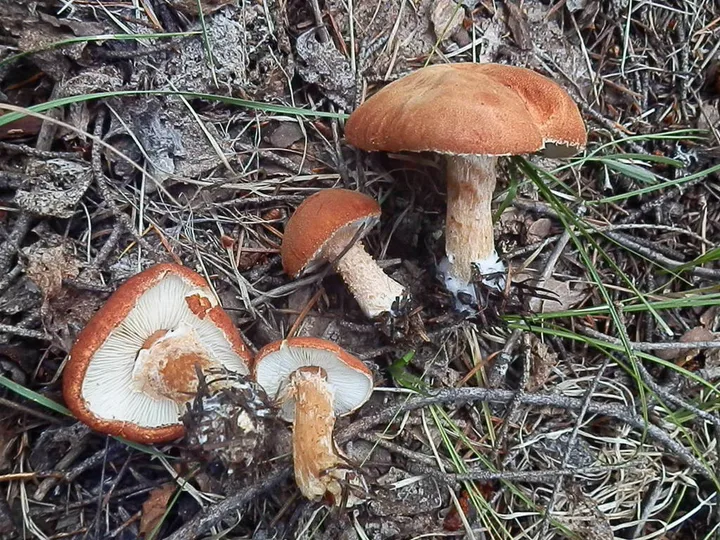
Foto yang diasosiasikan dengan Cystodermella cinnabarina pada iNaturalist. Identifikasi mengikuti sumber; bukan penentuan spesimen independen.
Kredit dan penggunaan
(c) pinonbistro, some rights reserved (CC BY-SA), uploaded by pinonbistro
Ukuran dan format gambar disesuaikan tanpa pemotongan, retus, atau penambahan skala. Lisensi sumber dipertahankan.
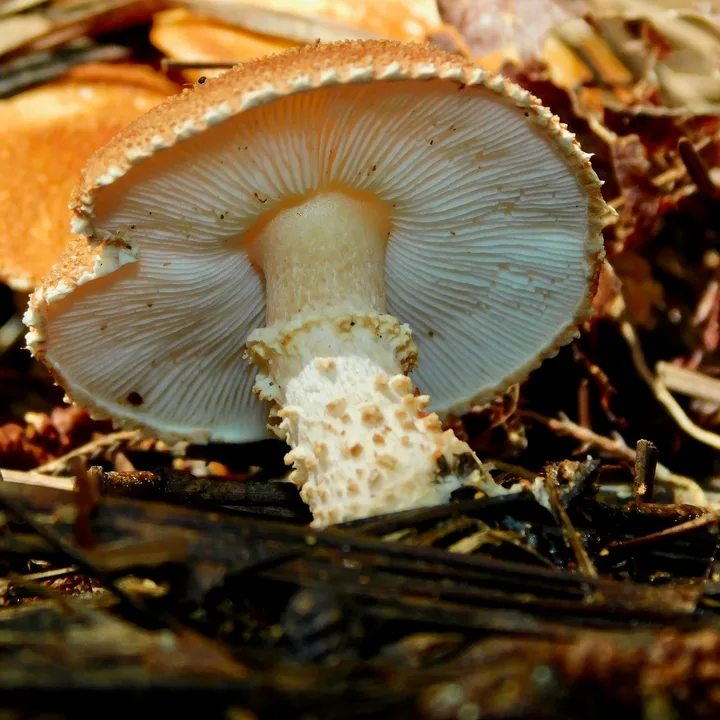
Foto yang diasosiasikan dengan Cystodermella cinnabarina pada iNaturalist. Identifikasi mengikuti sumber; bukan penentuan spesimen independen.
Kredit dan penggunaan
(c) Michael J. Papay, some rights reserved (CC BY), uploaded by Michael J. Papay
Ukuran dan format gambar disesuaikan tanpa pemotongan, retus, atau penambahan skala. Lisensi sumber dipertahankan.
Sumber profil
- [1] Cystodermella cinnabarina — Wikipedia (en)
- [2] Catalogue of Life Base2026-09-11 — Cystodermella cinnabarina
- [3] Dokumentasi visual — Cystodermella cinnabarina
- [4] Dokumentasi visual — Cystodermella cinnabarina
- [5] Dokumentasi visual — Cystodermella cinnabarina
Rujukan halaman ini
Fungi. Cystodermella cinnabarina. Rilis data fungi-2026-10-12-expansion-2. https://fungi-atlas.mgadib.chatgpt.site/jamur/cystodermella-cinnabarina/.
Status: impor sumber; pemeriksaan editorial per profil belum selesai. Untuk klaim biologis, gunakan rujukan pada bagian terkait dan periksa konteks sumber aslinya.