01 / Morfologi

Ciri dan struktur

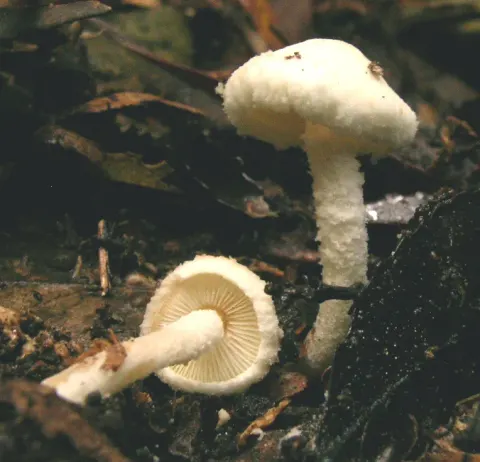
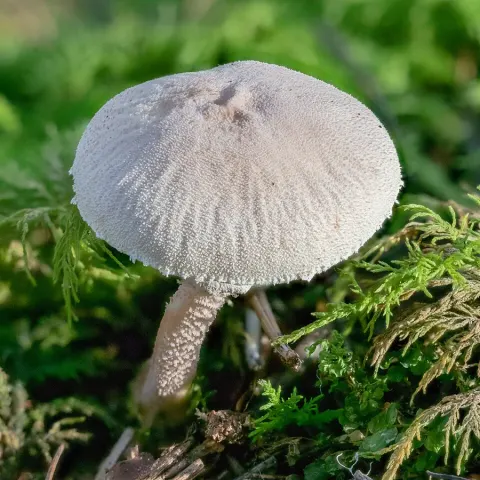
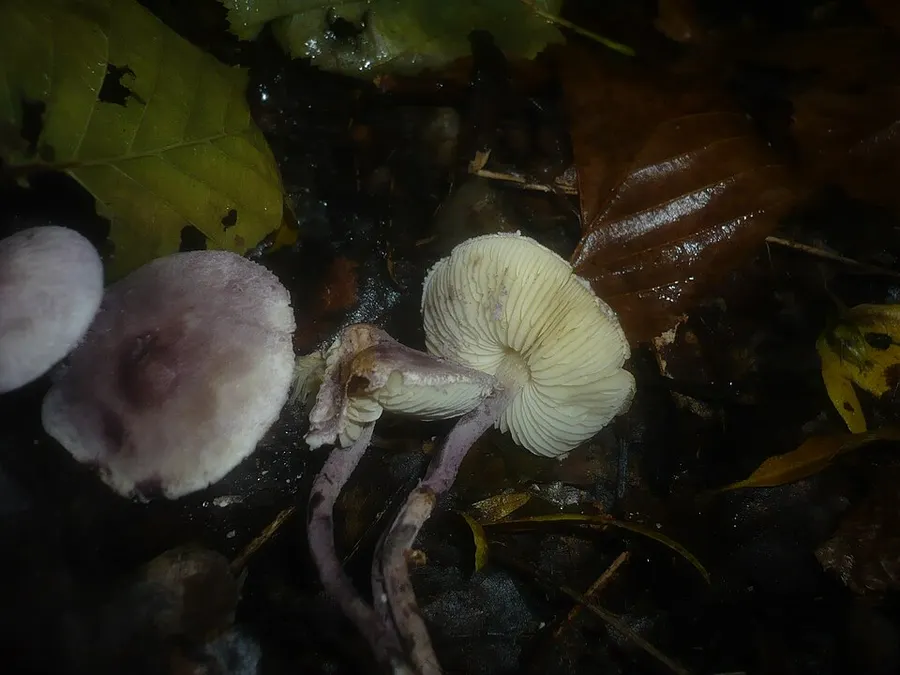
The fruit body of Cystolepiota bucknallii is a relatively small, thin-fleshed agaric. The cap is at first hemispherical and becomes convex with maturity. It bears a broad central umbo and reaches 5 cm in diameter. The cap cuticle is white with a lilac or violet tinge. The gills are crowded and not attached to the stipe. Their colour is cream to pale yellow. The stipe is comparatively long (up to 6 cm), slender and bare, tinged lilac or violet except for the uppermost section where it is pallid. Both cap and stipe are covered with a mealy powder which is easily rubbed off. All parts are fragile. The flesh is white, thin and does not bear a distinctive taste. The spore mass is white. With the aid of a light microscope, the spores are seen ellipsoid, smooth and colourless. When Melzer's reagent is applied, the spore walls barely stain; hence, the spores are weakly dextrinoid. Their dimensions are 7.5–10 μm by 1–3.5 μm. While its edibility is not known, there exists speculation about possible toxicity.

Sebagian uraian ditampilkan dalam bahasa sumber; terjemahannya belum tersedia atau belum lolos pemeriksaan.

Rujukan: [1]

Pengukuran mengikuti objek, spesimen atau kultur, dan metode yang disebutkan sumber. Baca uraian asli untuk konteks lengkap.

02 / Kehidupan

Habitat dan peran ekologis

C. bucknallii telah tercatat di berbagai negara di pusat dan utara Europe including Prancis, Belgia, Swiss, Austria, Jerman, Denmark, Norwegia, Sweden and Rusia. It is a terrestrial decomposer which occurs in deciduous forests with moist, calcareous soils rich in nutrients and especially nitrogen. Fruit bodies muncul di musim gugur.

Sebagian uraian ditampilkan dalam bahasa sumber; terjemahannya belum tersedia atau belum lolos pemeriksaan.

Rujukan: [1]

Habitat atau konteks temuan
hutan
Substrat
Informasi belum tersedia pada sumber rilis ini.
Peran atau konteks
Belum dikategorikan pada rilis ini.
Temukan hubungan serupa
03 / Siklus hidup

Reproduksi

The spore mass is white. With the aid of a light microscope, the spores are seen ellipsoid, smooth and colourless. When Melzer's reagent is applied, the spore walls barely stain; hence, the spores are weakly dextrinoid. Their dimensions are 7.5–10 μm by 1–3.5 μm.

Sebagian uraian ditampilkan dalam bahasa sumber; terjemahannya belum tersedia atau belum lolos pemeriksaan.

Rujukan: [1]

Sinonim menurut acuan taksonomi rilis: Agaricus bucknallii; Cystoderma bucknallii; Cystolepiota bucknallii var. lilacina; Lepiota bucknallii; Lepiota seminuda subsp. lilacina; Lepiota seminuda var. lilacina
04 / Batas informasi

Catatan identitas dan cakupan

  • Nama diterima mengikuti Catalogue of Life Base2026-09-11; uraian mempertahankan konsep dan nama sumber aslinya.
  • Original geographic, specimen and life-cycle scope retained; source import awaits individual editorial review.
  • Impor dan terjemahan otomatis belum diperiksa editorial per profil. Struktur reproduktif yang disebutkan tidak membuktikan seluruh siklus hidup diketahui.
  • Pengukuran pada uraian mengikuti spesimen, kultur, dan metode sumber; angka tidak diperluas ke semua populasi.

Catatan distribusi dalam narasi mengikuti sumbernya. Dokumentasi spesimen atau foto mengikuti catatan sumber. Bukti wilayah Indonesia dan penilaian konservasi tidak disimpulkan dari gambar.

05 / Dokumentasi

Melihat dengan konteks

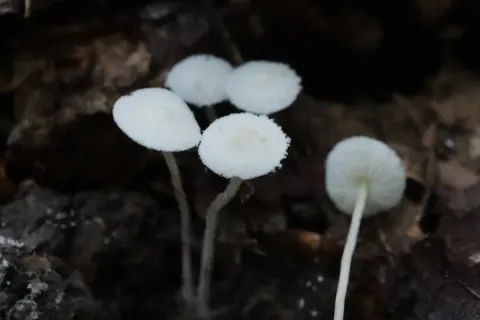
Dokumentasi Cystolepiota bucknallii dari Wikimedia Commons. Fruit bodies of the agaric fungus Cystolepiota bucknallii (Berk. & Broome) Singer & Clémençon. Photographed in Wolfstaudengraben, Marz, Bezirk Mattersburg, Burgenland, Austria. Identifikasi mengikuti record berkas sumber.

Jenis
Fotografi
Kredit
Gerhard Koller (Gerhard)
Sumber media
Buka entri sumber

Gambar menunjukkan objek menurut identifikasi sumber, bukan verifikasi independen spesimen oleh Fungi. Tidak ada skala baru yang ditambahkan.

06 / Rujukan

Sumber profil

  1. [1] Cystolepiota bucknallii — Wikipedia (en)Bagian sumber: Frozen revision 1223821828
    Tanggal penghimpunan sumber: 2026-10-12
    Teks sumber: CC BY-SA4.0 · Wikipedia contributors
  2. [2] Catalogue of Life Base2026-09-11 — Cystolepiota bucknalliiBagian sumber: ColDP NameUsage.tsv ID 6BXTH; accepted species; source 2073
    Tanggal penghimpunan sumber: 2026-10-12
  3. [3] Dokumentasi visual — Cystolepiota bucknalliiBagian sumber: Individual media record; identification follows the source, not independent determination
    Tanggal penghimpunan sumber: 2026-10-12
    Media sumber: CC BY-SA 3.0 · Gerhard Koller (Gerhard)

Adaptasi teks: CC BY-SA 4.0. Wikipedia contributors — Cystolepiota bucknallii — Wikipedia (en)

Uraian asli dan riwayat sumber

Riwayat atau halaman sumber

Ringkasan sumber

Cystolepiota bucknallii is a species of basidiomycete fungus of the genus Cystolepiota. Found throughout Europe, it is a rare fungus occurring in deciduous forests. The small fruit bodies bear a distinctive smell of coal gas and appear in autumn on damp ground. It is not an edible mushroom.

Revisi sumber

Morfologi sumber

The fruit body of Cystolepiota bucknallii is a relatively small, thin-fleshed agaric. The cap is at first hemispherical and becomes convex with maturity. It bears a broad central umbo and reaches 5 cm in diameter. The cap cuticle is white with a lilac or violet tinge. The gills are crowded and not attached to the stipe. Their colour is cream to pale yellow. The stipe is comparatively long (up to 6 cm), slender and bare, tinged lilac or violet except for the uppermost section where it is pallid. Both cap and stipe are covered with a mealy powder which is easily rubbed off. All parts are fragile. The flesh is white, thin and does not bear a distinctive taste. The spore mass is white. With the aid of a light microscope, the spores are seen ellipsoid, smooth and colourless. When Melzer's reagent is applied, the spore walls barely stain; hence, the spores are weakly dextrinoid. Their dimensions are 7.5–10 μm by 1–3.5 μm. While its edibility is not known, there exists speculation about possible toxicity.

Revisi sumber

Ekologi sumber

C. bucknallii has been recorded in various countries in central and northern Europe including France, Belgium, Switzerland, Austria, Germany, Denmark, Norway, Sweden and Russia. It is a terrestrial decomposer which occurs in deciduous forests with moist, calcareous soils rich in nutrients and especially nitrogen. Fruit bodies appear in autumn.

Revisi sumber

Struktur reproduksi sumber

The spore mass is white. With the aid of a light microscope, the spores are seen ellipsoid, smooth and colourless. When Melzer's reagent is applied, the spore walls barely stain; hence, the spores are weakly dextrinoid. Their dimensions are 7.5–10 μm by 1–3.5 μm.

Revisi sumber

Rujukan halaman ini

Fungi. Cystolepiota bucknallii. Rilis data fungi-2026-10-12-expansion-2. https://fungi-atlas.mgadib.chatgpt.site/jamur/cystolepiota-bucknallii/.

Status: impor sumber; pemeriksaan editorial per profil belum selesai. Untuk klaim biologis, gunakan rujukan pada bagian terkait dan periksa konteks sumber aslinya.