Ciri dan struktur
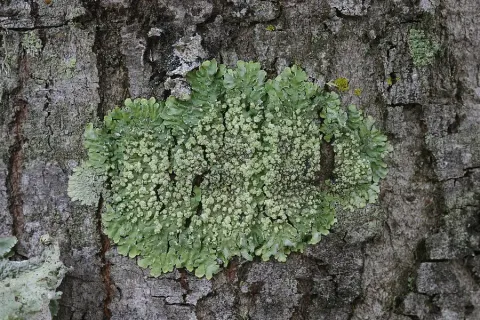
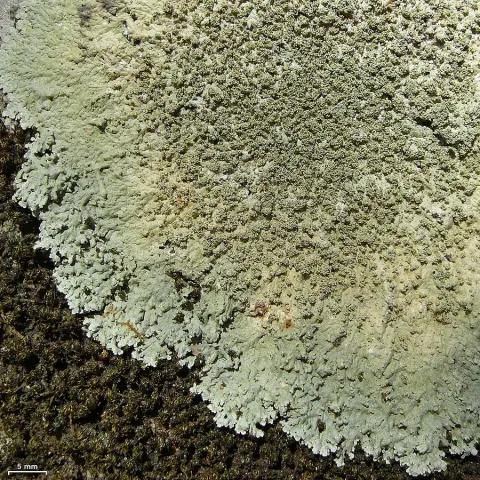
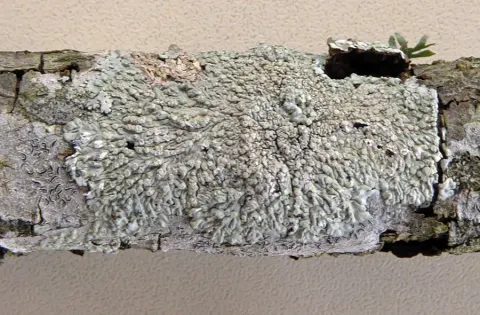
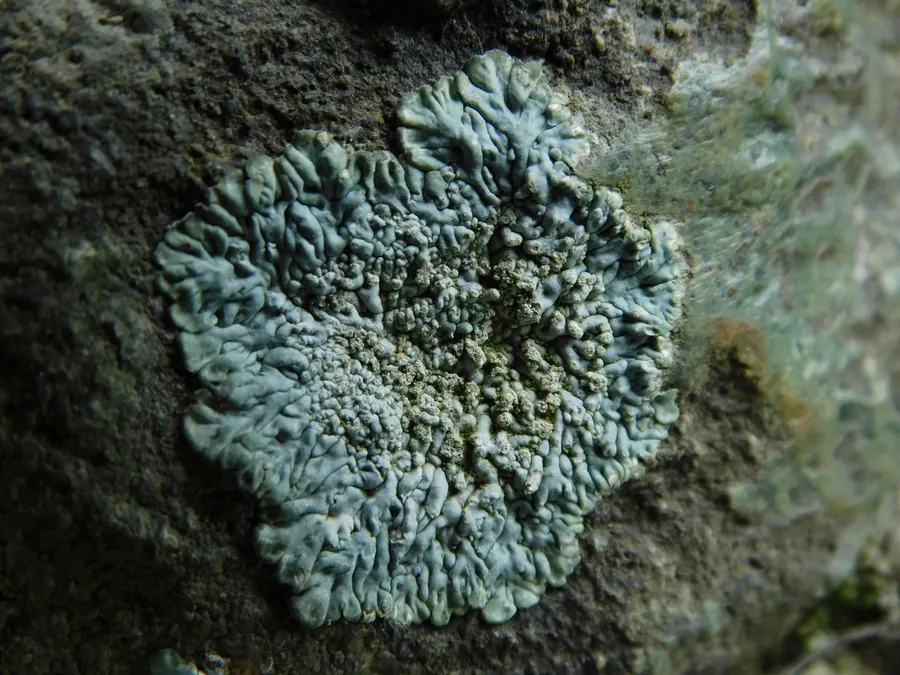
Dirinaria frostii has a foliose thallus, which is closely appressed to agglutinated and ranges from 1 to 3 cm in diameter. The lobes are dichotomously pinnately or subpinnately lobate, radiating, and often confluent. The upper surface can be gray, bluish gray, or yellowish gray, sometimes with white patchy pruinosity. Soredia are initially marginal, becoming laminal, and pseudocyphellae are mainly marginal. The medulla is typically white, occasionally with orange spots at lobe tips. The lower surface is black in the center, becoming paler towards the lobe tips. Apothecia are rarely present, and if so, they have brown, 1-septate ascospores. Spot tests reveal that the upper cortex is K+ yellow, C−, KC−, P+ yellow, while the medulla is K−, C−, KC−, P−. Secondary metabolites include atranorin in the upper cortex and divaricatic acid in the medulla, along with a few terpenes in low concentration.
Habitat dan peran ekologis
Dirinaria frostii primarily inhabits rocks, occasionally found on bark, and thrives in shaded areas such as thorn and deciduous forests. Its distribution spans the north- and southeastern United States, including areas from the upper Great Lakes region and southern New England south to the southern Atlantic and Gulf coastal states. In Mexico, it is particularly abundant in Baja California Sur, Chihuahua, and Sonora.
- Habitat atau konteks temuan
- hutan
- Substrat
- kulit kayu
- Peran atau konteks
- Pembentuk liken
Reproduksi
Dirinaria frostii has a foliose thallus, which is closely appressed to agglutinated and ranges from 1 to 3 cm in diameter. The lobes are dichotomously pinnately or subpinnately lobate, radiating, and often confluent. The upper surface can be gray, bluish gray, or yellowish gray, sometimes with white patchy pruinosity. Soredia are initially marginal, becoming laminal, and pseudocyphellae are mainly marginal. The medulla is typically white, occasionally with orange spots at lobe tips. The lower surface is black in the center, becoming paler towards the lobe tips. Apothecia are rarely present, and if so, they have brown, 1-septate ascospores. Spot tests reveal that the upper cortex is K+ yellow, C−, KC−, P+ yellow, while the medulla is K−, C−, KC−, P−.
Catatan identitas dan cakupan
- Nama diterima mengikuti Catalogue of Life Base2026-09-11; uraian mempertahankan konsep dan nama sumber aslinya.
- Original geographic, specimen and life-cycle scope retained; source import awaits individual editorial review.
- Impor dan terjemahan otomatis belum diperiksa editorial per profil. Struktur reproduktif yang disebutkan tidak membuktikan seluruh siklus hidup diketahui.
- Pengukuran pada uraian mengikuti spesimen, kultur, dan metode sumber; angka tidak diperluas ke semua populasi.
Catatan distribusi dalam narasi mengikuti sumbernya. Dokumentasi spesimen atau foto mengikuti catatan sumber. Bukti wilayah Indonesia dan penilaian konservasi tidak disimpulkan dari gambar.
Melihat dengan konteks
Dokumentasi Dirinaria frostii menurut asosiasi foto pada record takson iNaturalist. Kredit: Michael J. Papay. Identitas mengikuti sumber; bukan penentuan spesimen independen.
- Jenis
- Fotografi
- Kredit
- (c) Michael J. Papay, some rights reserved (CC BY), uploaded by Michael J. Papay
- Lisensi
- CC BY 4.0
- Sumber media
- Buka entri sumber
Dokumentasi tambahan
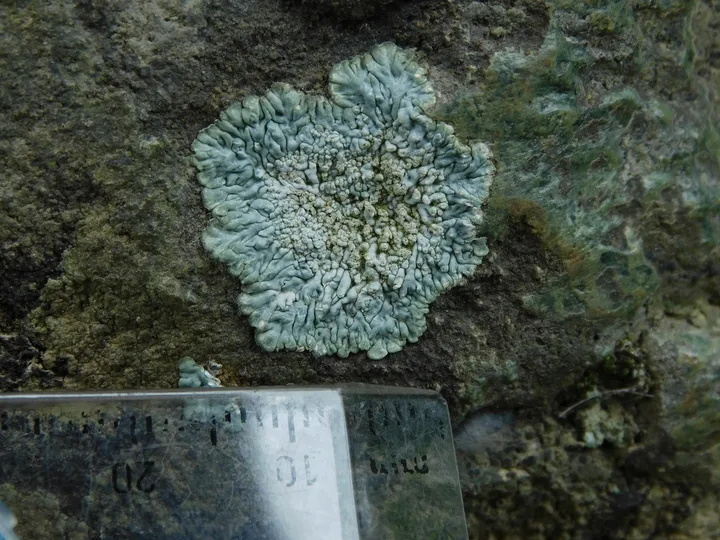
Foto yang diasosiasikan dengan Dirinaria frostii pada iNaturalist. Identifikasi mengikuti sumber; bukan penentuan spesimen independen.
Kredit dan penggunaan
(c) Michael J. Papay, some rights reserved (CC BY), uploaded by Michael J. Papay
Ukuran dan format gambar disesuaikan tanpa pemotongan, retus, atau penambahan skala. Lisensi sumber dipertahankan.
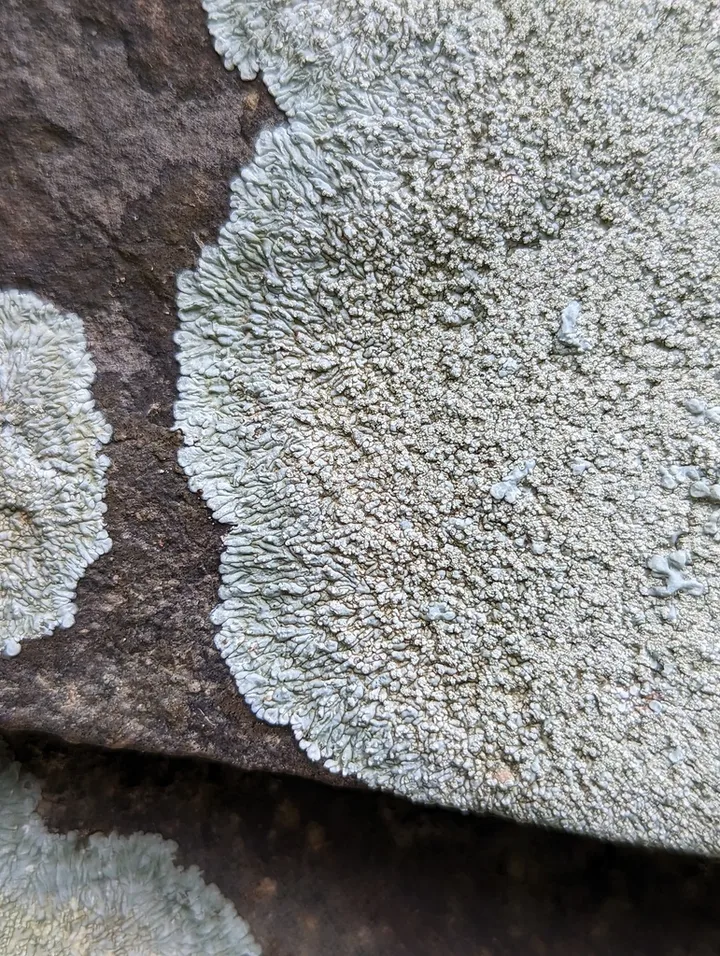
Foto yang diasosiasikan dengan Dirinaria frostii pada iNaturalist. Identifikasi mengikuti sumber; bukan penentuan spesimen independen.
Kredit dan penggunaan
no rights reserved, uploaded by Kristi Zoebelein
Ukuran dan format gambar disesuaikan tanpa pemotongan, retus, atau penambahan skala. Lisensi sumber dipertahankan.
Sumber profil
- [1] Dirinaria frostii — Wikipedia (en)
- [2] Catalogue of Life Base2026-09-11 — Dirinaria frostii
- [3] Dokumentasi visual — Dirinaria frostii
- [4] Dokumentasi visual — Dirinaria frostii
- [5] Dokumentasi visual — Dirinaria frostii
Rujukan halaman ini
Fungi. Dirinaria frostii. Rilis data fungi-2026-10-12-expansion-2. https://fungi-atlas.mgadib.chatgpt.site/jamur/dirinaria-frostii/.
Status: impor sumber; pemeriksaan editorial per profil belum selesai. Untuk klaim biologis, gunakan rujukan pada bagian terkait dan periksa konteks sumber aslinya.