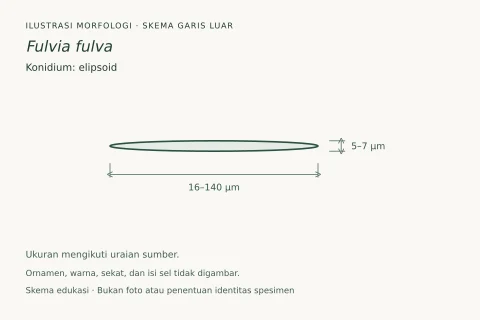
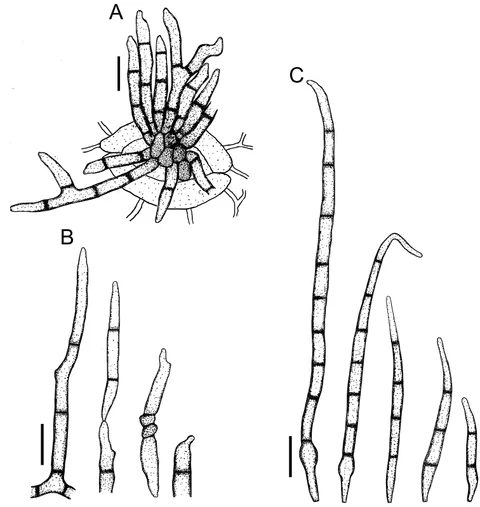
Ciri dan struktur
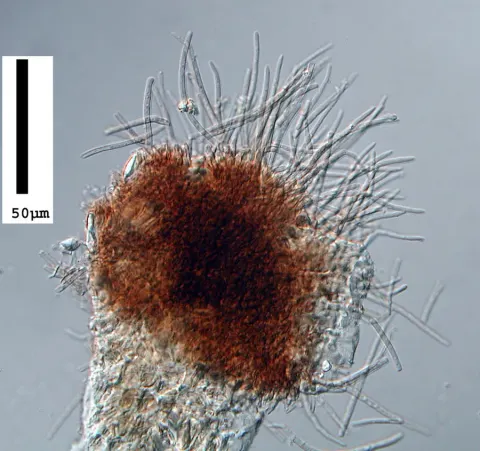
Dothistroma septosporum is a hemibiotroph, which follows two stages of development, biotrophic and necrotrophic, upon infecting an organism. Spread initially in moist conditions, the pathogen requires physical transport either through mist and rain, or by direct contact with other infected needles. Once the needles have been exposed, the fungus germinates. The ideal germination temperature is 12–18 °C, with high levels of humidity. This begins the biotrophic phase of the fungus' lifecycle; it subsequently penetrates the needle through the stoma, then colonizes the epistomatal chambers. Following this, the fungus begins its necrotrophic phase; it colonizes the mesophyll and produces the toxin dothistromin, which causes necrosis of cell tissue. The needles will then begin to show signs of infection, and eventually the pathogen produces stromata, which is the pathogen's fruiting body (sporocarps). These are formed in the spring and early summer, and usually coincide with above-average levels of rainfall. From these the blight is then passed on to the following year's growth. The stromata can be seen as a clear or white mass exuding from red spots on the leaf. Dothistroma septosporum is able to reproduce asexually (in the anamorphic stage) as well as sexually (in the teleomorphic stage), but the teleomorphic stage is uncommonly found. The sexual reproduction of the disease holds a greater danger as the division of cells that comes with meiosis allows a far greater genetic variation of the disease, and increases its ability to adapt to local climates and resistance to various forms of control.
Habitat dan peran ekologis
Dothistroma septosporum is found on all continents of the world, except Antarctica. It has a very broad climate range, including subarctic, Mediterranean, and dry tropical climate regions. According to Drenkhan et al. (2016), the needle blight disease had been reported in 76 countries globally, with D. septosporum confirmed in 44 of those countries. Dothistroma species had been found to be hosted primarily by species in the Pinaceae family. Over 60 species have been reported to be prone to infection.
- Habitat atau konteks temuan
- Informasi belum tersedia pada sumber rilis ini.
- Substrat
- Informasi belum tersedia pada sumber rilis ini.
- Peran atau konteks
- Belum dikategorikan pada rilis ini.
Reproduksi
Dothistroma septosporum is a hemibiotroph, which follows two stages of development, biotrophic and necrotrophic, upon infecting an organism. Spread initially in moist conditions, the pathogen requires physical transport either through mist and rain, or by direct contact with other infected needles. Once the needles have been exposed, the fungus germinates. The ideal germination temperature is 12–18 °C, with high levels of humidity. This begins the biotrophic phase of the fungus' lifecycle; it subsequently penetrates the needle through the stoma, then colonizes the epistomatal chambers. Following this, the fungus begins its necrotrophic phase; it colonizes the mesophyll and produces the toxin dothistromin, which causes necrosis of cell tissue.
Catatan identitas dan cakupan
- Nama diterima mengikuti Catalogue of Life Base2026-09-11; uraian mempertahankan konsep dan nama sumber aslinya.
- Original geographic, specimen and life-cycle scope retained; source import awaits individual editorial review.
- Impor dan terjemahan otomatis belum diperiksa editorial per profil. Struktur reproduktif yang disebutkan tidak membuktikan seluruh siklus hidup diketahui.
- Pengukuran pada uraian mengikuti spesimen, kultur, dan metode sumber; angka tidak diperluas ke semua populasi.
Catatan distribusi dalam narasi mengikuti sumbernya. Dokumentasi spesimen atau foto mengikuti catatan sumber. Bukti wilayah Indonesia dan penilaian konservasi tidak disimpulkan dari gambar.
Melihat dengan konteks
Dokumentasi visual yang memenuhi pemeriksaan subjek dan hak penggunaan belum tersedia. Foto gejala, label, dan gambar yang meragukan tidak dihitung.
Sumber profil
- [1] Dothistroma septosporum — Wikipedia (en)
- [2] Catalogue of Life Base2026-09-11 — Dothistroma septosporum
Rujukan halaman ini
Fungi. Dothistroma septosporum. Rilis data fungi-2026-10-12-expansion-2. https://fungi-atlas.mgadib.chatgpt.site/jamur/dothistroma-septosporum/.
Status: impor sumber; pemeriksaan editorial per profil belum selesai. Untuk klaim biologis, gunakan rujukan pada bagian terkait dan periksa konteks sumber aslinya.