Ciri dan struktur
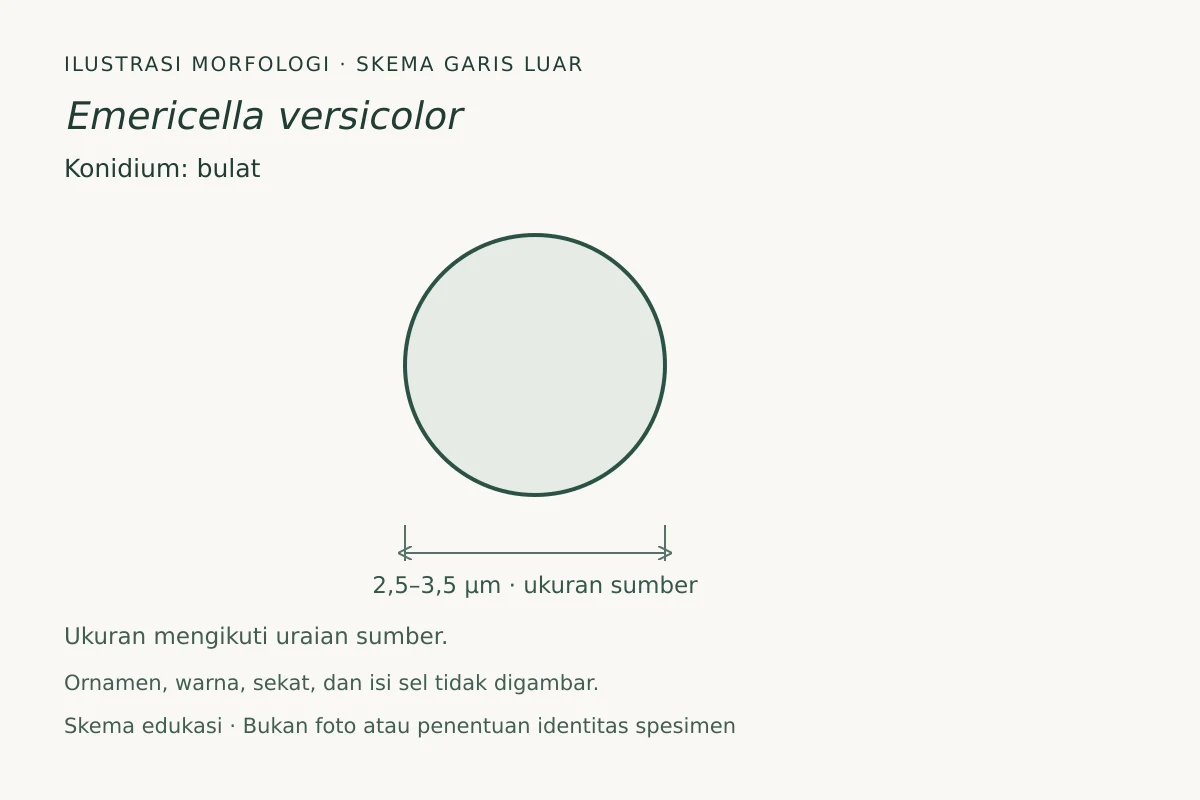
Colonies vary greatly in colour, growth rate, and surface characteristics depending upon growth conditions. By contrast, microscopic morphology tends to be consistent independent of growth parameters. Colonies are typically white at the start of development, and change to yellow, orange, and green, often with pink or flesh hues intermixed, as they mature. Reverse pigmentation is often variable as well, especially for incubation periods greater than two weeks in duration. Aspergillus versicolor has long, septate hyphae that appear glassy and transparent. Conidiphores, which are specialized hyphal stalks for asexual reproduction, typically measure 120–700 μm in length. Conidiophores terminate in small vesicles (10–15 μm in diameter) that are biseriate (i.e., with two successive layers of cells interposing the vesicle and conidia). The first layer of cells are called metulae upon which phialides are borne. The vesicles are variable in shape but are often described as "spoon-shaped". Conidia are spherical, approximately 2.5–3.5 μm in diameter, and may have smooth or slightly roughened surfaces.
Habitat dan peran ekologis
Aspergillus versicolor is a highly ubiquitous species commonly isolated from soil, plant debris, marine environments, and indoor air environments. It is among the most common of indoor molds, often reported in dust and in water-damaged building materials, such as wallboards, insulation, textiles, ceiling tiles, and manufactured wood. Aspergillus versicolor is a highly resilient fungus, explaining its wide global distribution in a variety of environmental conditions. Although it grows optimally between 22 and 26 °C, A. versicolor can grow at a larger temperature range from 4–40 °C. The fungus can also tolerate a wide pH range, and is particularly resistant to alkaline conditions. The soil depth at which the fungus can be found is variable (down to 50 cm), but it appears to be particularly abundant in deeper soils. Like other members of its genus, A. versicolor displays moderate xerophillic characteristics, meaning that it can grow in conditions with low water activity (down to aW of 0.75–0.81 in the optimal temperature range). A. versicolor is also considered to be osmophilic as it is able to survive in solutions that are up to 30% NaCl or 40% sucrose. This makes the fungus an economically important spoilage organism for stored grains, rice, tea, and spices.
- Habitat atau konteks temuan
- Informasi belum tersedia pada sumber rilis ini.
- Substrat
- Informasi belum tersedia pada sumber rilis ini.
- Peran atau konteks
- Belum dikategorikan pada rilis ini.
Reproduksi
Aspergillus versicolor has long, septate hyphae that appear glassy and transparent. Conidiphores, which are specialized hyphal stalks for asexual reproduction, typically measure 120–700 μm in length. Conidiophores terminate in small vesicles (10–15 μm in diameter) that are biseriate (i.e., with two successive layers of cells interposing the vesicle and conidia). The first layer of cells are called metulae upon which phialides are borne. The vesicles are variable in shape but are often described as "spoon-shaped". Conidia are spherical, approximately 2.5–3.5 μm in diameter, and may have smooth or slightly roughened surfaces.
Catatan identitas dan cakupan
- Nama diterima mengikuti Catalogue of Life Base2026-09-11; uraian mempertahankan konsep dan nama sumber aslinya.
- Original geographic, specimen and life-cycle scope retained; source import awaits individual editorial review.
- Impor dan terjemahan otomatis belum diperiksa editorial per profil. Struktur reproduktif yang disebutkan tidak membuktikan seluruh siklus hidup diketahui.
- Pengukuran pada uraian mengikuti spesimen, kultur, dan metode sumber; angka tidak diperluas ke semua populasi.
Catatan distribusi dalam narasi mengikuti sumbernya. Dokumentasi spesimen atau foto mengikuti catatan sumber. Bukti wilayah Indonesia dan penilaian konservasi tidak disimpulkan dari gambar.
Melihat dengan konteks
Ilustrasi skematis garis luar konidium Emericella versicolor, berdasarkan uraian sumber; ukuran yang dilaporkan 2,5–3,5 µm. Proporsi disederhanakan, bukan salinan satu spesimen. Ornamen permukaan, warna, sekat, dan isi sel tidak direkonstruksi. Konidium bulat berdiameter sekitar 2,5–3,5 µm. Kekasaran permukaan yang kadang ada tidak digambar; sumber memakai alias Aspergillus versicolor. Ornamen, warna, sekat, dan isi sel tidak digambar. Skema edukasi, bukan alat identifikasi.
- Jenis
- Ilustrasi skematis
- Kredit
- Fungi, ilustrasi orisinal (2026); fakta morfologi berdasarkan Wikipedia contributors
- Lisensi
- CC BY-SA 4.0
- Sumber media
- Buka entri sumber
Sumber profil
- [1] Aspergillus versicolor — Wikipedia (en)
- [2] Catalogue of Life Base2026-09-11 — Emericella versicolor
Rujukan halaman ini
Fungi. Emericella versicolor. Rilis data fungi-2026-10-12-expansion-2. https://fungi-atlas.mgadib.chatgpt.site/jamur/emericella-versicolor/.
Status: impor sumber; pemeriksaan editorial per profil belum selesai. Untuk klaim biologis, gunakan rujukan pada bagian terkait dan periksa konteks sumber aslinya.